
A travel advisor's guide to choosing your safari stay, from nostalgic grandeur to canvas.
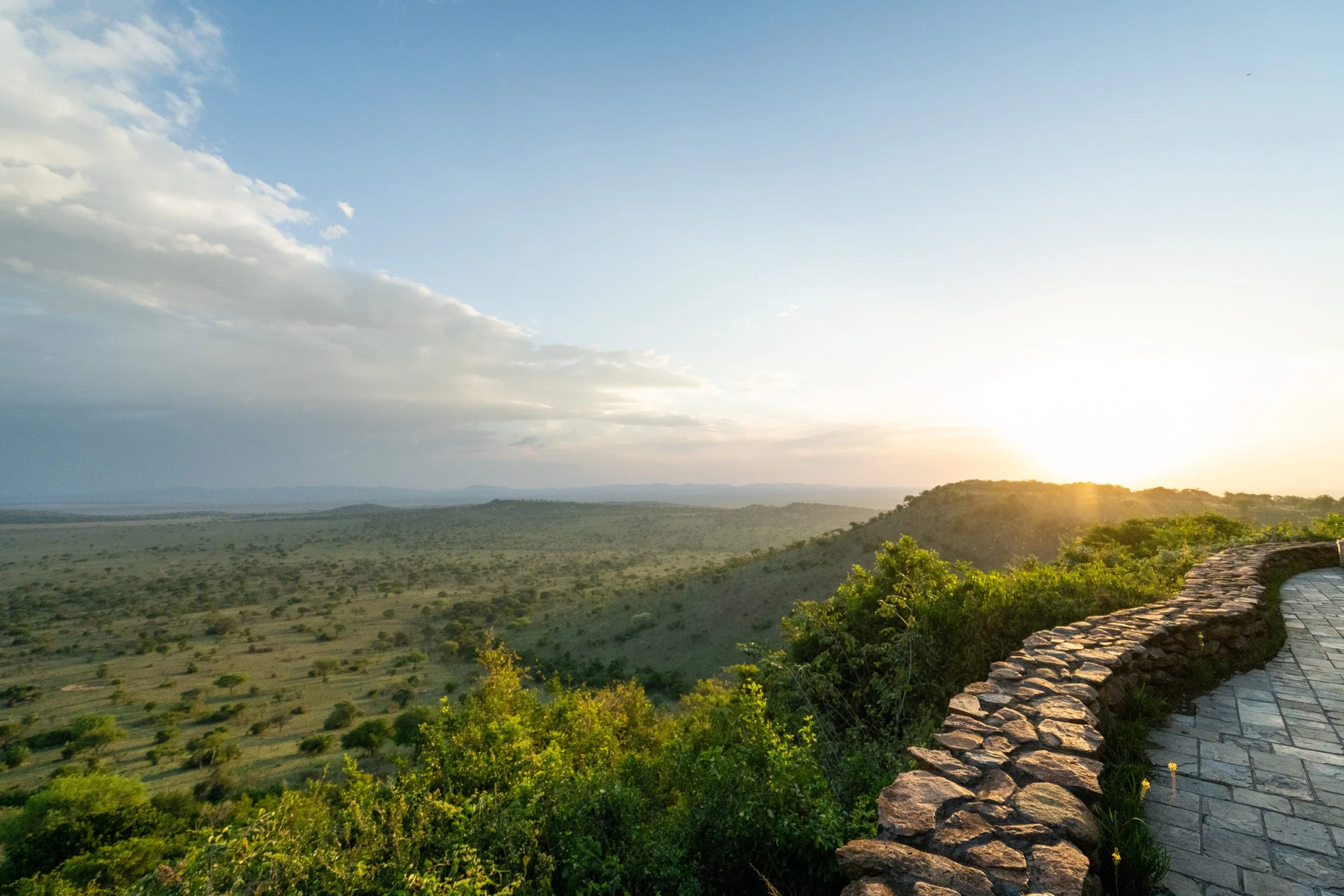
One night at Sasakwa, I woke in the dark to the crack of branches outside my cottage. Elephants, having a midnight snack. A couple of days earlier, I'd eaten breakfast thirty feet from hundreds of grazing zebras at a tented camp. Same reserve, completely different nights, and that difference is the part of safari planning most people underestimate. It's the first thing to get right for my clients.
This was the final leg of a research trip across South Africa, Zimbabwe, Rwanda, and Tanzania. In Tanzania, I spent five days in Singita's Grumeti Reserves visiting five properties: lodges, tented camps, and private villas. I went with the question clients ask me most: where should we stay? Lodge, tented camp, villa, mobile camp. The words sound interchangeable, and you don't understand the differences until you've been there.
Singita is one of many incredible places to stay in Africa. This article focuses on its properties, but the lessons apply anywhere: what matters is understanding the nuances of each style of stay and matching them to the people traveling. That's what I get right for clients. This is part two of a two-part series. Part One, Serengeti without the Crowds: Inside a Private Reserve, covers the private reserve, the Migration, and getting there.
Sasakwa: The Serengeti's Grand Dame
THE FEEL
You understand Sasakwa from the approach. Whether you're coming from the airstrip, a game drive, or another lodge, you see it on the highest point around, grand even from a distance. The drive up the hill passes clay tennis courts and zebras, metal animal sculptures, and a historic garage of antique cars. Then you reach the entrance of a lodge, somehow both regal and homey. The style is Edwardian, but don't mistake that for old-fashioned or stuffy. It has a throwback quality that makes you nostalgic for a time you may never have known, contemporized with modern art and bright, fresh palettes.
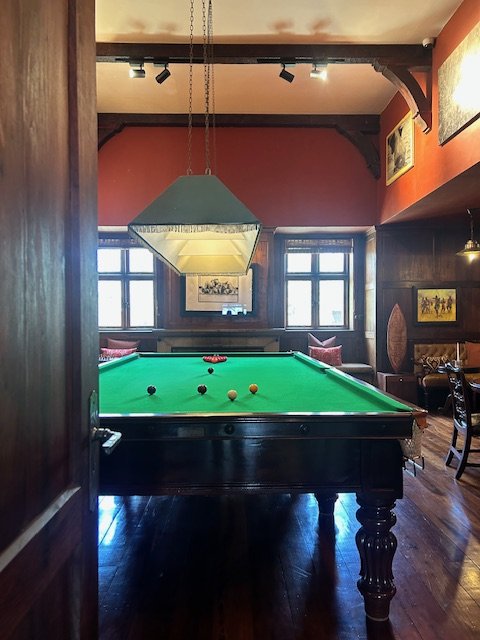
What I loved most is how many places there are to tuck into. A room for movie night with overstuffed couches. A library for a drink and a cigar, with that earthy, historic smell drifting through. Hidden outdoor nooks for two. And the main living room, bright and colorful, where the staff serves afternoon tea, and which feels like the heart of the lodge.
WHERE YOU SLEEP
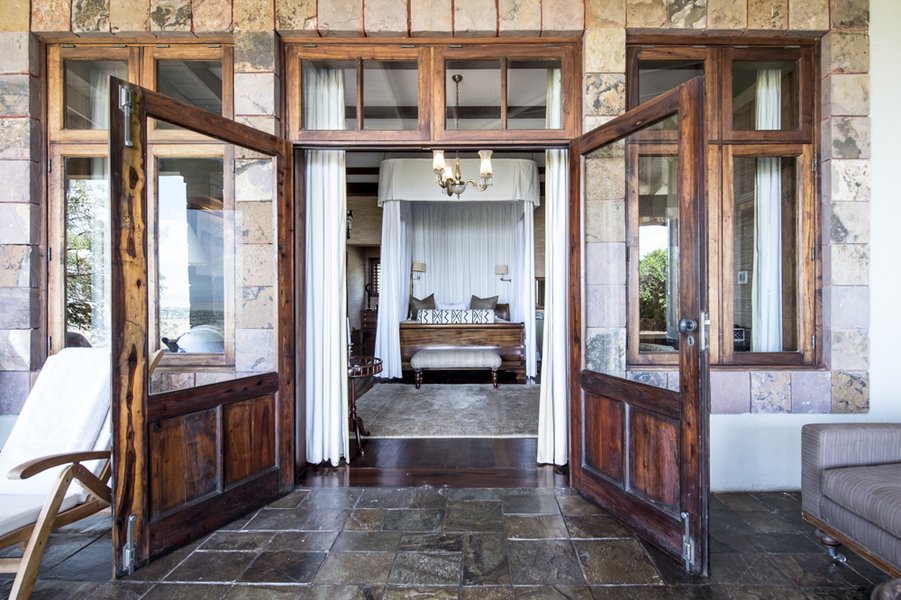
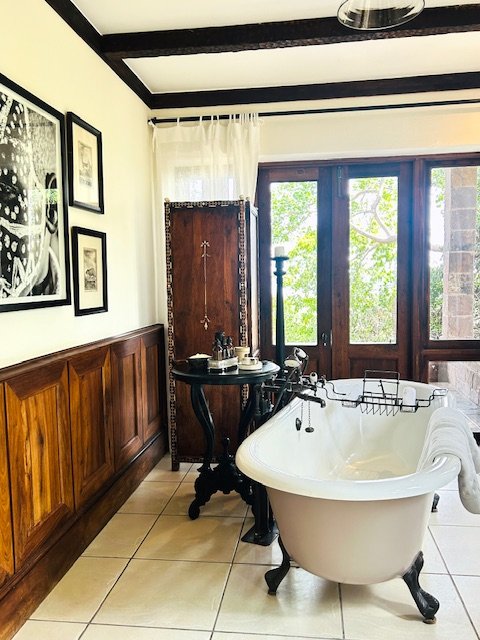
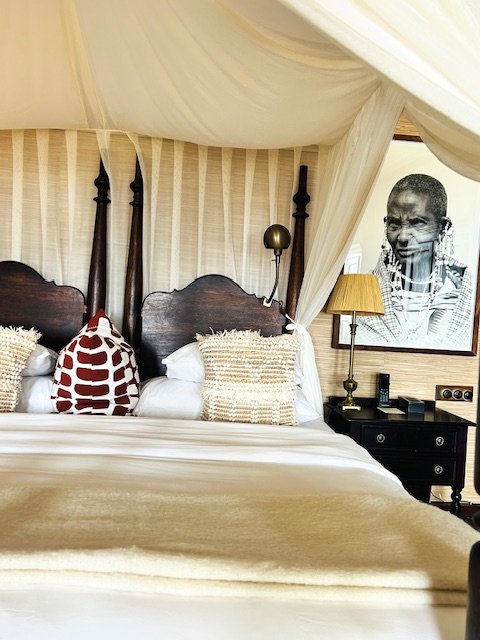
The cottages are enormous. A one-bedroom suite opens into an entry with an impressively stocked minibar, then a living area with antique wood furnishings, plush African upholstery, and a writing desk. It feels like the home of a relative you love staying with. The bedroom is huge, with strong air conditioning, a firm king bed, and pillows you'll want at home. There's a dressing area with a walk-in closet and makeup table, a double vanity, and a separate bathing room with a glass shower and freestanding tub, each facing the view.
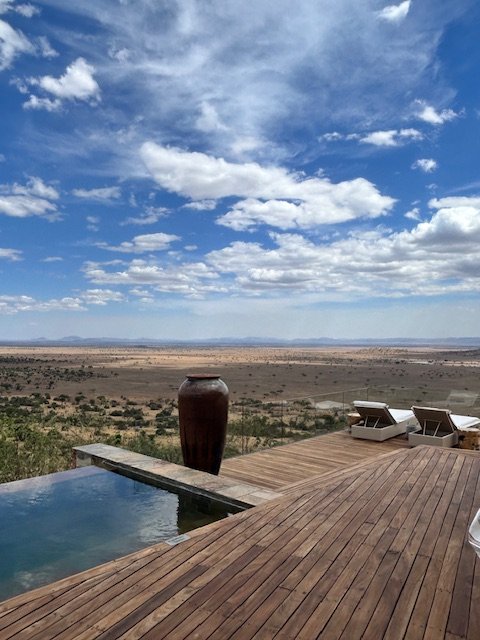
A veranda wraps the cottage, with seating nooks, a daybed made for falling asleep over a book, an outdoor dining area, and lounge chairs for two. Then there's the private infinity-edge pool. After a game drive, pour your favorite drink, perch in the pool, and stare out at the horizon.
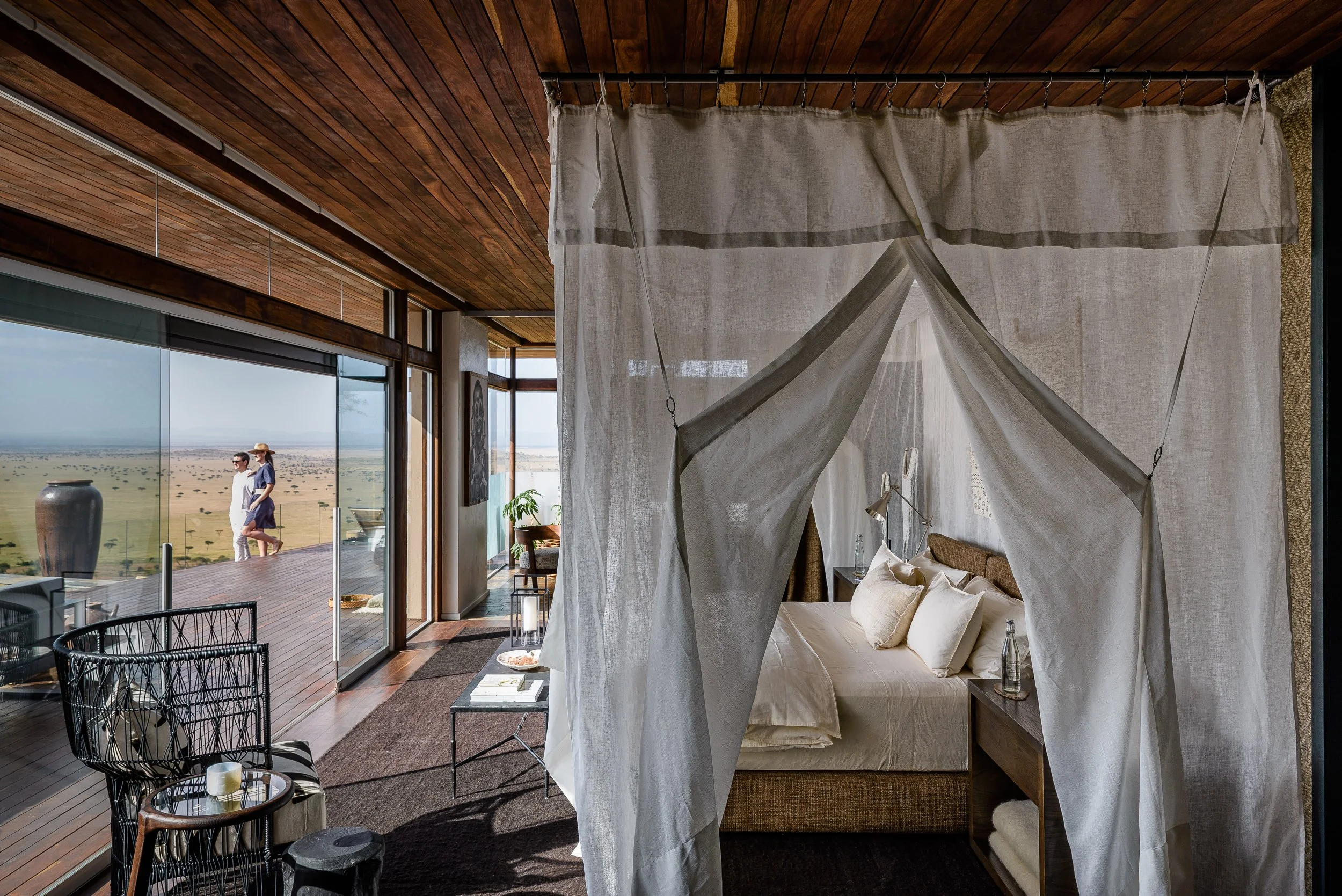
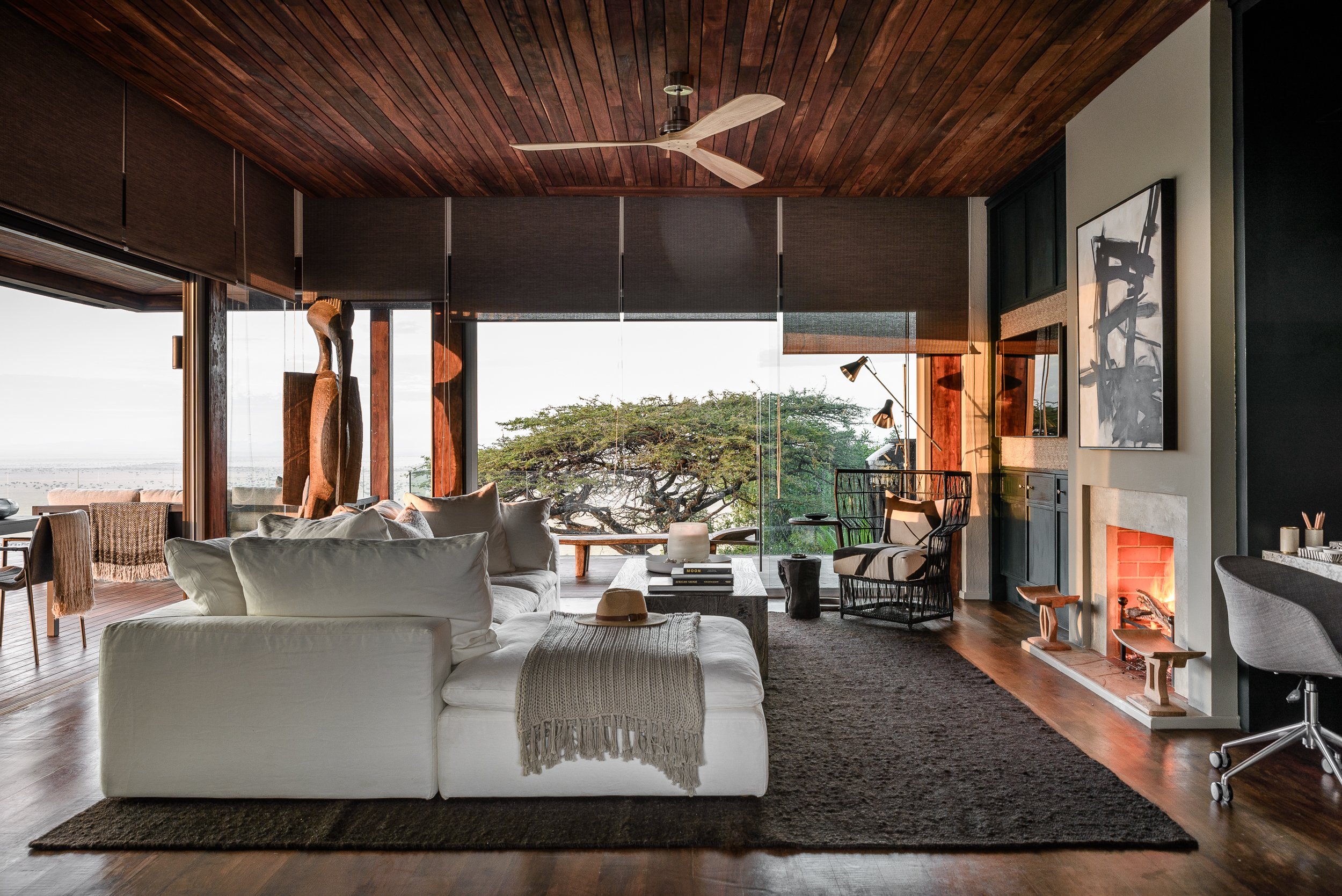
Sasakwa also has multi-bedroom villas for families and groups, but for a honeymoon or anniversary, the standout is a two-story, one-bedroom villa at the far edge of the property, with incredible privacy. It could sleep more, but it's meant for two. The interior is brighter and more contemporary, with the master suite on the first level and the living area on the second. Its private pool looks out over an expansive view, and you have the sensation of floating over the earth.
HIGHLIGHTS
The animals don't stay out on the plains. One night I woke in the dark to the crack of branches and the steady munching of leaves just outside my cottage. Elephants. I didn't get up to look. I lay there and listened, nervous at first, until I realized I was completely safe, and then I simply listened.
In the morning, the evidence was outside: broken trees and the debris elephants leave behind. Another morning, I opened my door to find zebras standing beside it. However grand the cottage, the wild is right outside.
The dining is just as varied: a formal dining room, a courtyard, and patios where each group dines in its own area and never sees anyone else. It's privacy within a shared experience. Then there's the deck overlooking the Serengeti, which seems to hang over the plains. We had dinner there by the fire, served on a wooden board three people wide that fed the whole table: fried rice, butter chicken, vegetables, and their version of flatbread.
The spa is where Sasakwa stands apart. The waiting area and the foot bath both look out over the savanna, and my massage happened with the doors open, a warm afternoon breeze moving across my skin. We also did private yoga on the covered patio, syncing our flow and breath to the sounds of the plains.
And the food. There was chipsi mayai, a Tanzanian street-food favorite, served here as an omelette topped with fries and cabbage slaw. A cacio e pepe I'd put up against Rome's. An off-menu smashburger, just because. But the showstopper was dessert: crisp chocolate cookies around a slab of fresh mint ice cream, the real kind, not toothpaste green. It was on the menu for one day. I ordered it three times.
WHO IT’S FOR
Everyone- families, couples, friends, multi-generational groups; I recommend at least three nights, longer if you can. Pair it with Explore, Sabora or Faru Faru - or make it your whole stay. It’s that good.
Private Villas in the Serengeti
The Feel
Singita has three exclusive-use villas in Grumeti: Serengeti House, Milele, and Kilima. Each comes with its own guide, chef, and staff working only for your party, plus your own vehicle and your own schedule.
HIGHLIGHTS
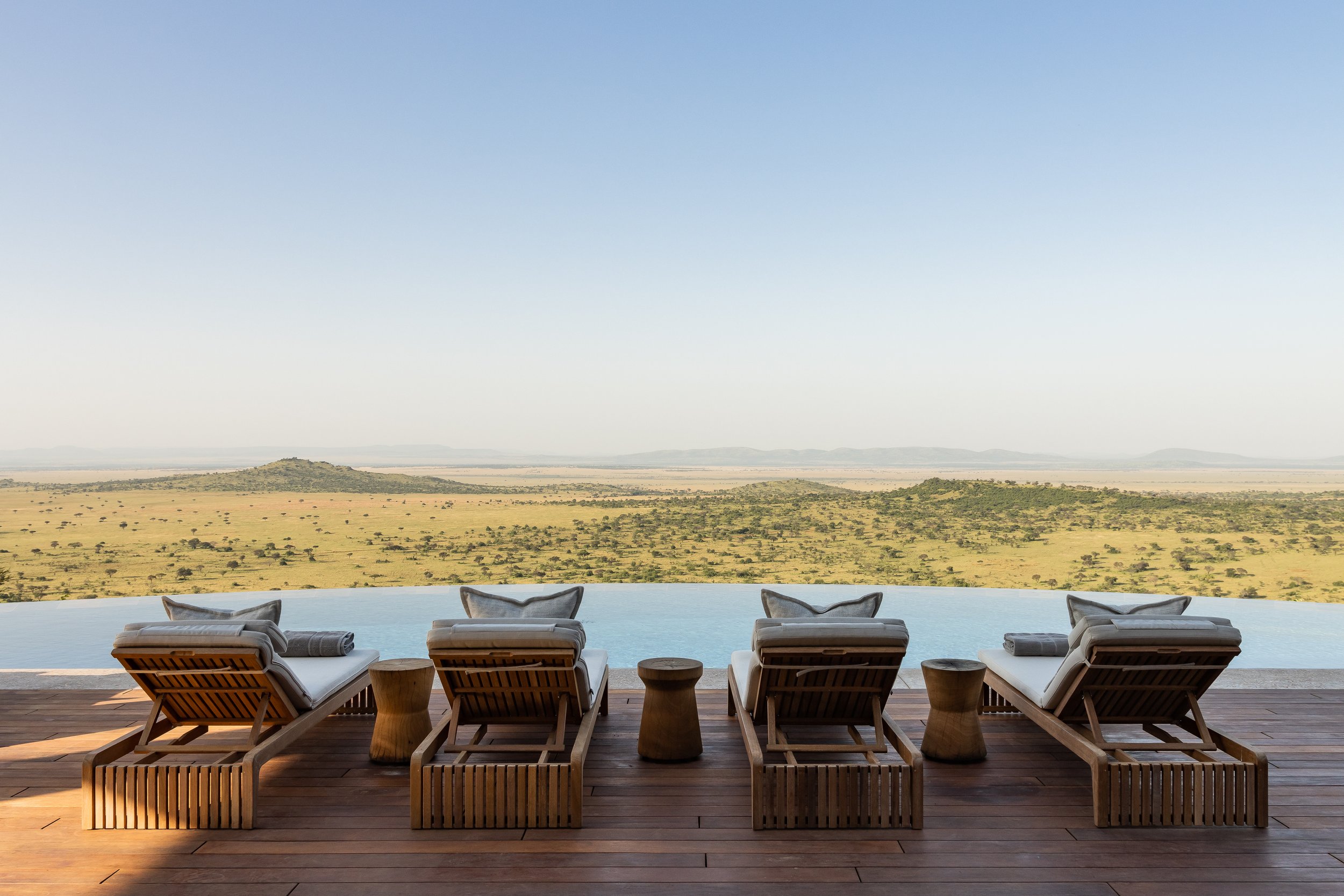
What grabbed me in touring the villas wasn't any amenity. It was the view. From the infinity-edge pool, the hot tub, the outdoor dining table, or the living room, the Serengeti fills the frame, both spectacular and humbling. You're surrounded by the people you love, with a staff catering to every need and childminders if you want them, but the real luxury is the plains and all the life unfolding around you.
Where You Sleep
All three sit on Sasakwa Hill. Serengeti House, the original, has four suites, a 25-meter lap pool, a tennis pavilion, a fitness center, and a tented massage area. Milele (2024) and Kilima (2025) are the newest, each with five suites for up to 10 guests.
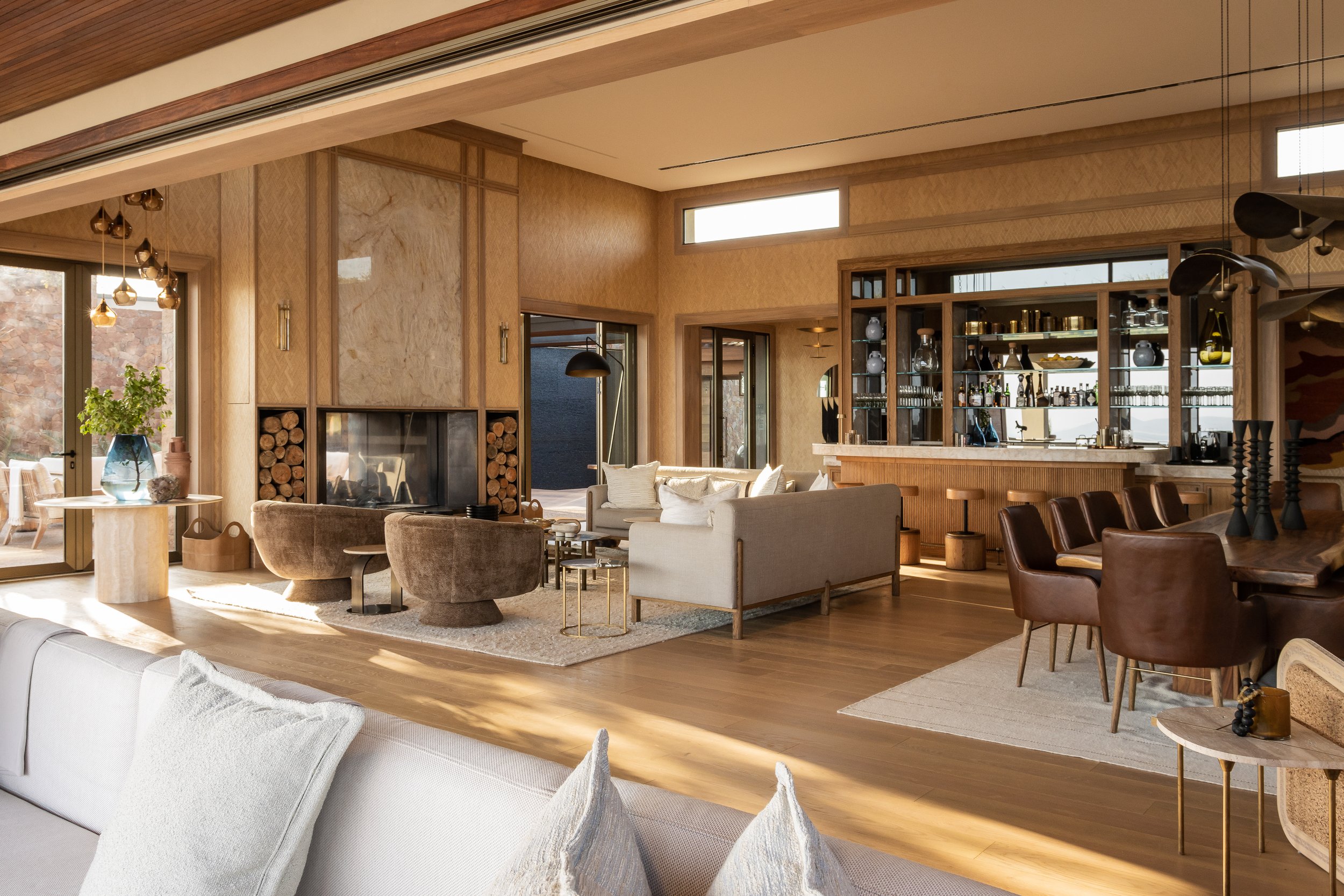
Milele has a fresh, young, almost party vibe. Its two master suites each have their own hot tub. The central living space has two seating areas, a billiards table, a large dining table, and high-tops made for cocktails, all anchored by a huge bar, along with a 10-person cinema and a pizza oven. Outside, everyone finds their spot: by the pool, at the fire pit, in the hot tub, or under the covered pergola with its fireplace lounge and a table for cards. What you're really getting at Milele is flexibility, room for the whole group to be together and apart at the same time. Each villa has its own wellness outbuilding, so you never have to leave for a spa treatment.
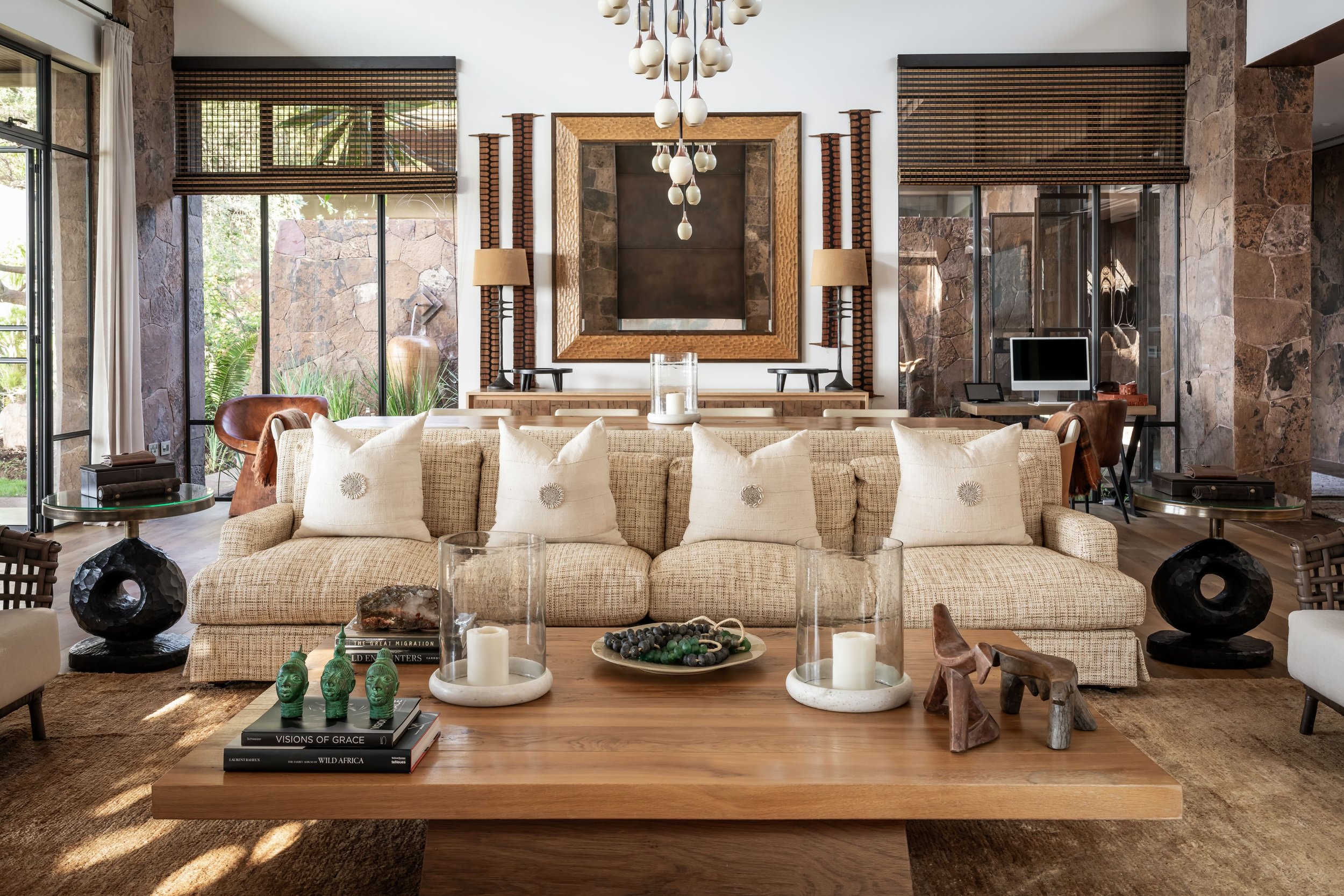
Kilima celebrates togetherness in a different register. The grand living and dining area feels more formal, and the suites feel more private; they vary in size and décor, and two of the five have their own heated pools. Where Milele is young and fun, Kilima has sophistication, like a well-dressed woman with understated style. The suites lean toward a traditional African feel, with handmade local art. The art programs in both houses are remarkable, and Kilima has the most impressive gym I've seen in a private villa. A one-bedroom outbuilding gives someone who wants more privacy their own space while still being part of the group.
Who It's For
These villas are made for multigenerational trips, milestone celebrations, friendmoons, and family reunions. When a family asks me which to book, the answer always comes down to the group and how they want to spend their time together.
Front Row at the Watering Hole
THE FEEL
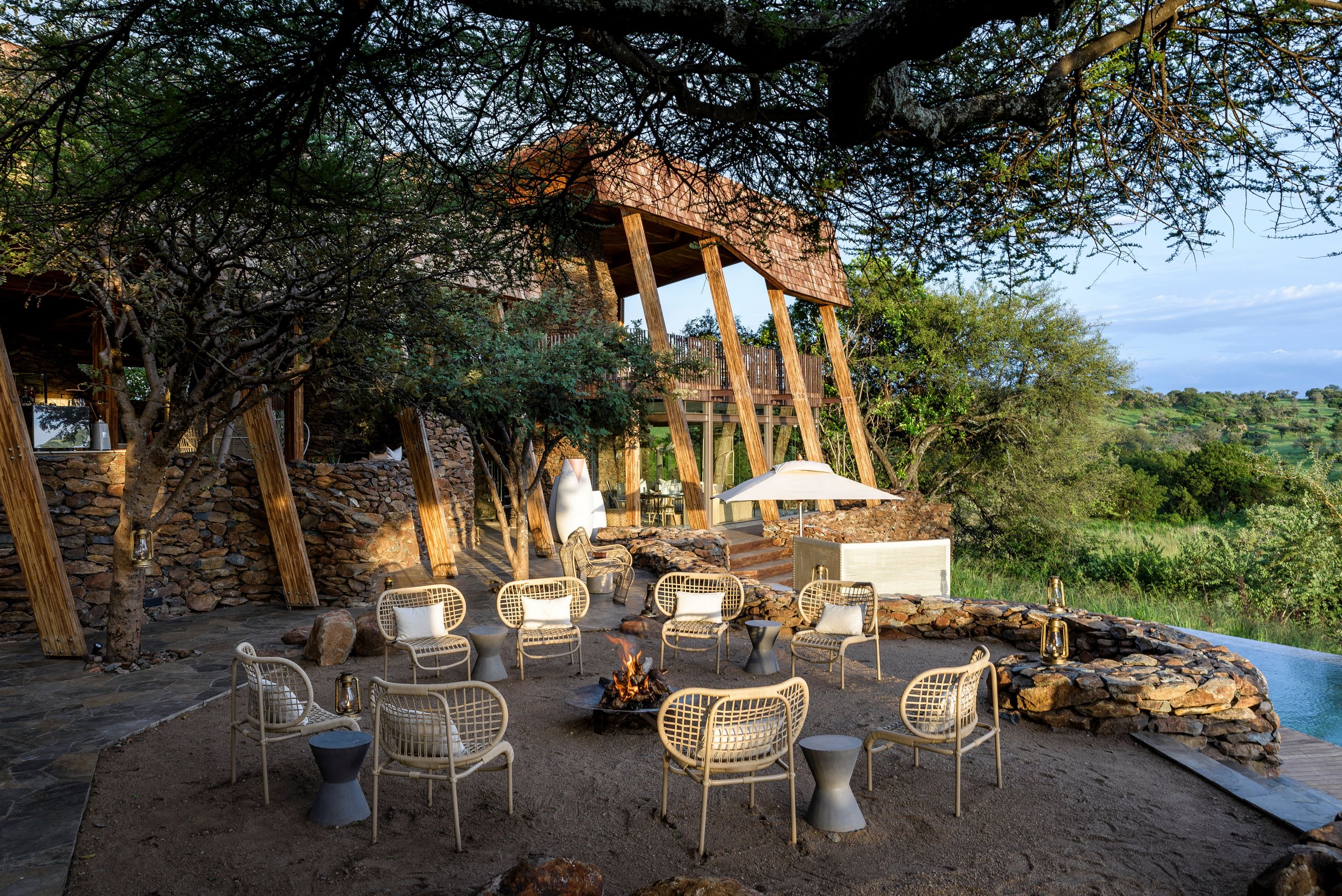
Faru Faru Lodge is built into a hillside above the Grumeti River, which in the dry season is more of a riverbed. The design is contemporary and minimalist, in neutral tones.
The lodge overlooks a watering hole that's never quiet. Resident hippos live in it, and zebras, wildebeest, and just about everything else come down to drink. During breakfast, we watched lines of zebras take turns drinking, each shift startled whenever the hippos crept toward them: a burst of air, a bark, and splashes as both held their ground. Animals move around and through the property constantly, so the wildlife viewing never really stops.
HIGHLIGHTS
The mostly open-air common area offers a cozy lounge and bar, dining room, wine room, and fire pit, plus an enclosed lounge for dining, relaxing, or a wine tasting when the weather turns. Of the two shared pools, one sits in a more private spot overlooking the riverbed. The other overlooks the active watering hole so while you dip and cool off, you watch the animals doing the same. The cool, dark spa features a full wall of glass that invites nature in during your treatment, and an efficient gym looking out over the plains.
WHERE YOU SLEEP
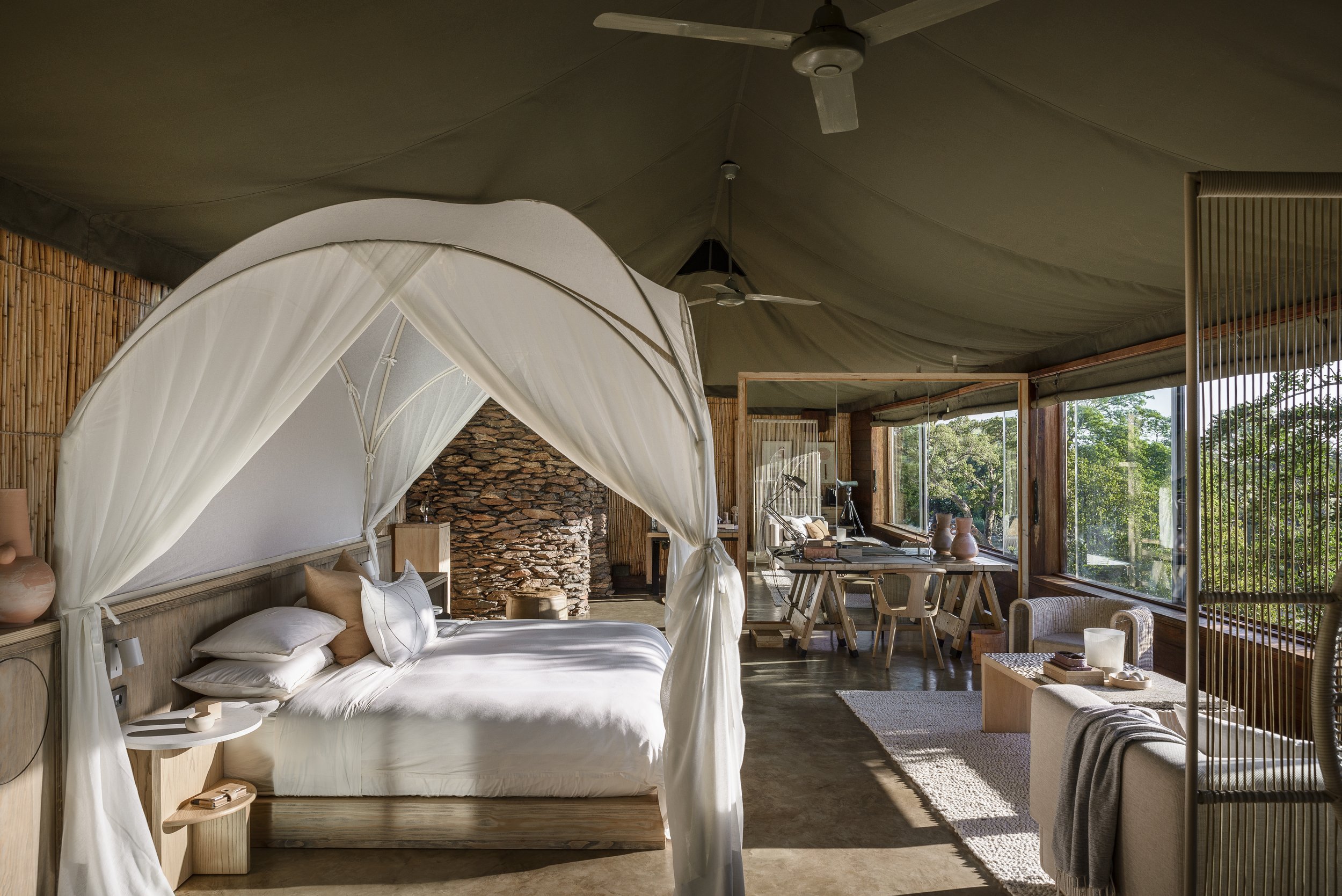
Not every suite faces the watering hole, and I know which ones to request. The others look out over the riverbed instead, with baboons, zebras, and impalas crossing the plain. A practical note: the baboons are clever enough to try your door handles, so always keep your doors locked. Suite 9 is really a villa: two bedroom suites identical to the others, plus an enclosed living area with a dining table and a sectional sofa overlooking the lodge's only private pool. For two couples or a small family, it's your own space without booking an entire house.
What sets Faru Faru apart from the tented camps is the walls. The suites are brick and mortar, with glass you can open to let in the views and the sounds. Inside, it feels like a familiar hotel room, with air conditioning and a separate toilet room, and the shower becomes an outdoor shower only when you slide open the glass door.
WHO IT’S FOR
Travelers who want to be in the middle of the action without true glamping. If canvas gives you pause, Faru Faru delivers the same wildlife with walls you're used to. Animals cross the property- buffalo, baboons, and elephants- so keep your doors locked and your night guides close to avoid unwanted encounters.
SABORA: Glamping at Its Best
THE FEEL
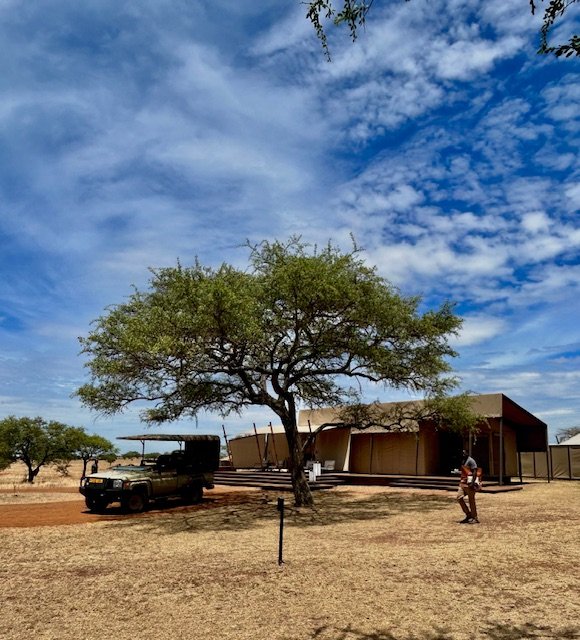
You pull up to Sabora along a driveway cut through the savannah, past a lone tree with a safari vehicle parked in its shade: the picture most people have in their heads before they ever book a safari.
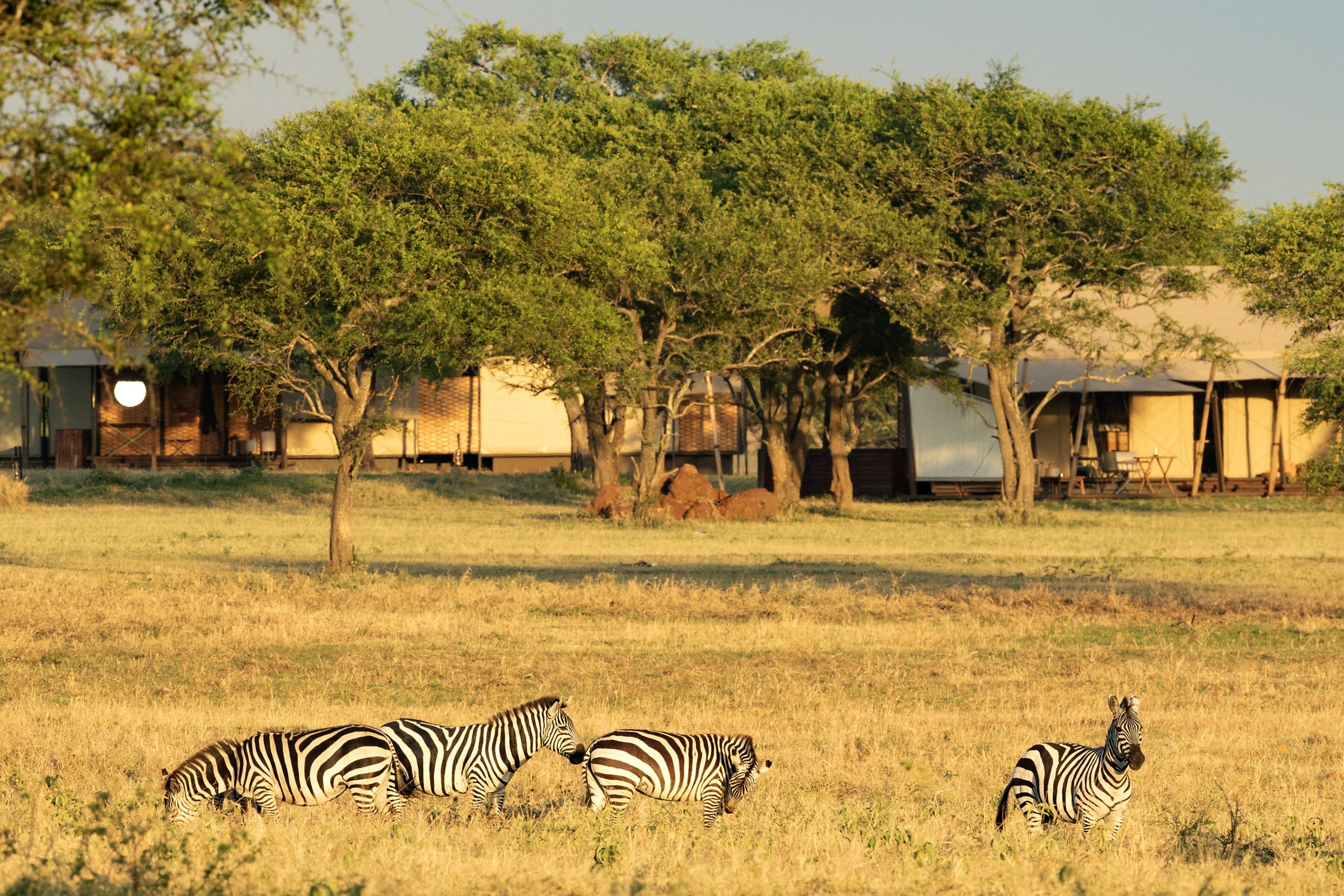
Sabora consists of nine tented suites on the open plains, directly on the Migration route, and every comfort comes with you under canvas. The tents are permanent, built on platforms and anchored with metal and wood rods, and the design is chic, contemporary, and upscale. The walls are canvas, so you never forget where you are.
HIGHLIGHTS
At breakfast, a plate of fluffy, petite pancakes with caramel sauce arrived for the table while hundreds of zebras grazed about thirty feet away, neighing, eating, drinking, and doing everything else animals do in the open. You aren't looking at nature here. You're sitting in it.
Animals pass all day, eating and tending their young, and you hear them, including the sounds of distress. It's hot, sunny, windy, and dusty, so the shade and privacy of your tent matter at midday. What people don't anticipate is that the animals' cycle of feeding, moving, drinking, and expelling is everywhere. You'll see it and smell it, and it's part of being here. Because the animals are this close, a guide escorts you whenever you move around camp, day or night. It lets you enjoy the wildlife right outside your tent without a second thought.
WHERE YOU SLEEP
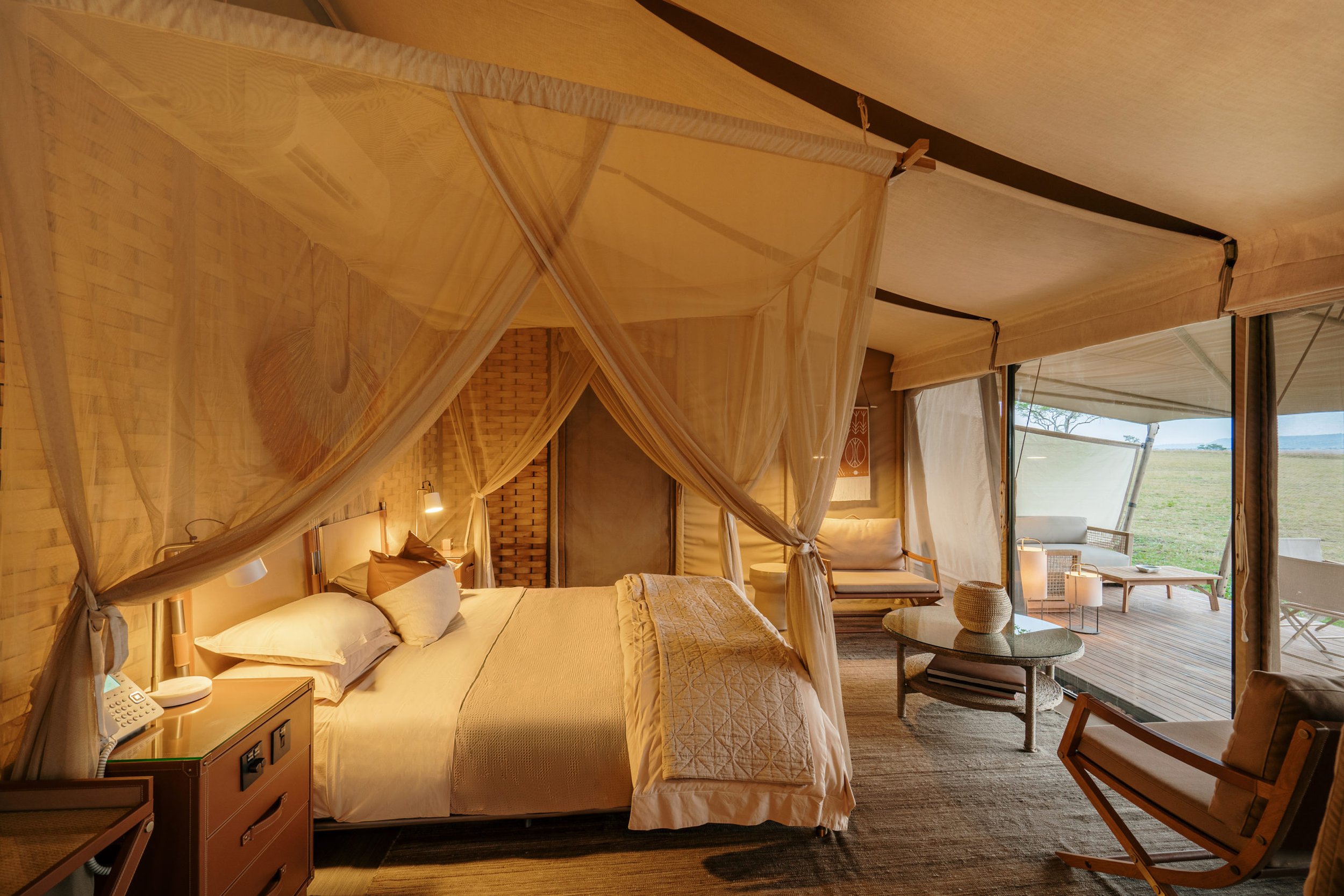
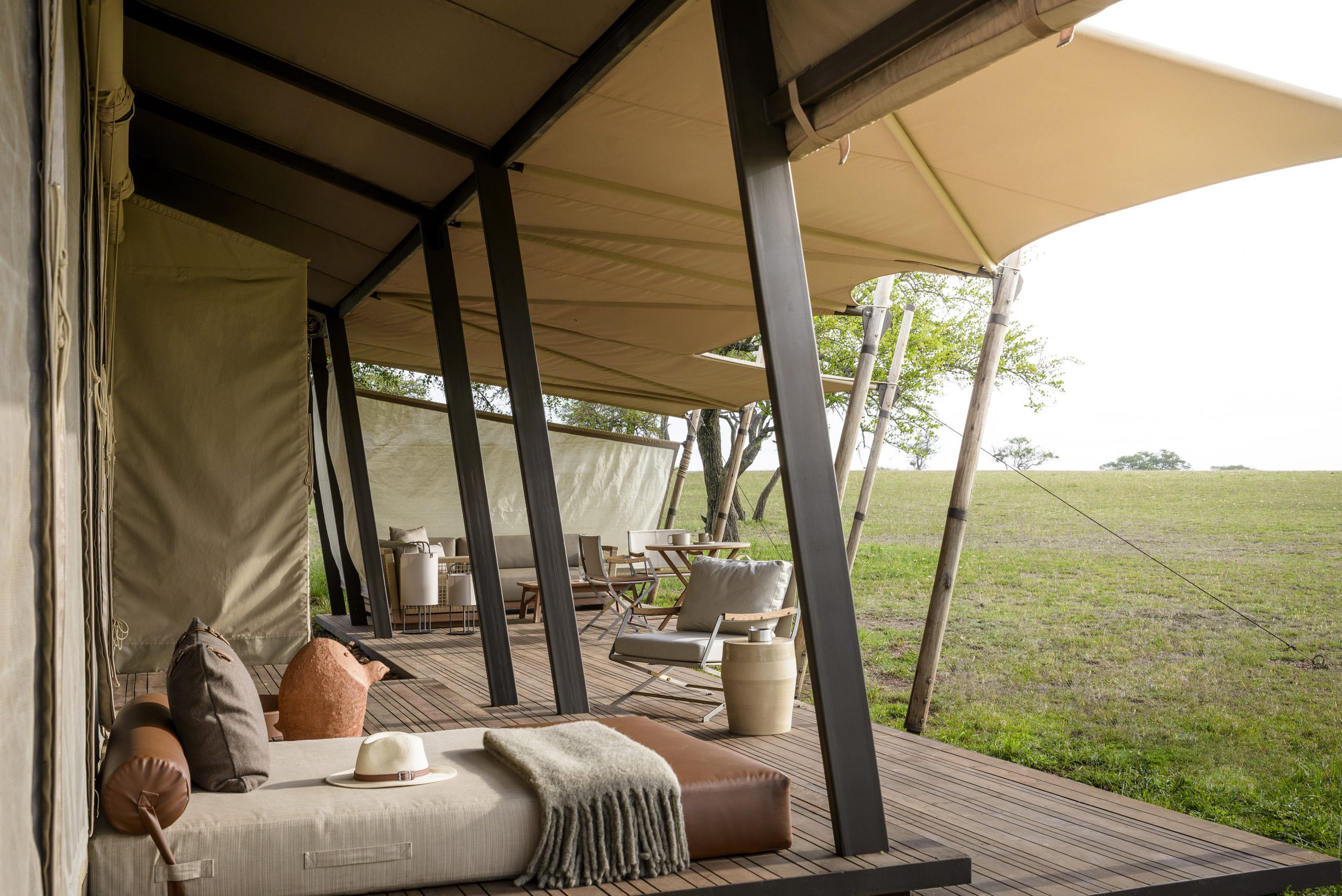
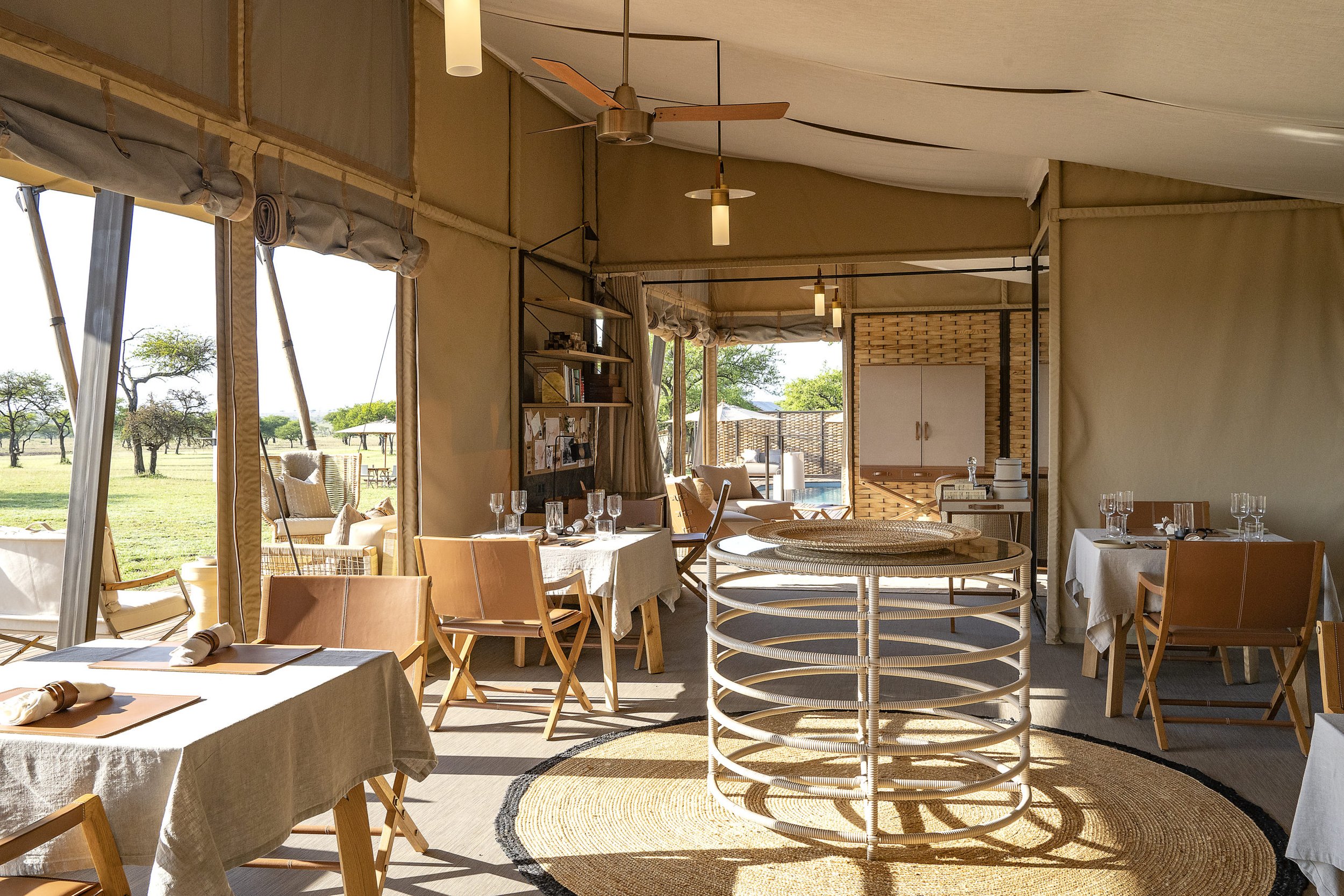
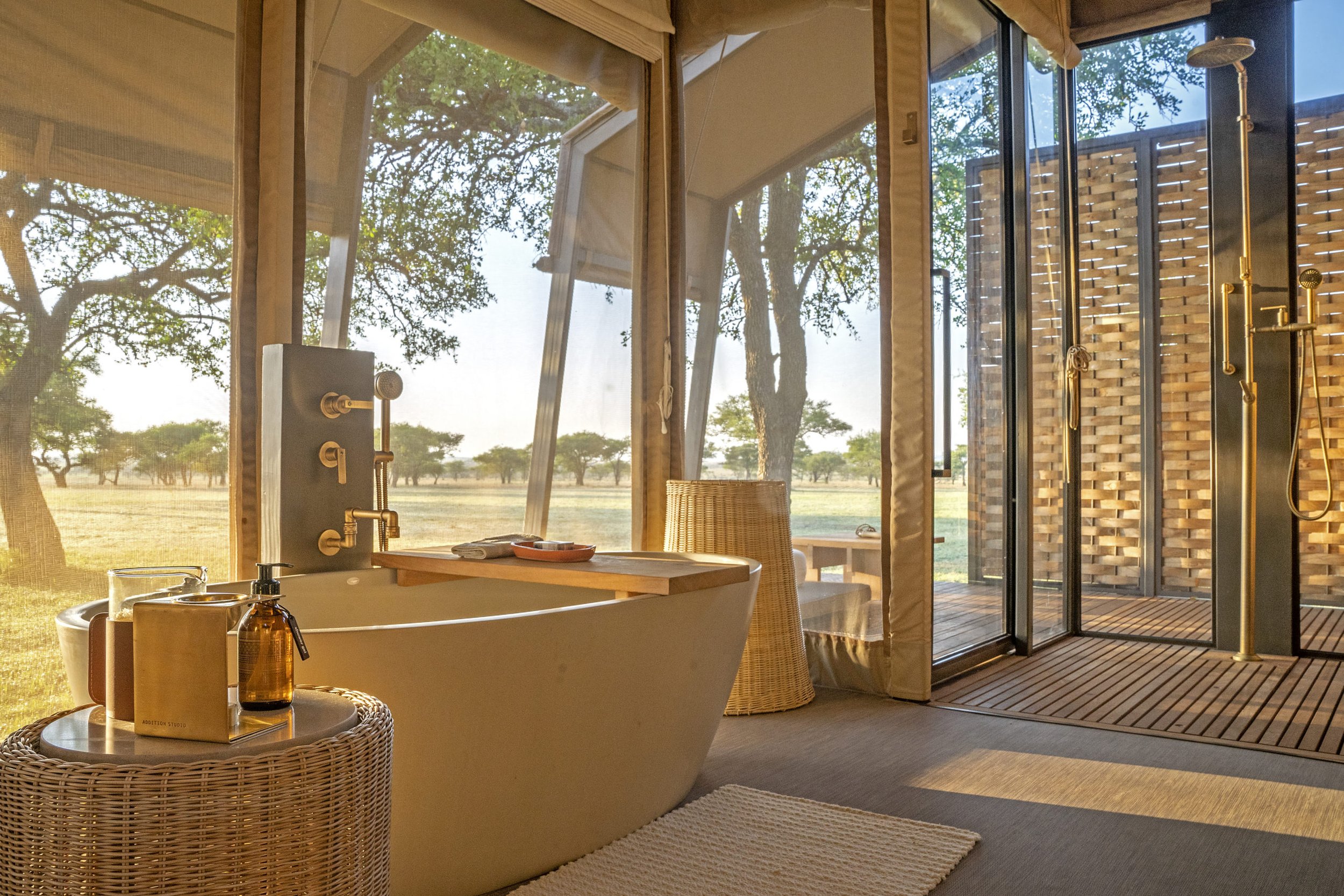
Each suite has its own private entry, and inside, screens, glass doors, mosquito nets, and curtains give you privacy behind the canvas. There's a kitchenette with a fully stocked minibar, a study area, and a bedroom with a king bed that opens onto a private terrace over the Serengeti. The oversized bathroom has a freestanding tub and an indoor-outdoor shower.
For a tented camp, the shared spaces are impressive: pool, dining room and outdoor eating area, small wine bar, yoga area and gym, wellness room for spa treatments, and a deli/kitchen stocked all day with wine, smoothies, and snacks.
Sabora also has an established relationship with all the Singita camps in Grumeti, so you can have breakfast at another lodge after a morning balloon ride, or go to Sasakwa for dinner. Choosing a tent doesn't mean giving up what the rest of the reserve offers.
Who it's for
Travelers who want canvas, zebras at breakfast, and the feeling of being out on the plains, with a king bed and a freestanding tub to come back to, and those who enjoy the nighttime rustling noises outside the tent.
Explore: The Edge of Your Comfort Zone
THE FEEL
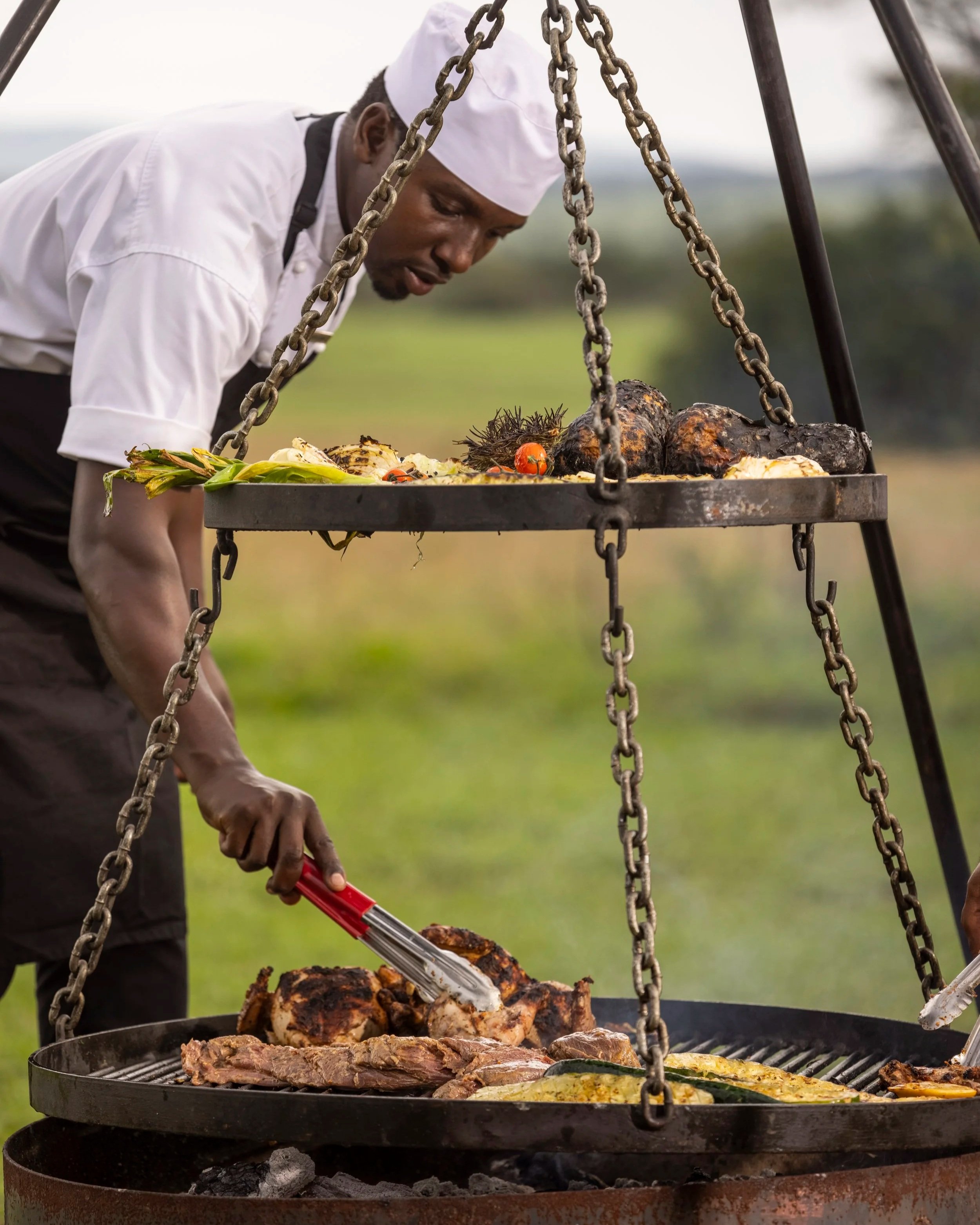
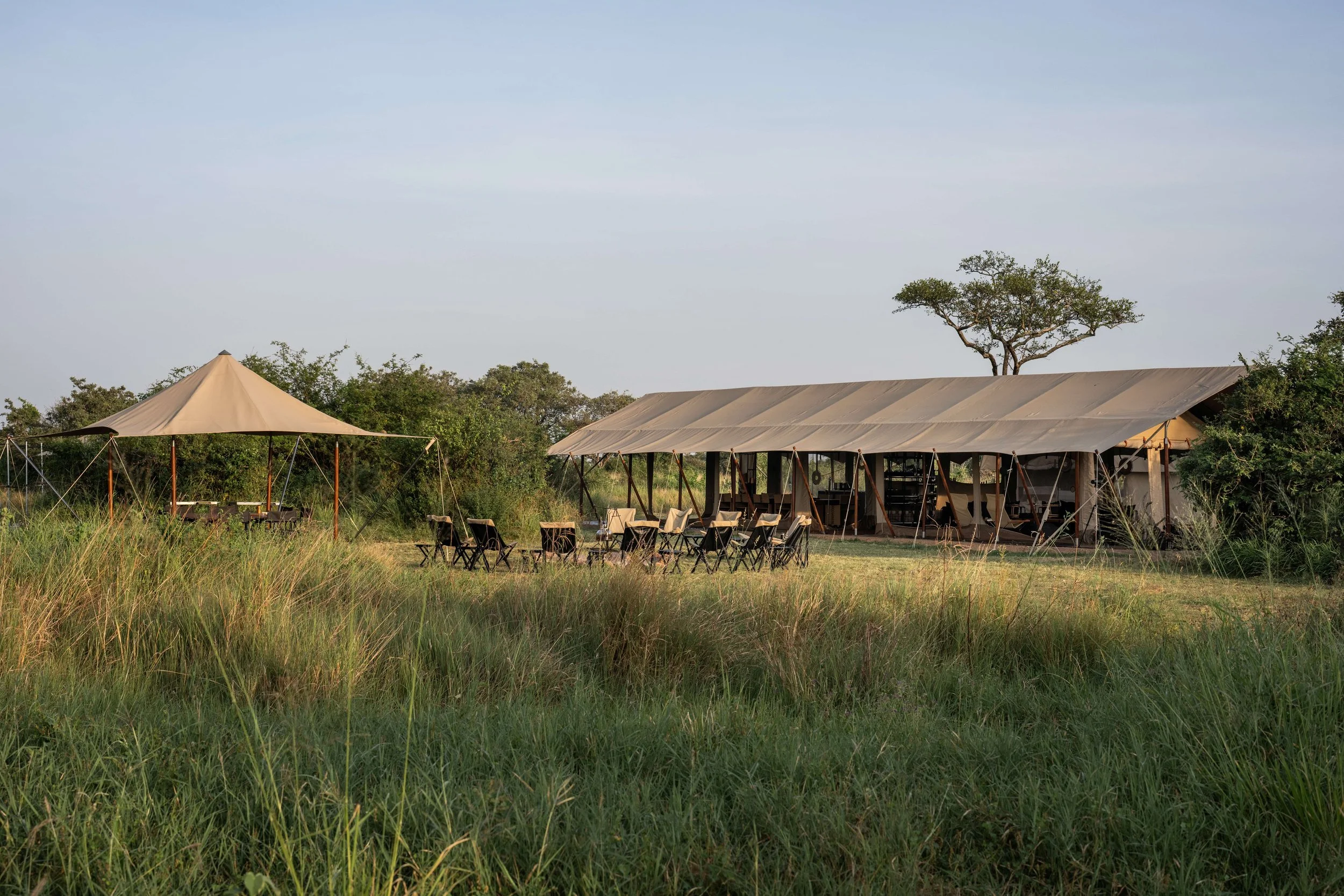
Travelers who want to push the boundary of their safari love Explore. Redesigned and reopened in 2026, it's a seasonal camp on the reserve's western plains, open about nine months a year and closed through the long rains from March to May. It hosts one group at a time among open plains, wildlife herds, and desert date trees, runs on solar power, and serves simple, fresh meals cooked over open flames.
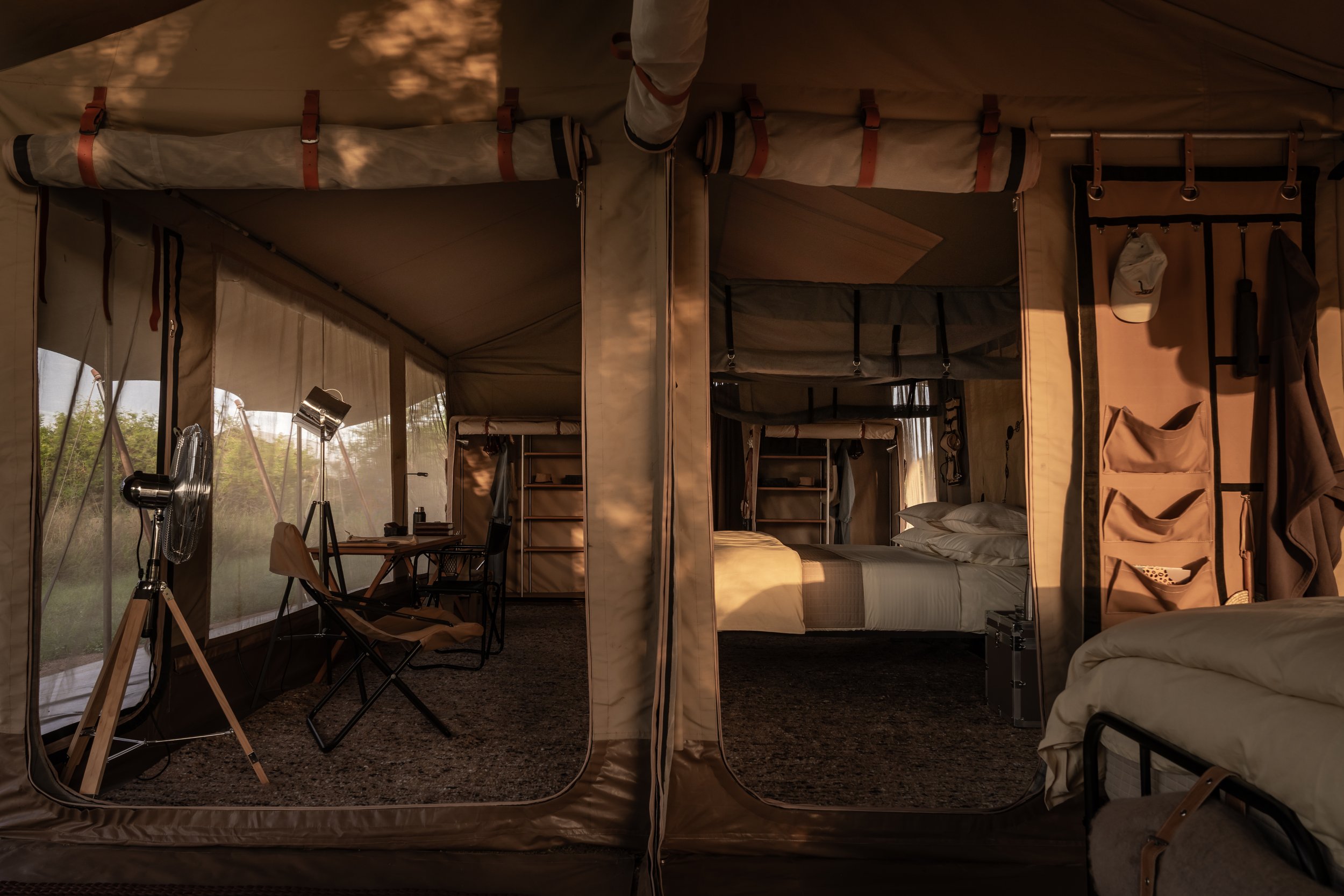
You don't give up the Singita experience here. There's an entire staff, a sommelier, and everything you'd get at any other Singita lodge. But this is glamping that sits closer to camping. There are no raised platforms, and you zip and unzip your way in and out of every space, including the restroom in the common area. You have a real mattress, but you know you're in a tent: the savanna wind whips through the screens, the chandeliers sway, and there's sand everywhere.
HIGHLIGHTS
Each tent has its own outdoor area, with a hammock and comfortable seating for the view. In the evening, everyone gathers around the barbecue and the fire in camp chairs. It feels like real camping, and that's the point.
WHERE YOU SLEEP
The canvas shower moves with the wind, and there's hot water as well as a bucket shower that feels genuinely authentic. The furniture is casual, like old-school campaign pieces, and the formal dining table sits on a mat laid over earth. There's no pool, just open-air showers where you'd wear a swimsuit for a cold rinse.
WHO IT’S FOR
Groups who want privacy and a camp of their own, or travelers who want a few days of something different to mix up their time in the Serengeti. It's a more adventurous approach to a luxury lodge.
Mobile Camps: Follow the Herds
I didn't stay in one on this trip, but for adventurous travelers, a mobile tented camp is a compelling way to experience the Migration. Crews take these camps down and rebuild them as the herds move through Serengeti National Park, relocating several times a year, from the southern plains during calving season to the north for the river crossings, and guests never see the move. Amenities are simpler, though service isn’t compromised, and in exchange you're positioned close to the herds. Migration chasers, repeat safari travelers, and those who love camping will appreciate this stay.
singita lodges talk
After five properties in five days, the lesson learned is that on safari, where you sleep isn't a backdrop to the trip. It shapes what you see, what you hear at night, how your days run, and with whom you share it.
What I appreciated most was despite distances, the lodges remain connected. Part of that is having one guide and one vehicle with you the entire time. A private vehicle can seem like an unnecessary expense at first, especially when other lodges let you share. Once you're there, you understand: it's about consistency, the long distances between properties, and a team making sure you're cared for.
At Faru Faru, I'd had an issue with the coffee machine in my room. When we moved to Sasakwa, the manager showed me to my cottage, and before anything else he demonstrated that the coffee machine was in perfect working order. He offered to do whatever it took to make sure I got my morning coffee. I couldn't resist poking at him. “How did you know about my coffee machine?” He joked right back, but the message underneath was clear. The lodges talk. It isn't a set of separate teams. It's one team, and you feel that consistency and care across the whole journey.
WHY CLIENTS DON’T PLAN THIS ALONE
Africa is full of nuances most travelers don't have time to learn: which camp suits a nervous first-timer, when the herds are likely to be where, how to route between countries without losing a day. Booking through me means you don't have to. I know the questions to ask, and I have the relationships to act on the answers.
I work directly with Singita's team- and many other local suppliers in Africa. When I got home, I scheduled a call with them to apply what I'd learned to two clients' upcoming trips, so they'll have the moments I loved most, plus a few surprises. That's the value of an advisor who has been there.
Planning begins with a Discovery Call about who's traveling and how you want the trip to feel. From there, I handle everything, from the right suites to the bush flights and a seamless customs and immigration experience. The best Grumeti properties and Migration dates book a year or more ahead so start planning early.
Anyone can book a destination. Well Placed Travel finds your perfect place.
It starts with a conversation.
Thanks to Singita for photo usage.
