
Japan Did This to Us: A Honeymoon Story
Well Placed Travel client spotlight for a tailor-made Japanese itinerary
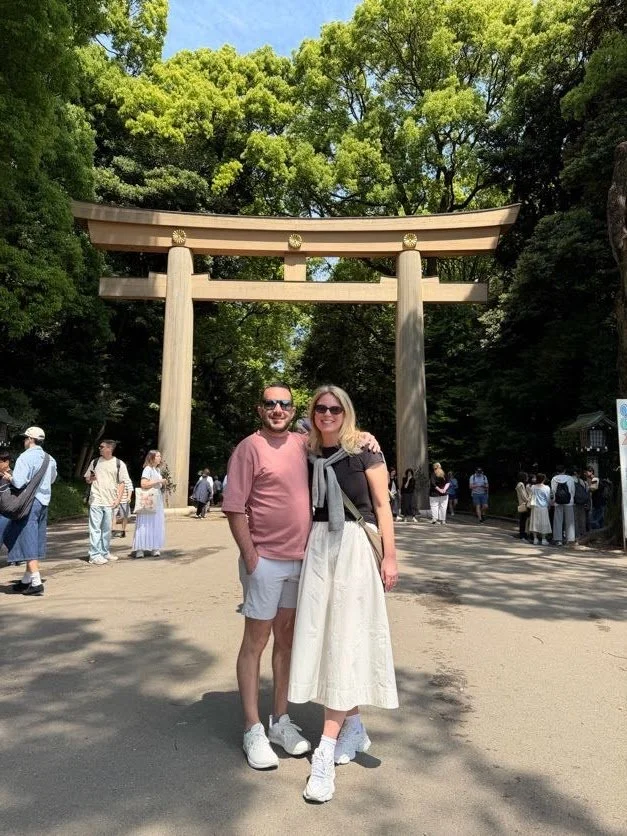
Most trips give you memories. Japan gives you a before and after.
It hands you something extraordinary every few hours- a century-old sushi restaurant, a moss garden that moves people to tears, a fishing boat that ends at a table where the owner cooks what you caught- and then acts as if this is perfectly normal. Alex and Mike came home unable to explain it properly. They’ve been trying ever since.
How a Honeymoon Gets Built
Alex and Mike arrived at the Discovery Call with a clear wishlist: sushi, a Japanese baseball game, live music, and what they called ‘a day in the life with locals.’ Food was a priority and one of the primary reasons they’d chosen Japan in the first place. They wanted immersion balanced with genuine rest. And, they came in thinking they wanted time in the mountains north of Tokyo.
But mountains weren’t what the Discovery Call revealed. That conversation goes deeper than logistics, designed to understand not just what clients want to see, but how they actually live. They spend summers at the shore and shared a memorable Key West trip with live music, warm weather, wandering into bars, talking to strangers. That answer said more than any wishlist could. Beach people, not mountain people. With the initial suggestion of Okinawa, the response was hesitant. “It wasn’t initially on our list,” Alex said, “but when we were talking to Karen and she was asking us about our interests—we go to the beach so much—and [she’s] like, why don’t you go to the water?” They became evangelists.
The itinerary that emerged: four nights in Tokyo, two nights in the Mt. Fuji foothills, with a helicopter transfer layered in as a wow moment neither of them saw coming, four nights in Kyoto, and three final nights in Okinawa.
Tokyo: Better Than Expected
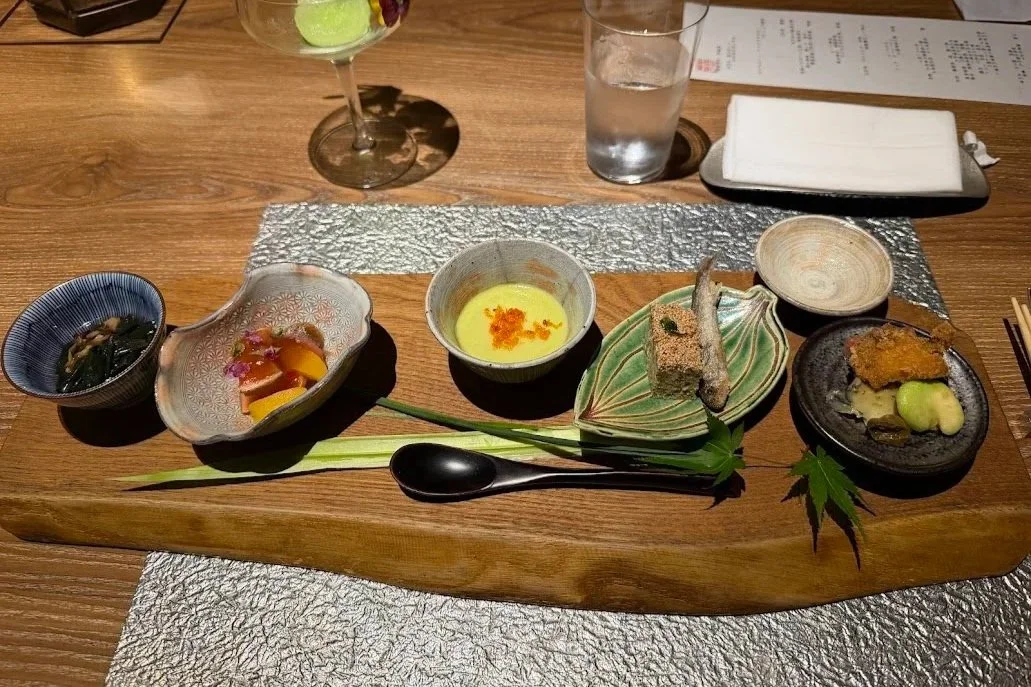
They landed at Haneda and were transferred to a private car. The Prince Gallery Tokyo Kioicho, a Forbes Five-Star property near the Imperial Palace Gardens, became their base. “Every time we went back, it felt like, okay, this is zen,” Alex said.
The first full day brought a private guide who walked them through Meiji Shrine, Harajuku, Aoyama, and Japanese public transit- the kind of orientation that teaches you to read a city, not just see it. By the end of the Tokyo they were navigating Shinjuku Station without a second thought. Their guide was reportedly astonished. “She was blown away,” Alex laughed. “We’re like, give us some credit.” Every itinerary is built around the clients- some prefer a car waiting at every turn, others want to move through a city the way locals do. Alex and Mike root firmly in the second camp, and Japan rewarded them for it.
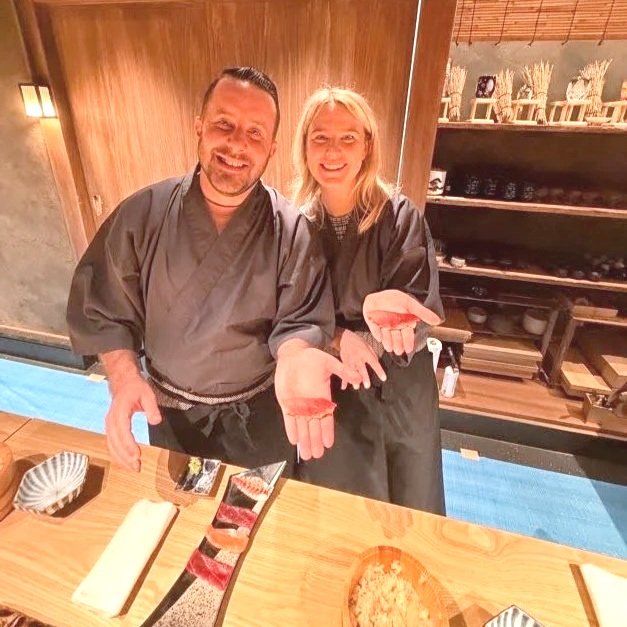
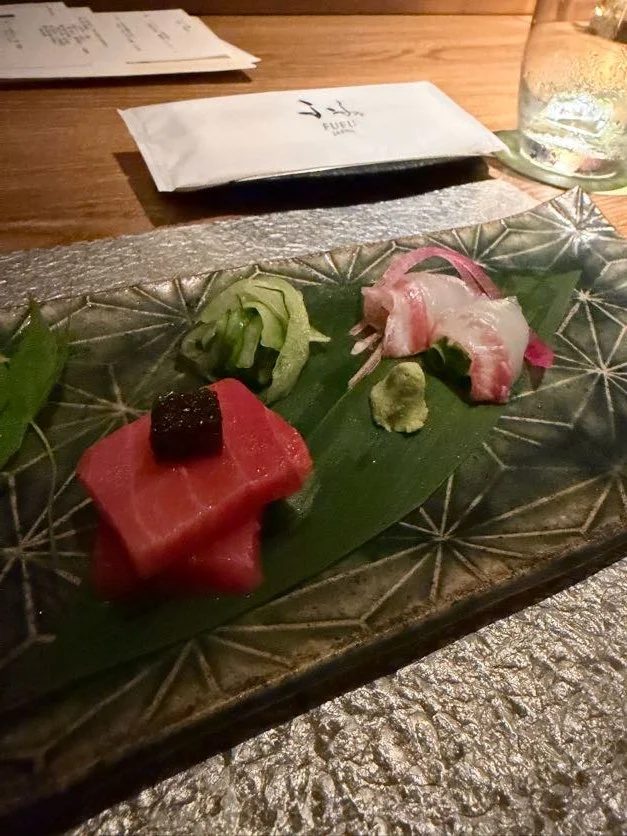
That evening: a private sushi masterclass at a Tsukiji restaurant with over a century of tradition behind it. Chef, interpreter, wasabi tasting, the philosophy behind every cut. “That was the best sushi we had the whole trip,” Alex said, which says something for two weeks in Japan.
One morning, Alex slipped away for a head spa, a deeply Japanese wellness ritual that the local team had specifically sought out for her. Unlike a standard scalp massage, it’s a clinical, multi-step treatment: microscopic scalp analysis, steam, deep cleansing, specialized serums, and electroporation technology, all designed to restore the scalp from the root up in about two hours. “My head felt so light,” Alex said. “It was incredible.” She spent the rest of the morning wandering Ginza and made her way back on her own, something she was very proud of, and rightly so.
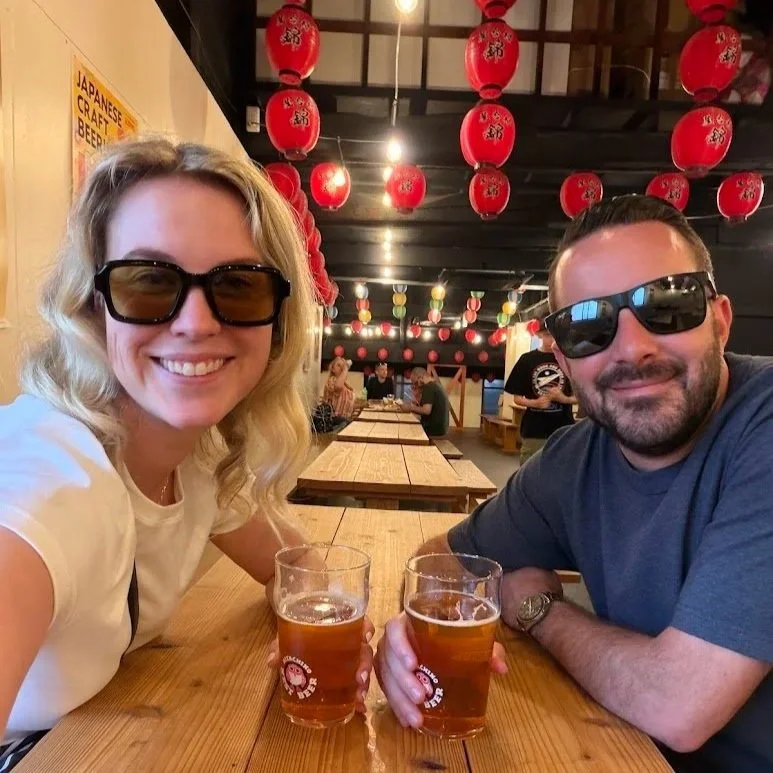
The afternoon became a private sake tasting led by one of Tokyo’s most respected authorities on the subject- an author, academy chair for 50 Best Bars, and someone the local team knows personally and calls on when the experience needs to be genuinely extraordinary. Ten styles, brewery stories, an education dressed up as a very good evening. He spent the rest of their trip sending bar recommendations in Kyoto.
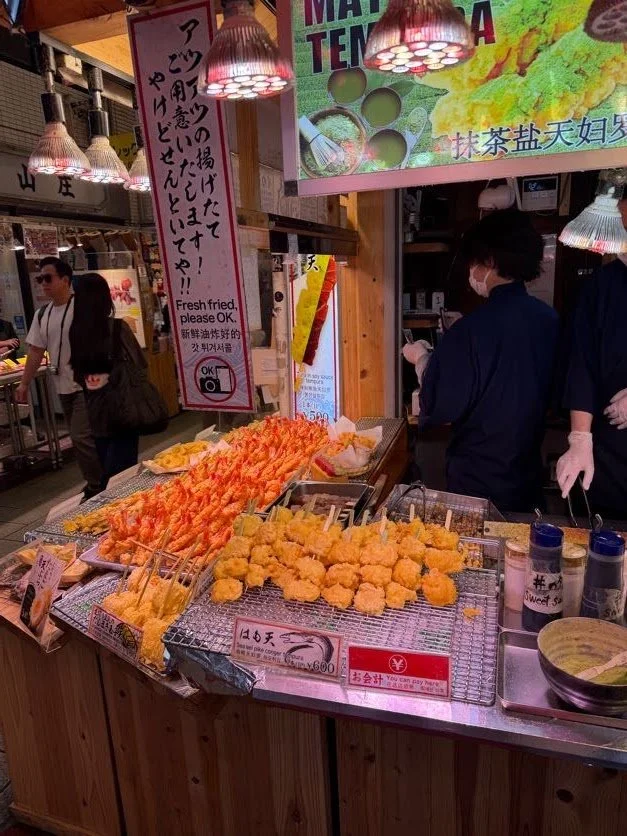
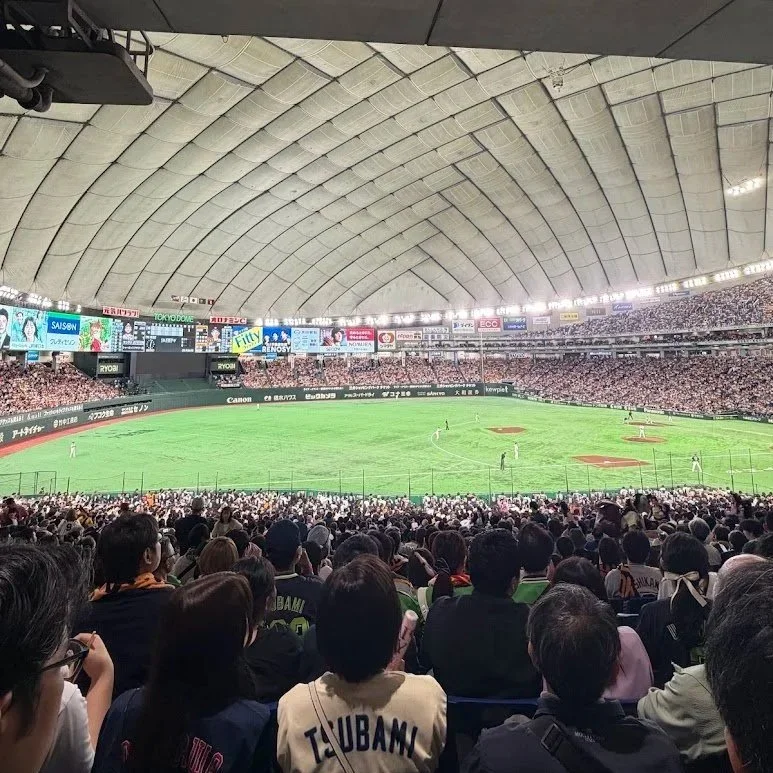
The last full Tokyo day brought two of the experiences they’d come for. At the Tsukiji fish market, Mike found what he called the best single bite of food of the entire trip: Wagyu skewers from a market stall, still sizzling. “I still can’t believe how good that was,” he said. That evening, Tokyo Dome: Giants versus Yakult, organized cheering sections, umbrellas, two Americans figuring out the choreography and switching allegiances mid-game. By the time they left the stadium, the city felt like theirs.
Eighty Days a Year
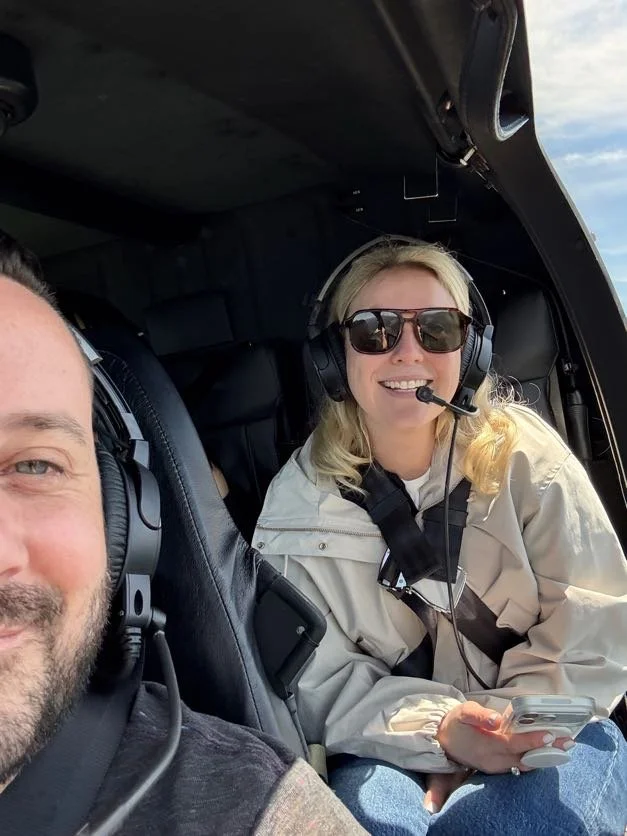
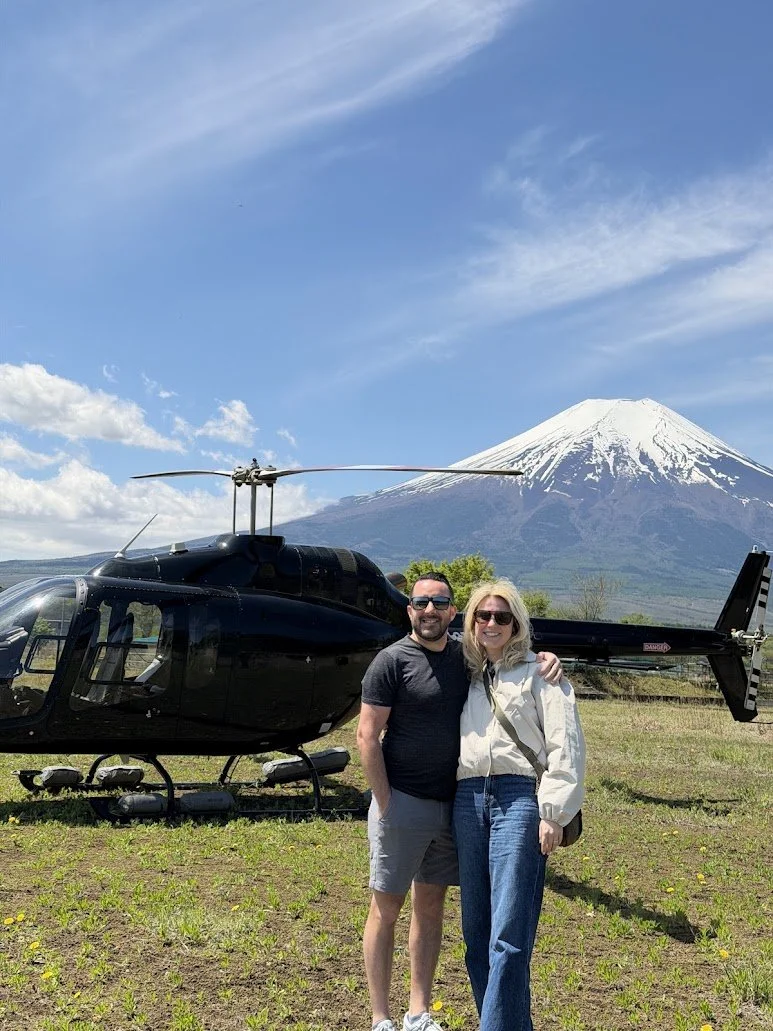
The transition from Tokyo to the Mt. Fuji foothills was by helicopter, a detail neither of them knew was coming when they first started planning.
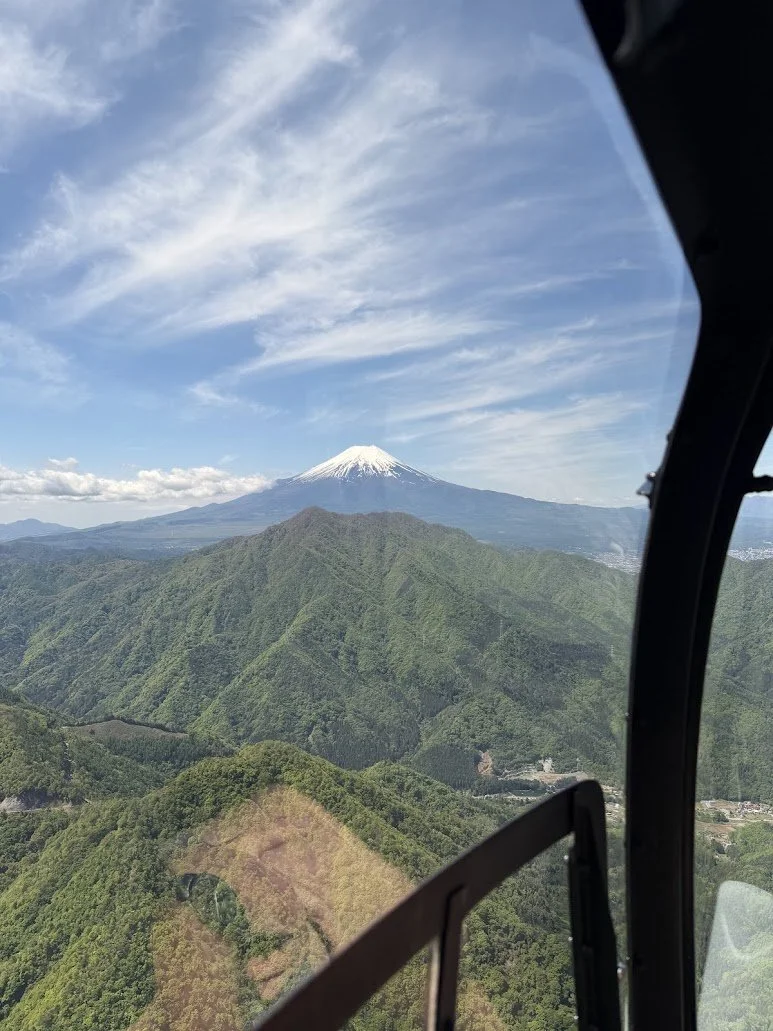
For the first few moments after takeoff, Tokyo spread out below them in every direction: the towers, the expressways, the density of a city that holds 14 million people. Then, gradually, it gave way to forest and lakes. Then, Fuji appeared: the full summit, perfectly clear, filling the window. Mike had been filming on his phone. He stopped. He put the phone down and held onto the view with both eyes.
He didn’t learn until he was home researching that Fuji visibility occurs on only 80 days per year. “Fuji visibility was a 10 that day,” he said. “I forgot about the weather, and then two days before I thought, oh no, what if it’s cloudy? And then it was just perfect.” Two days later, from their ryokan window with Fuji a ten-minute walk away, the mountain was completely hidden in a cloud.
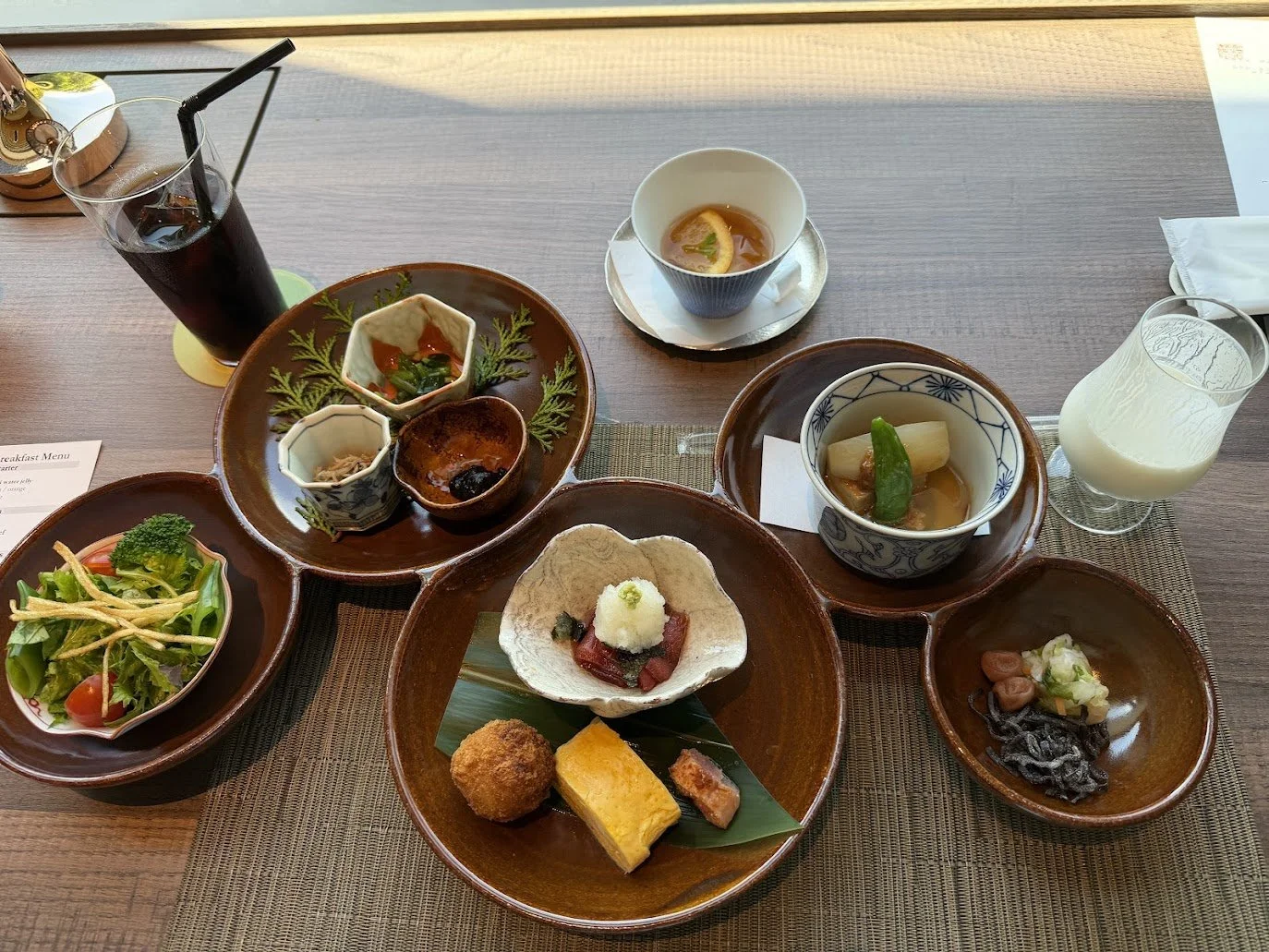
Fufu Kawaguchiko is a ryokan, a traditional Japanese inn built around the experience as much as the room. Their suite had a private outdoor bath made from volcanic stone quarried from Fuji itself, a bioethanol fireplace, a balcony that opened onto the forest. Dinner and breakfast were included, served in long, unhurried kaiseki style. By the second night they’d learned the unwritten rule: wear the loungewear. “First night we were the only ones not in loungewear,” Alex laughed. “Second night, fully decked out.”
Their driver that day went well beyond the brief, finding a locals-only soba restaurant that felt like eating in someone’s living room, and a small family winery that doesn’t appear in any guidebook. Some of the best moments in travel can’t be searched for. They can only be unlocked by someone who knows which door to open.
Kyoto: You’ll Feel It Before You Can Name It
The bullet train from Mishima took just under two hours. A drink on the tray table didn’t move a millimeter. Mike noted this.
Hotel The Mitsui Kyoto, a Forbes Five-Star, Michelin Three-Key property opposite Nijo Castle, impressed the couple. Alex said simply: “I think that’s the best hotel I’ve ever stayed at.” The garden from the lobby didn’t look real. The stone soaking tub. The castle view from bed. These are the kinds of details that stay with a couple long after they’re home—and that Well Placed Travel still thinks about when recommending a hotel in Kyoto.
Their Kyoto days were shaped by their guide, one of the city’s most sought-after cultural guides, featured in Vogue, with a client list that spans the globe and a calendar that is rarely open. Securing time with her is one of the advantages of working with partners who have spent years building the right relationships in Japan. She took them somewhere most visitors never go.
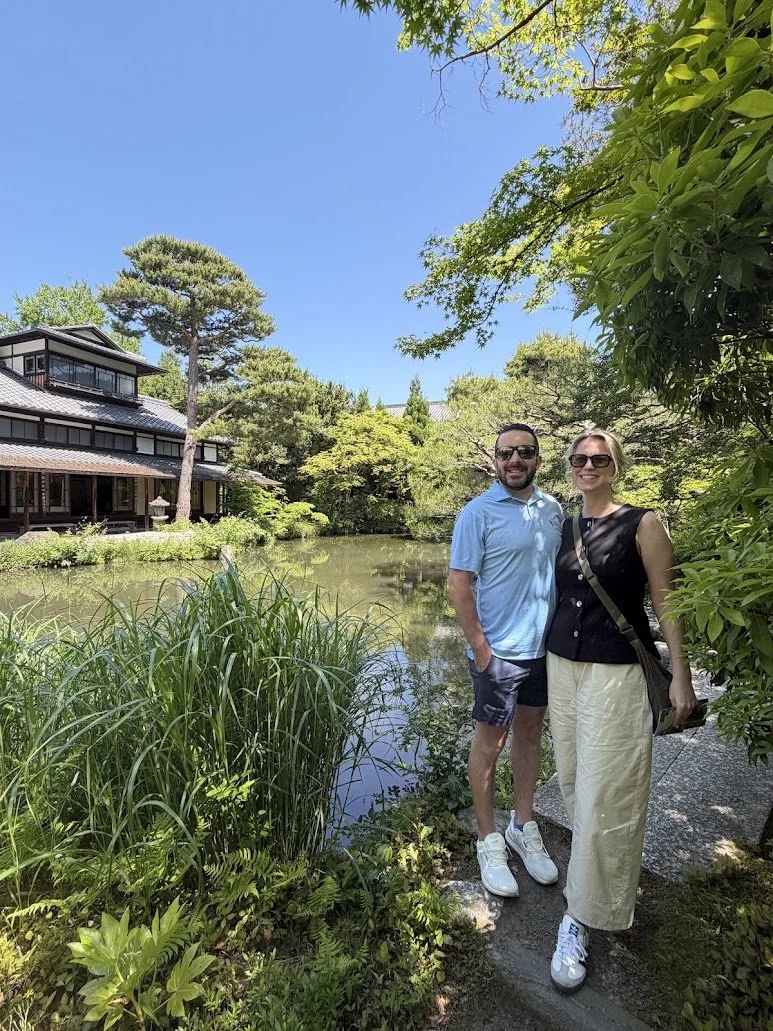
The first stop was Saihoji, the Moss Temple, a World Heritage site that requires advance permission to visit and accepts only a handful of guests at a time. You enter, you write a sutra, and then walk the garden.
Alex cried. Not the quick, surprised kind, but the slow, overwhelming kind that happens when natural beauty catches you off guard. “The green, the sereneness,” she said later, still searching for the right words. “It was just so overwhelming.” Saihoji is approaching its 1,300th anniversary. It has been this still, this green, this quiet, for longer than some nations have existed.
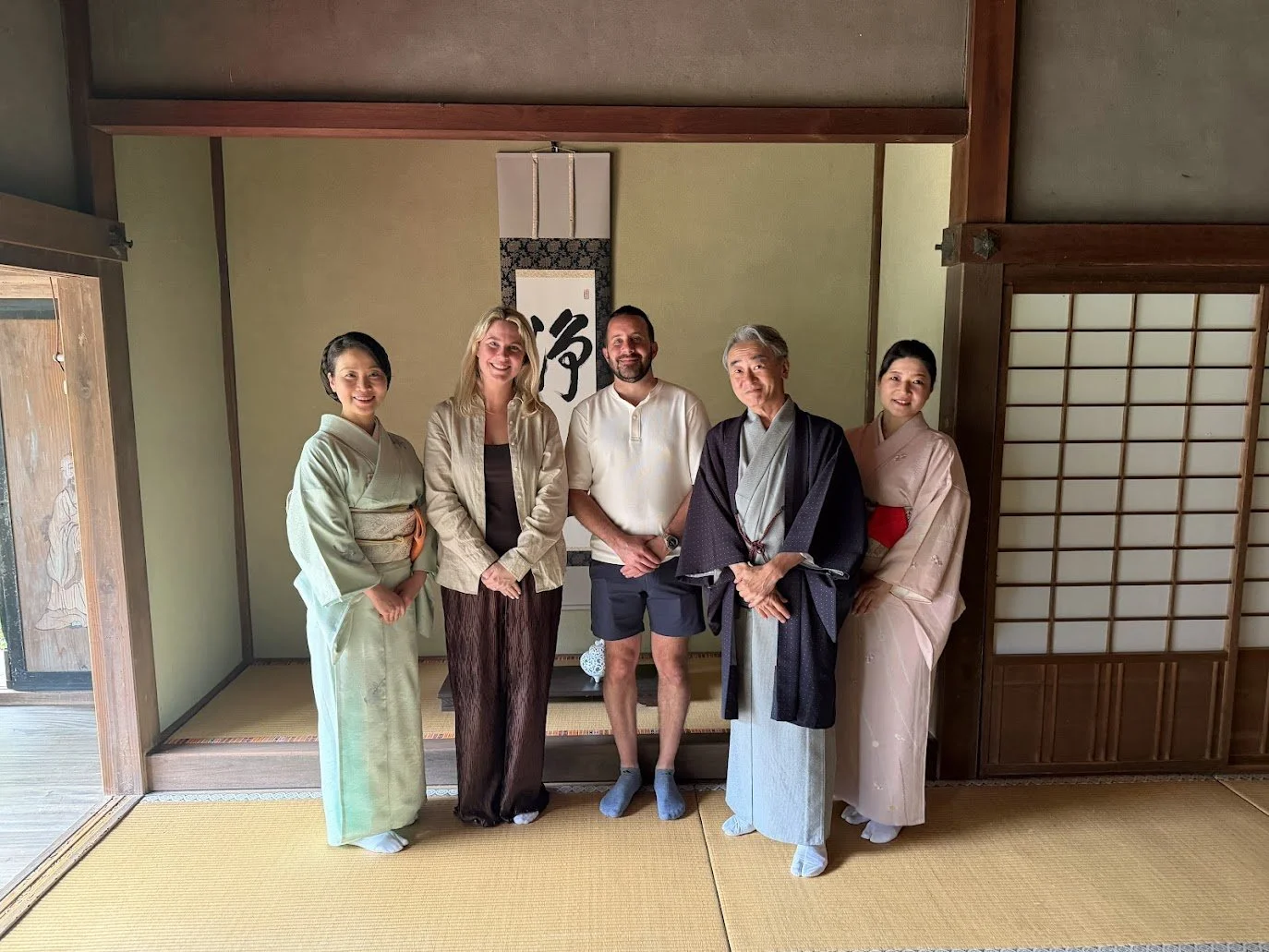
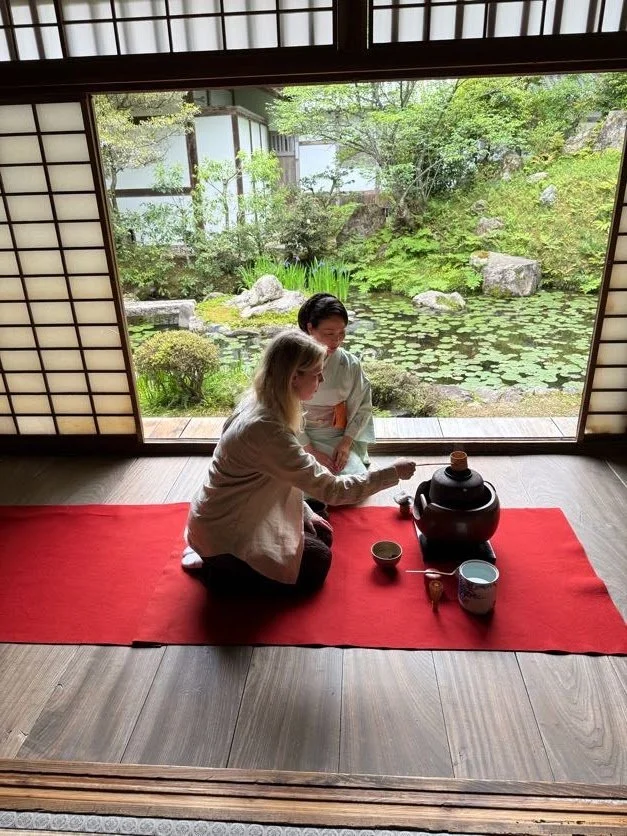
A private tea ceremony followed at the aristocratic Hamuro family temple in a room normally closed to the public, one-on-one with a tea master, no crowds, no performance. “I think this, the helicopter, and the fishing day are the three things people ask us about most,” Alex said.
Their guide also took them along the Philosopher’s Path, a stone walkway that follows a canal through quiet gardens and local neighborhoods, uncrowded even in spring, and to the former home and gallery of artist Hashimoto. The evening ended at Bee’s Knees, a twelve-seat speakeasy down an alleyway and up a narrow staircase, vinyl hip hop on a real turntable. They stayed the full two-hour allotment.
The final days at the Mitsui were built around the hotel itself with a private onsen, couples massage, and twelve courses at TOKI where Chef Tetsuya Asano builds tasting menus around Kyoto’s water and seasonal ingredients. A honeymoon dessert arrived at the table unannounced.
Okinawa: Eat What You Catch
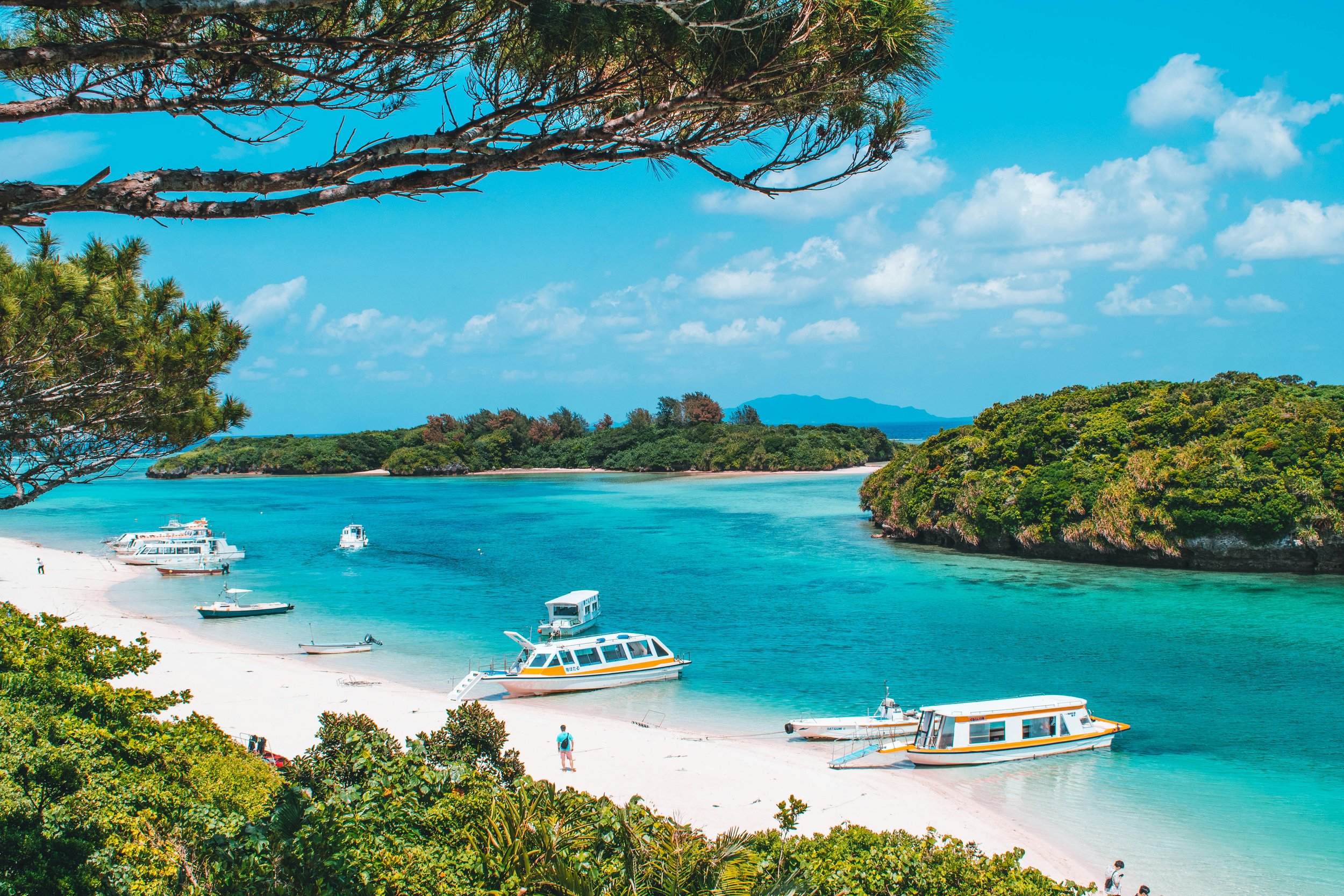
Photo credit Romeo A on Unsplash
Okinawa hadn’t been in the original plan. People asked why they were going. By the end of the trip, they had answers.
The Halekulani Okinawa stretches nearly a mile along the Okinawan coast, with multiple infinity pools and every room facing the East China Sea. Their suite had a balcony over the water and a soaking tub positioned in front of a full wall of glass. The first day was rainy and they let it be. The second day cleared and they found the adults-only pool and the pina coladas.
But the day both of them named, without hesitation, as one of the best of their lives: the fishing day.
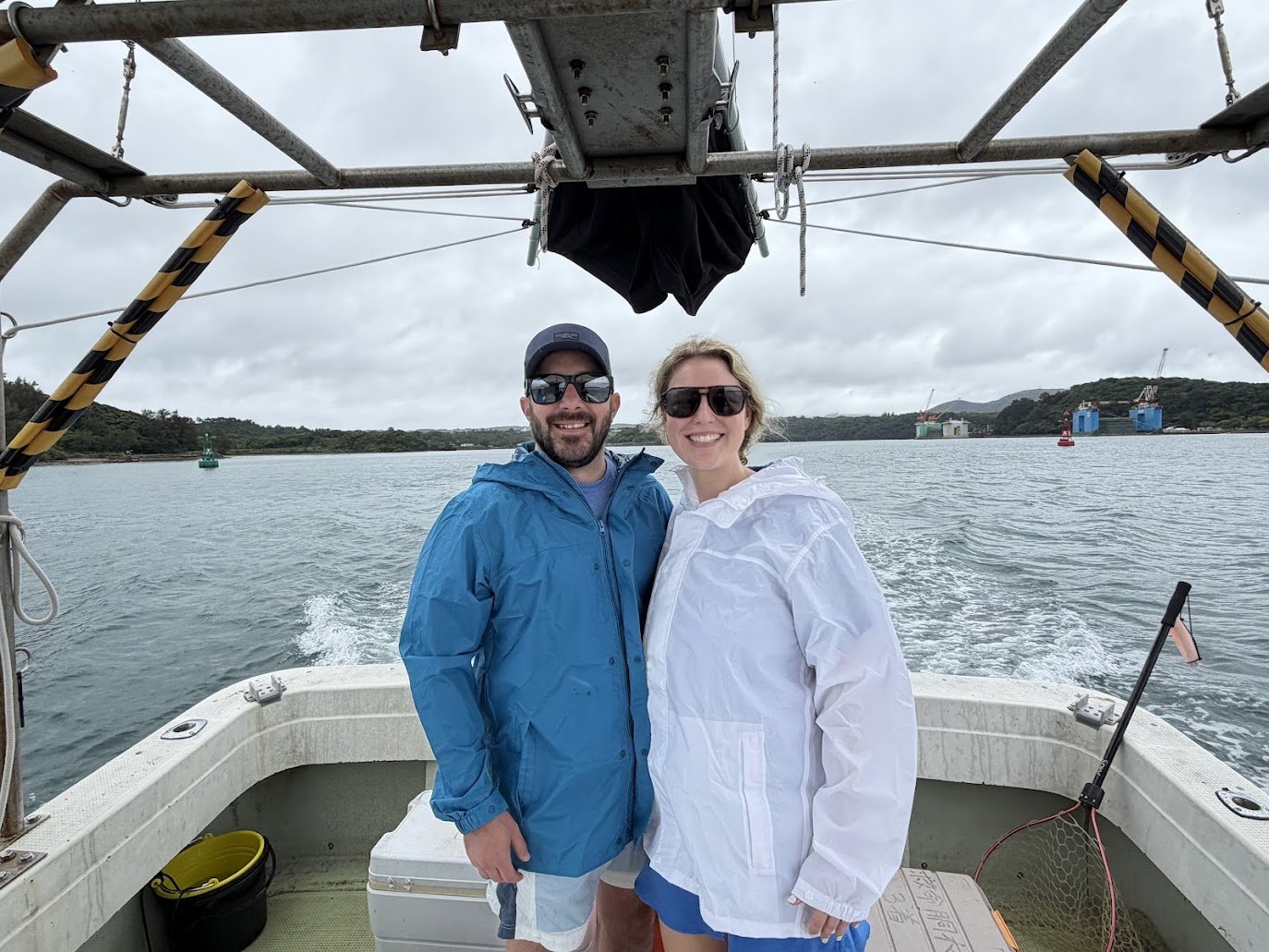
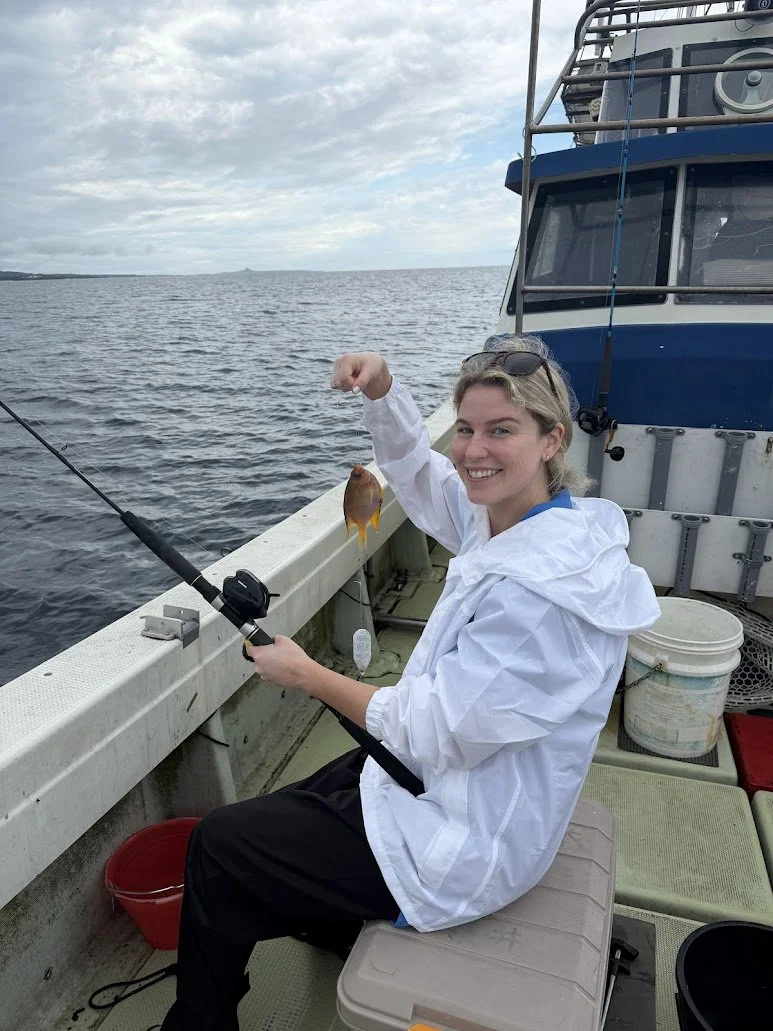
This is where having deeply connected local partners changes the nature of a trip. Their guide, a marine expert who has worked with BBC’s Blue Planet documentary crews, isn’t someone you find on Google. He’s someone the local team knows, trusts, and calls on when the experience needs to be genuinely extraordinary. They boarded a small fishing boat and went offshore, stopping at specific spots, fishing the way locals fish. Mike caught fish. Alex caught more.
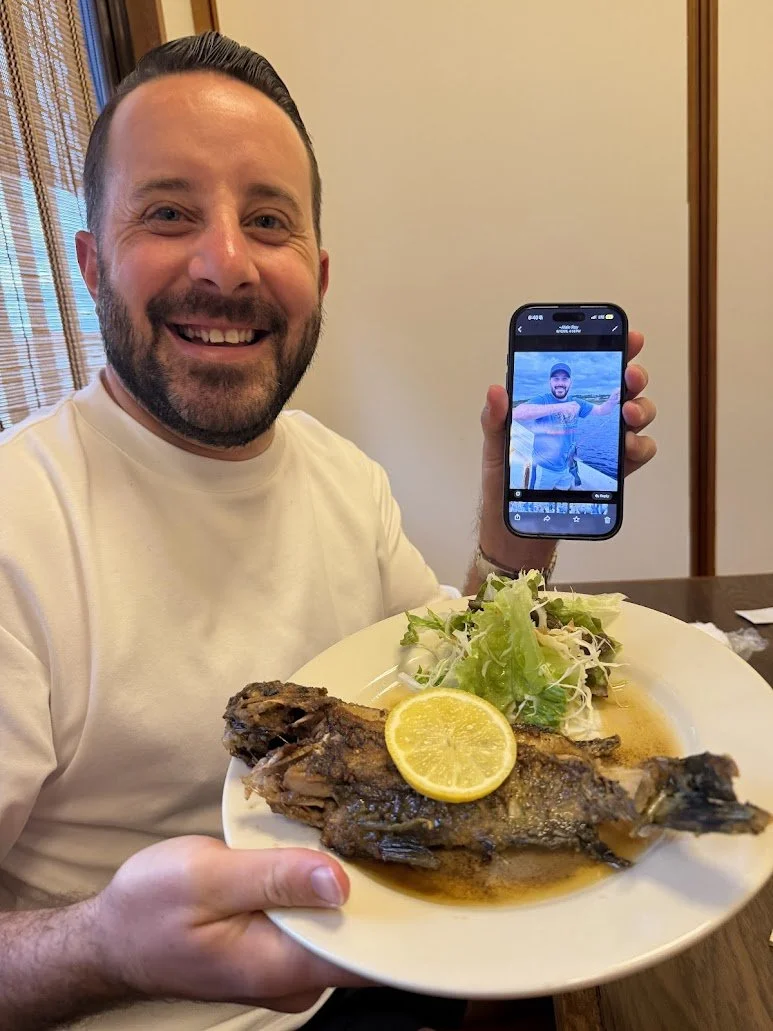
When they returned to port, the captain brought their catch to a small seafood izakaya where the owner and captain’s friend, cooked it on the spot. They sat with the fishermen, ate what they had caught, drank beer, and communicated through their guide in the unhurried way strangers become something closer to friends. The owner photographed them and posted it to the restaurant’s Instagram.
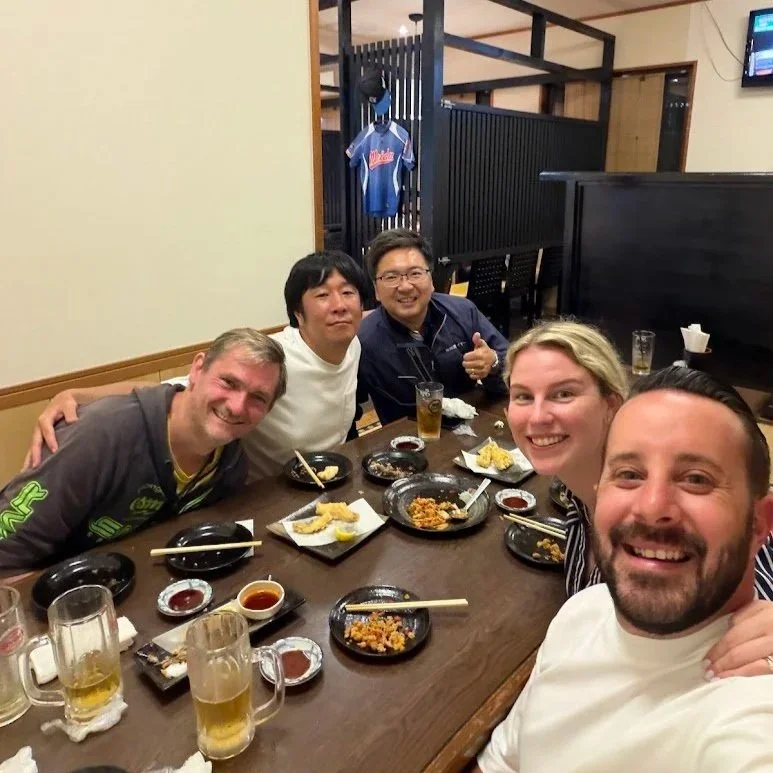
“I felt like Anthony Bourdain,” Mike said.
“Sharing a meal, sharing drinks, sharing stories. One of my favorite days of my life.”
Their driver, who had been waiting at the dock, produced a small dragon figurine when they got back to the car- a traditional Okinawan talisman, bought while they were out on the water. He’d thought of them while they were gone. “He just gave it to us,” Alex said. It now sits above their door, exactly where it’s supposed to be.
The People Behind the Trip
One thread ran through their entire debrief: the team. The Japan ground partners were in contact every single day- always present, never intrusive, whatever was needed. “We got to the point where we were sending them pictures of where we were,” Alex said. “Like they were our friends.”
This is the hosted travel model at work: Well Placed Travel collaborates with carefully vetted local partners in each destination, who bring their own relationships, expertise, and access to experiences that don’t appear in search results. “You made it happen,” Alex said.
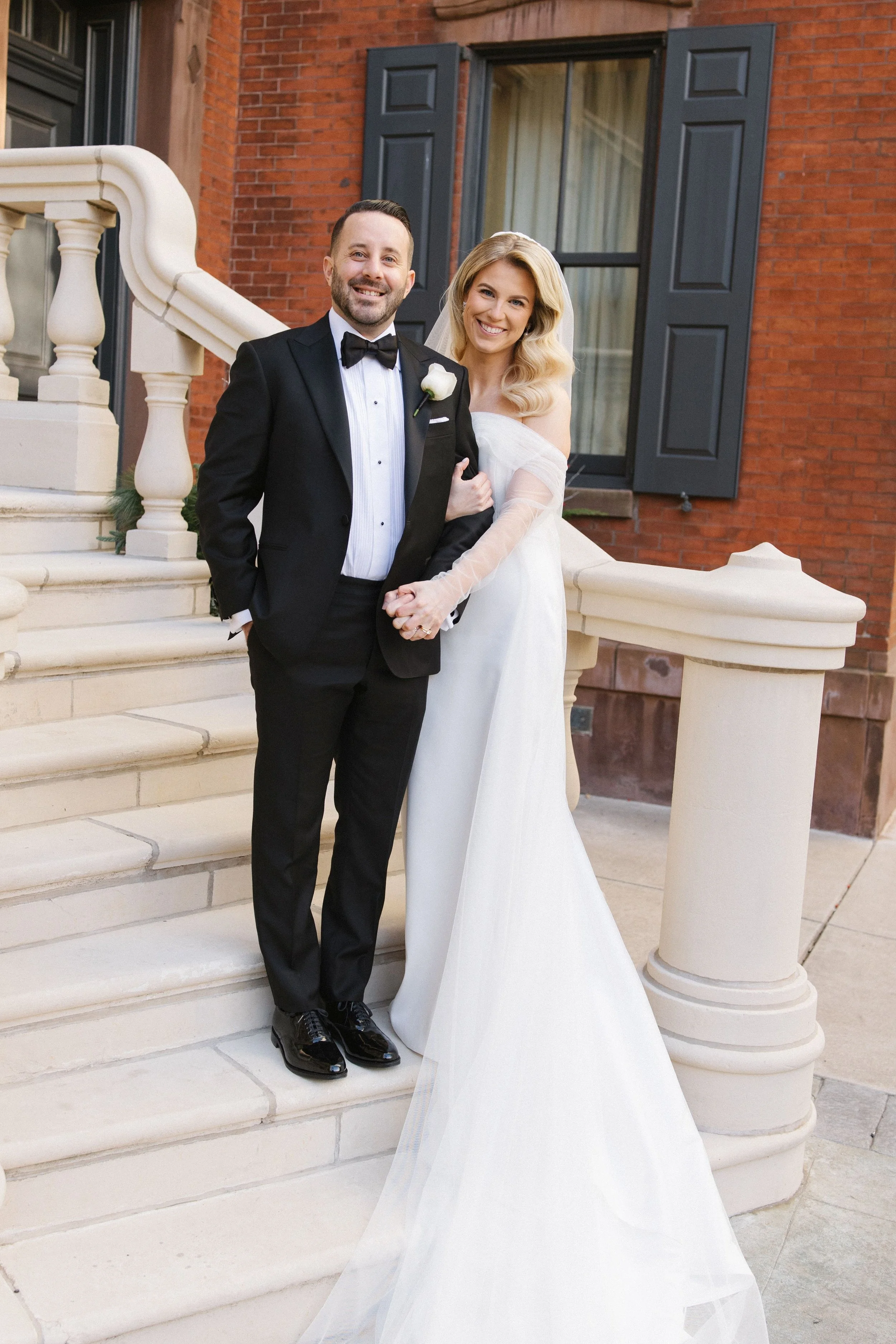
What Alex and Mike experienced at each hotel - welcome notes, carefully chosen gifts, the sense that the staff already knew them- didn’t happen by accident. Before each arrival, Well Placed Travel coordinated preferences, communicated dietary needs, and pushed for upgrades. For a honeymoon, the brief went further. Karen tracked down their wedding photographer through Instagram, obtained photos of the couple on their wedding day, and worked with each hotel team in advance to create a welcome that felt genuinely personal rather than generically celebratory. “Every time we walked into a new hotel room, there were tears,” Alex said. “We just couldn’t believe it, honestly.”
270 Photos and a Toto Toilet
Alex has posted 270 photos from the trip. People keep asking to copy the itinerary. She tells them yes, and mentions Well Placed Travel.
They’re already planning to go back and add two more days in Tokyo at the end. “When we were leaving Tokyo we were finally hitting our stride,” Mike said. “I feel like we barely scratched the surface.” That’s what a trip like this does—it makes you understand how much more there is, and why it matters who helps you find it.
Mike is researching Toto toilets. Alex has ordered the shampoo from the head spa. Japan didn’t just recalibrate their expectations for travel. It recalibrated their expectations for everything.
Well Placed Travel specializes in curated luxury travel for discerning clients. To begin planning your own trip, send a note.
Thank you to the couple and the hotels for their photos.
Interested in more exceptional travel stories and destinations? Read here.
