
Green Spain: Come Hungry
A Well Placed Travel journey to San Sebastian and coastal northern Spain where cider flows and mountains meet the sea
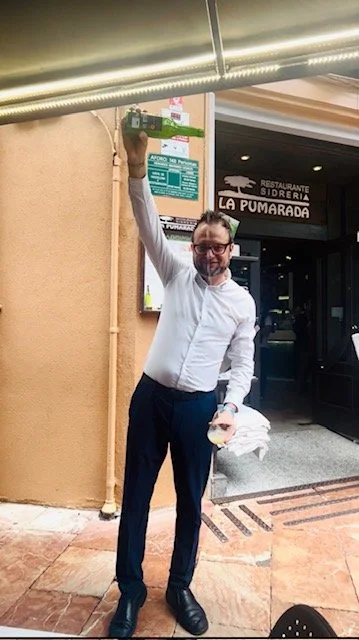
The server raised the bottle above his head, arm fully extended. The glass dropped to hip level, somewhere in the vicinity of his nether regions. He looked at neither bottle nor glass. He poured. Cider splashed across the table, landed on my hand, and a thin two-finger pour hit the glass. He handed it to me. I sipped.
My guide winced. You're supposed to chug it.
The dramatic overhead pour aerates the cider, giving it fizz and life. Sip it and it goes flat. I tried again the correct way and understood. My guide told me she had practiced as a girl in the bathtub, a bottle of water in one hand and a glass in the other, to avoid soaking the floor.
I sat in a cider house in Oviedo in the Asturias region of northern Spain on a chilly June Saturday afternoon, a cider festival underway. Bands played music I can only compare to polka, with similar instruments and unapologetic joy. Men marched through the town square, singing, drinking, engaging with everyone in their path.
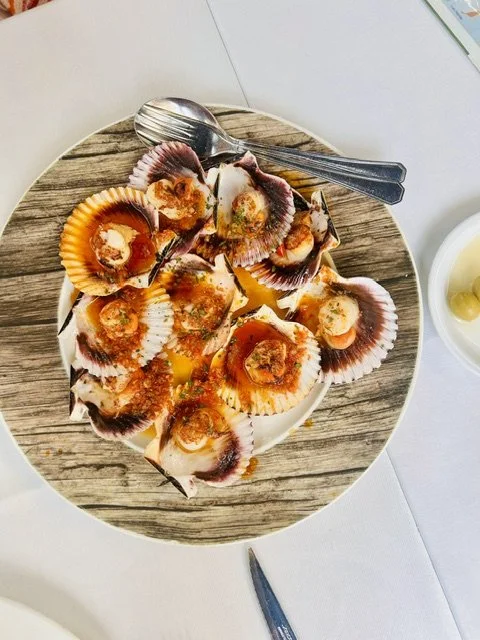
Scallops on the shell with fiery red seasoning arrived. Four whole artichokes, charred and covered in crumbled sausage and crispy garlic were next. A crusty roll, no butter, no olive oil, set directly at my spot, meant to be torn by hand and used to scoop up whatever remained on the plate.
I had been in Madrid for five nights. I thought I knew Spain.
Northbound Train
Many travelers fly into Madrid or Barcelona and stop there. Those who want something genuinely more authentic, less shaped by social media posts, take the AVE high-speed train north from Madrid Chamartín for three and a half hours. The landscape shifts in a slow reveal: golden farmland threaded with bright poppies and blue wildflowers, old stone farmhouses, pine forests thickening as the elevation rises, rolling hills going deeply green. The temperature dropped twenty degrees from a Madrid heat wave by the time the train reached Oviedo. It felt like an arrival into a different country.
Oviedo is the capital of Asturias and a city most Americans don't consider. Art deco and art nouveau facades line the streets. A statue of Woody Allen, uncanny in its likeness right down to the oversized clothes, stands in the city center because he filmed Vicky Cristina Barcelona here. The old town is compact, beautiful, and on the Saturday of my visit, completely alive.
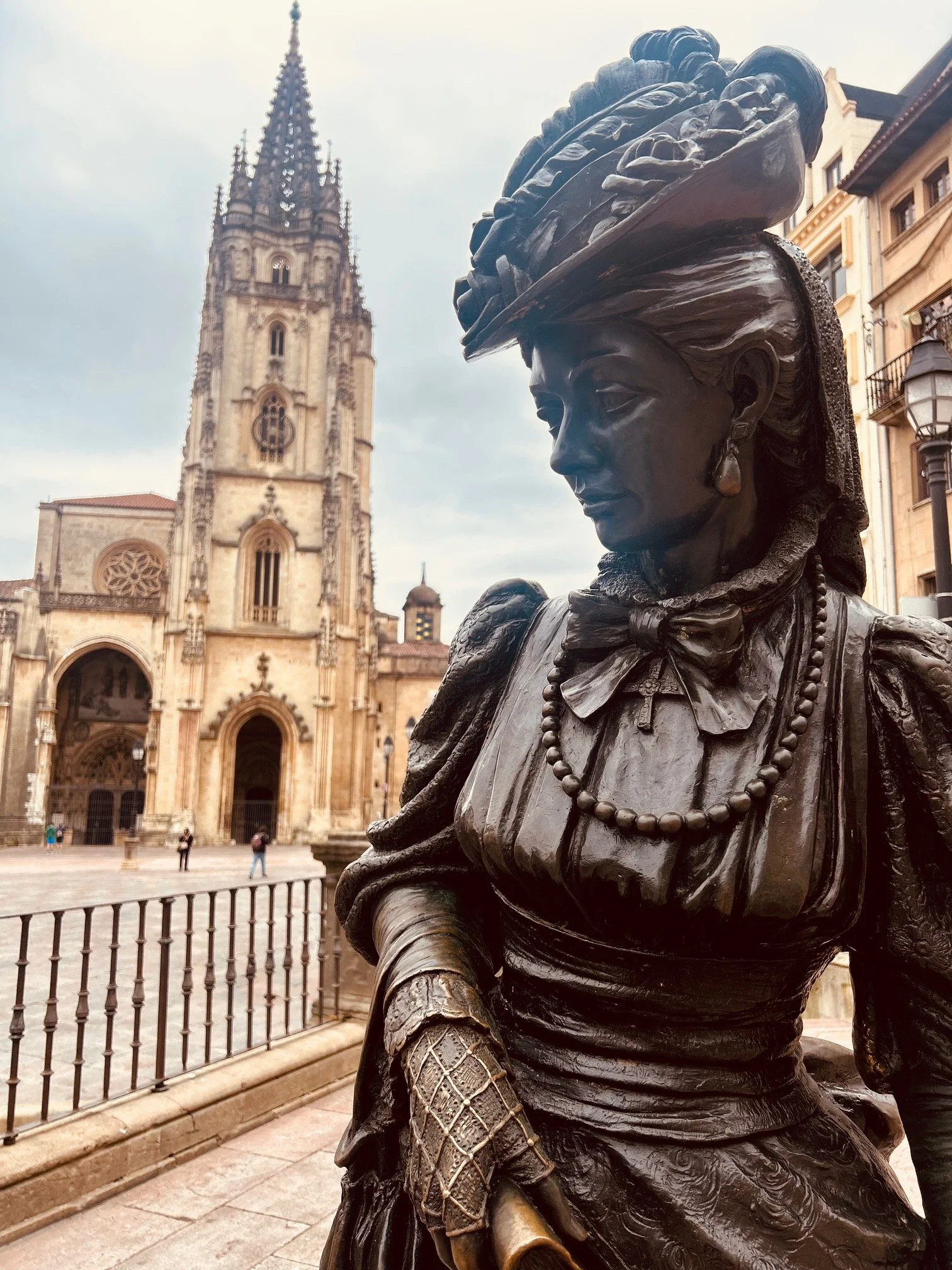
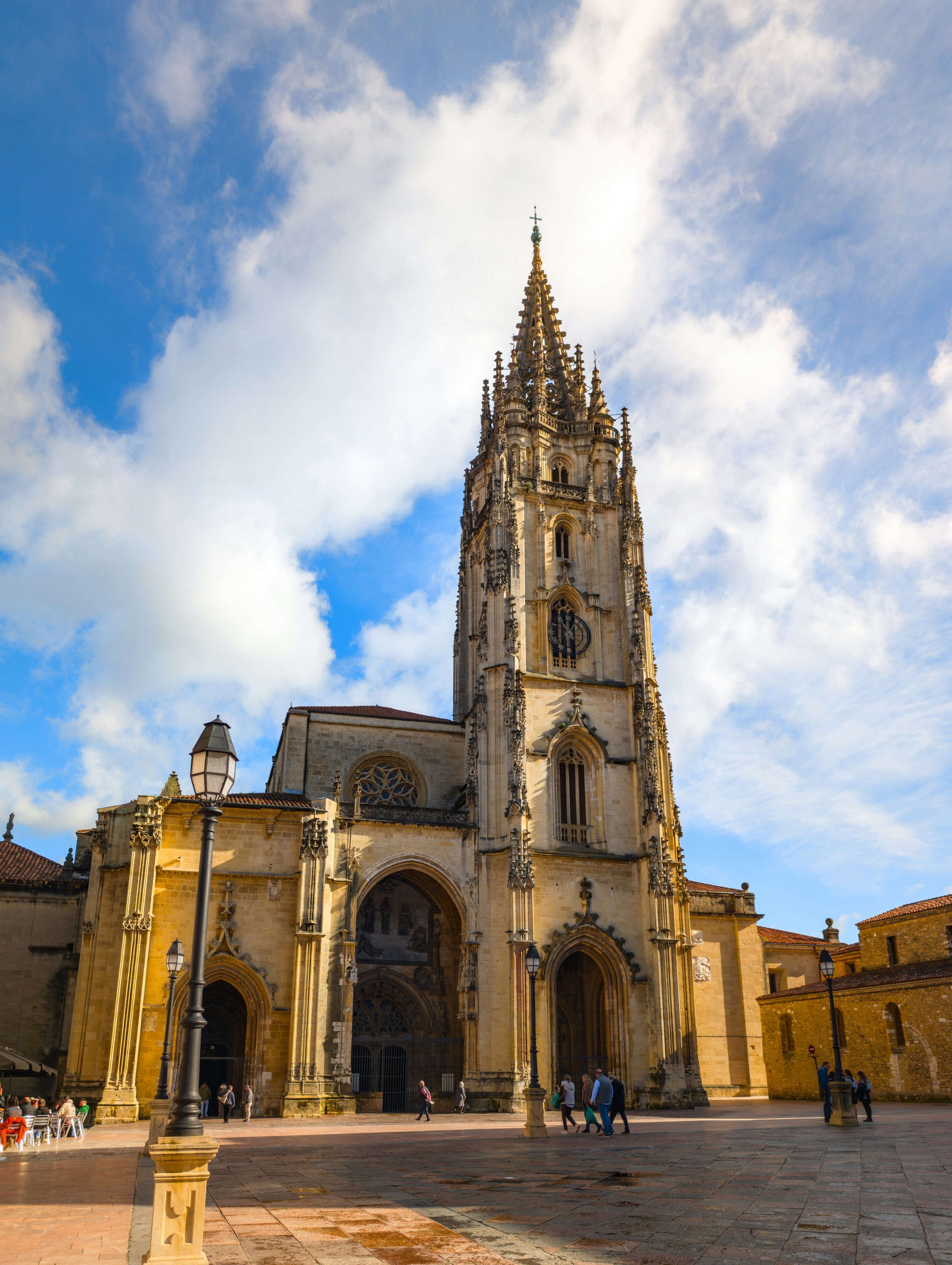
Something went sideways early: my guide, wonderful in every other regard, sent the private driver away- the one meant to hold my luggage while we toured the city. I dragged a suitcase and laptop bag through the streets until we found a restaurant willing to store it in their office. Not ideal, I contacted the owner of our local partner company immediately. They were apologetic and responsive; lunch was covered and a small refund followed. Things happen in travel, even with excellent partners and the best intentions. What matters is how it gets handled. Had this happened to a client, I would have been mortified. Experiencing it myself only sharpened how to handle things that go wrong in travel.
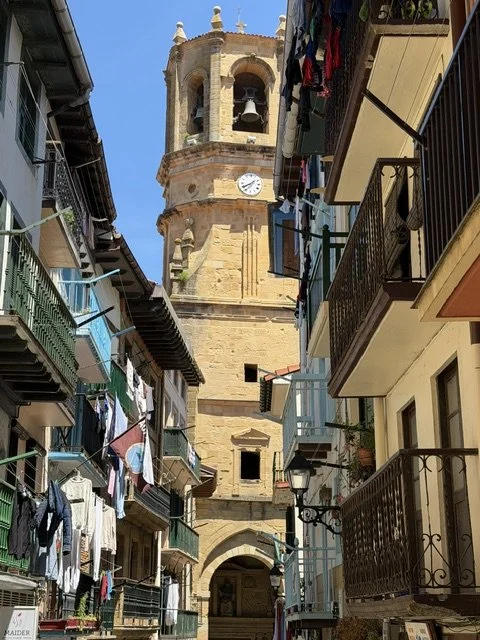
What I loved most about the city: every square held families across generations, friends in clusters, children playing football on one side while parents occupied restaurant tables on the other. No one was in a rush. No one was in athleisure. I saw the same spirit the following day in Gijón, and again all week in San Sebastián at the marina, outside the historic church, on the beach. In Spain, the lunch hour and the evening gathering are not optional. They are the structure around which the rest of life buzzes.
Asturias homebase
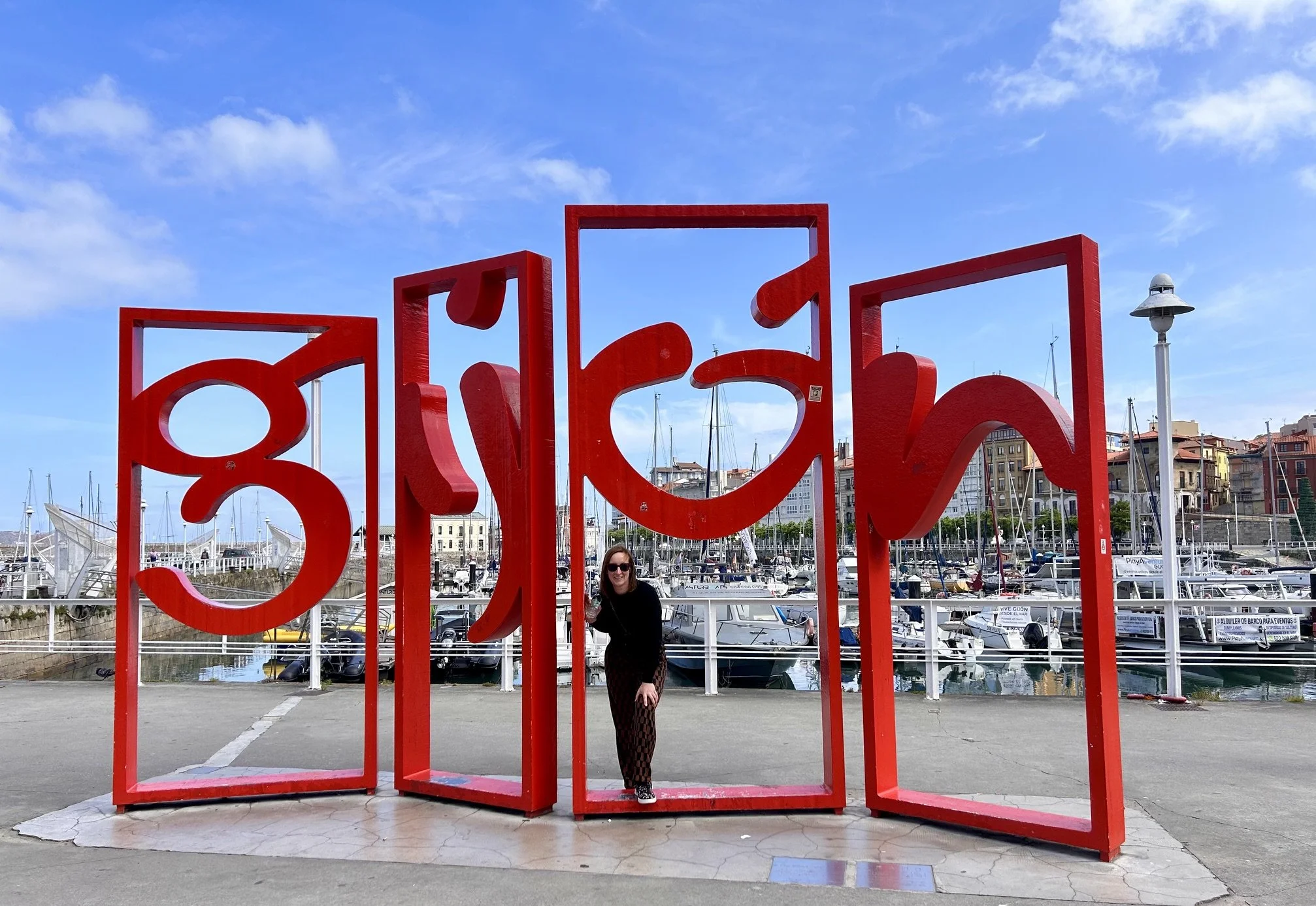
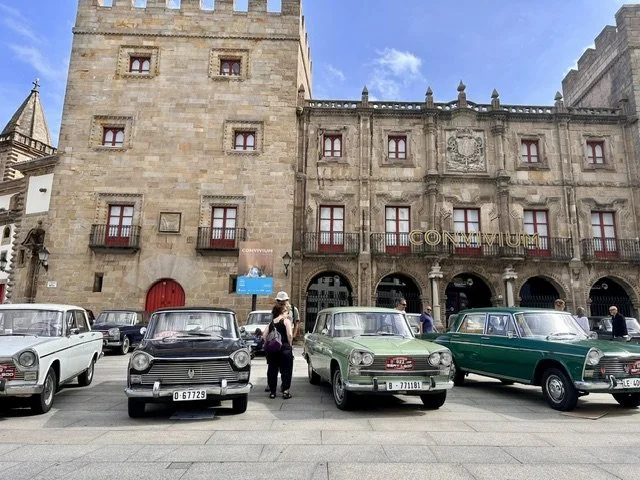
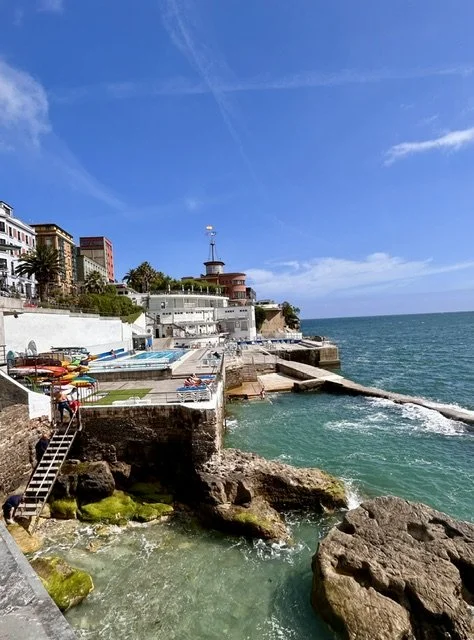
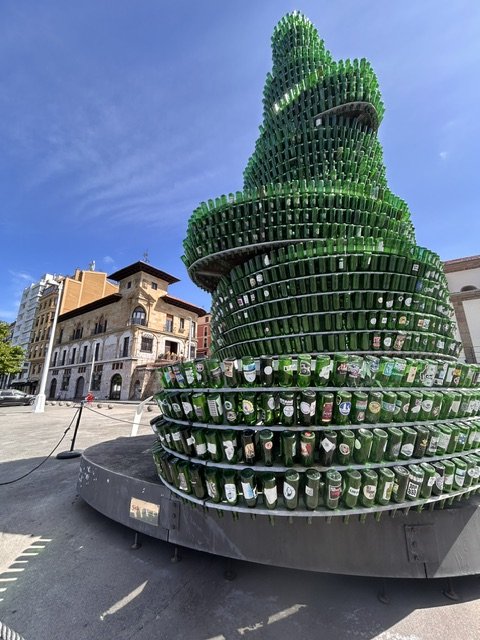
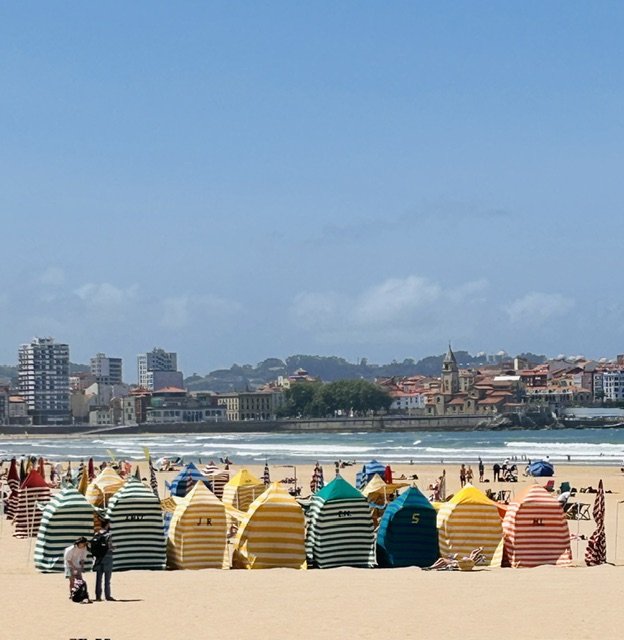
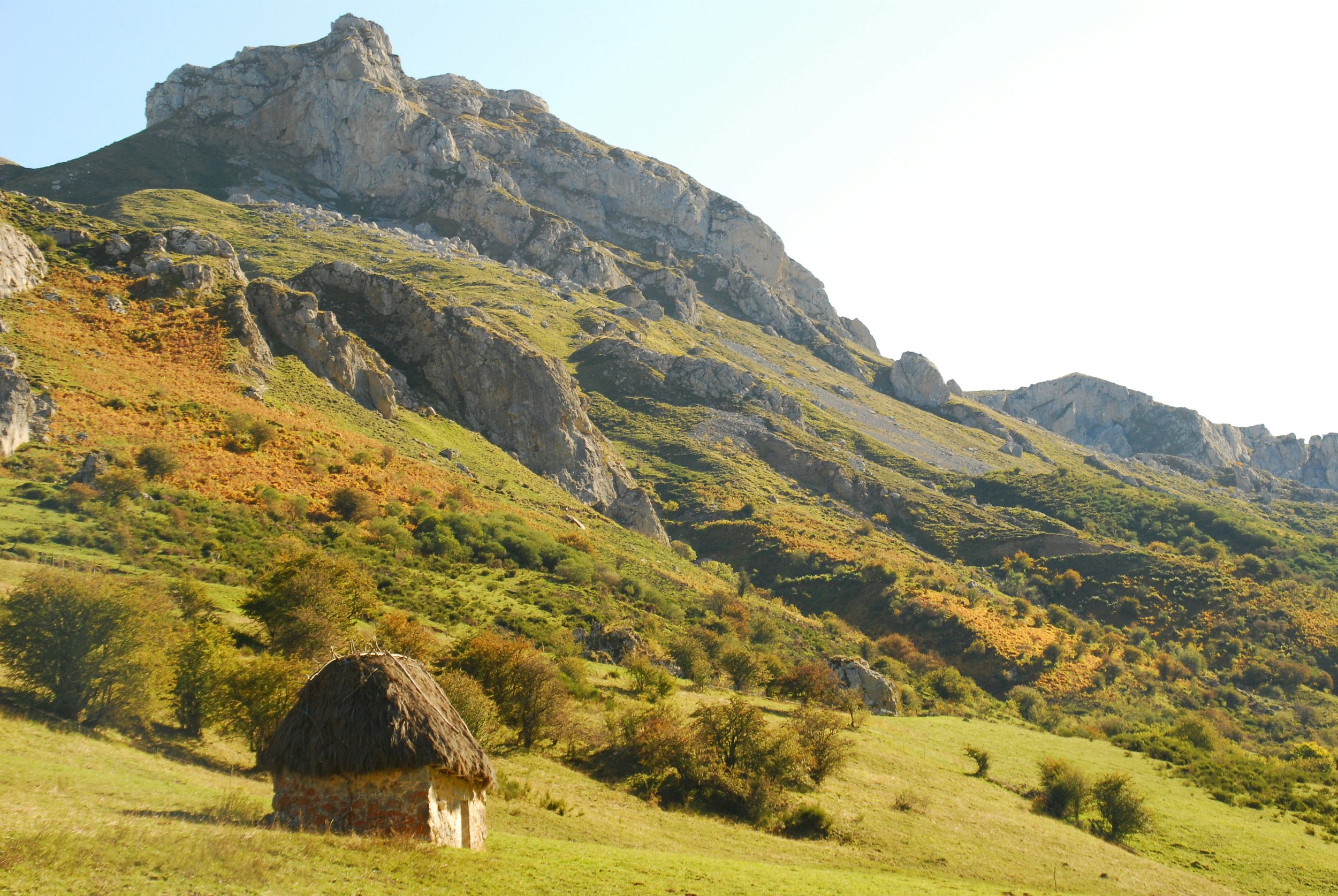
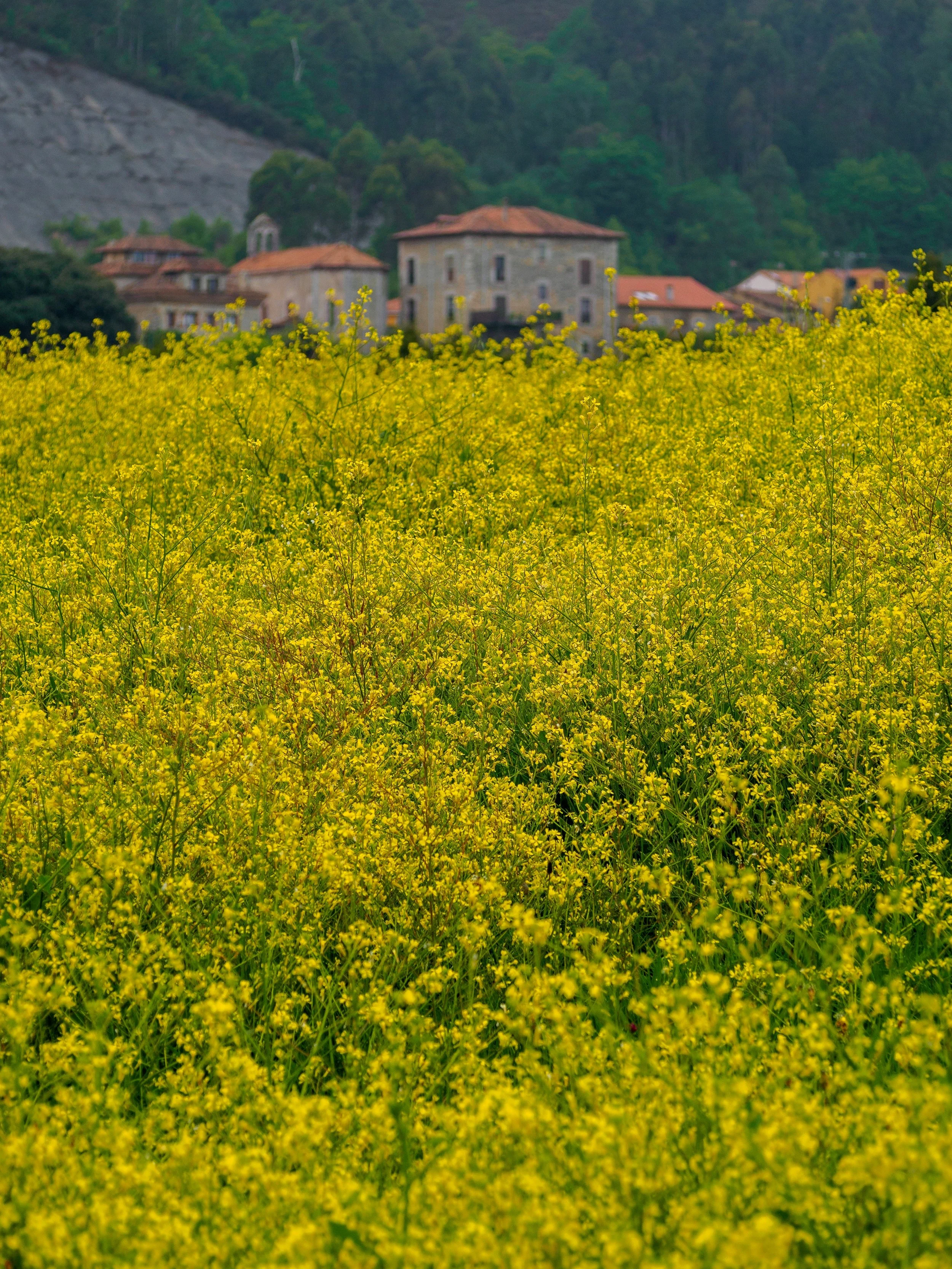
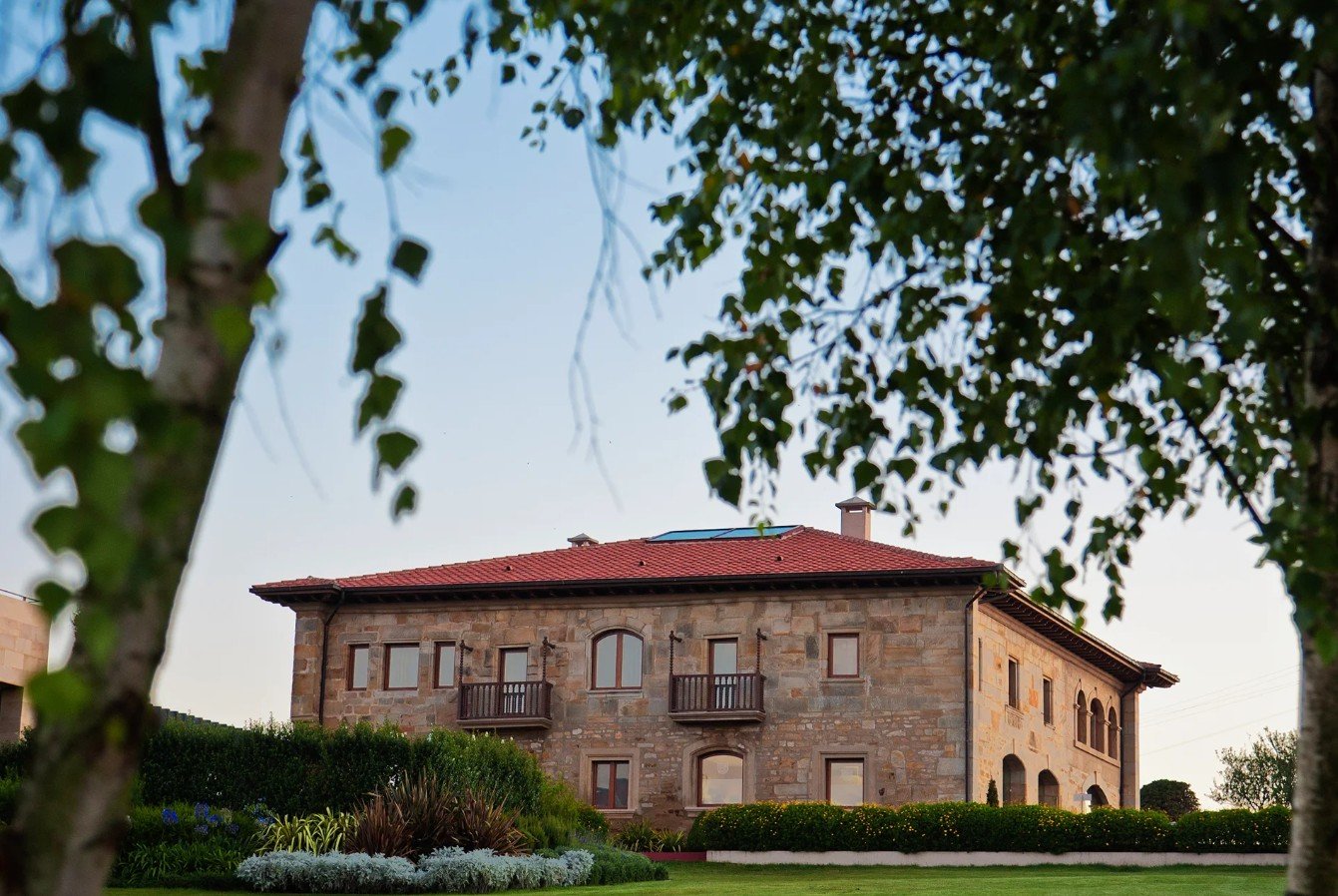
After a day in Oviedo, I spent two nights in Gijón (pronounced hee-hon), another energetic oceanside town. My solo time concluded and I moved on to meet my partner. The short drive from Gijón to Palacio de Luces left highways for single-lane roads past stone villages with houses added onto room by room across generations, and hórreos, the ancient Asturian granaries raised on thick wooden stilts to keep rodents from the grain. The coastline appears at the edges of fields, half-obscured by ocean mist. The property, a 16th-century stone mansion set within stone walls with soft lawns and grounds, feels like a quiet exhale. The lounge holds the original manor fireplace, nearly as tall as a person and twice as wide. The suite, calm and grey-blue, revealed distant sea views.
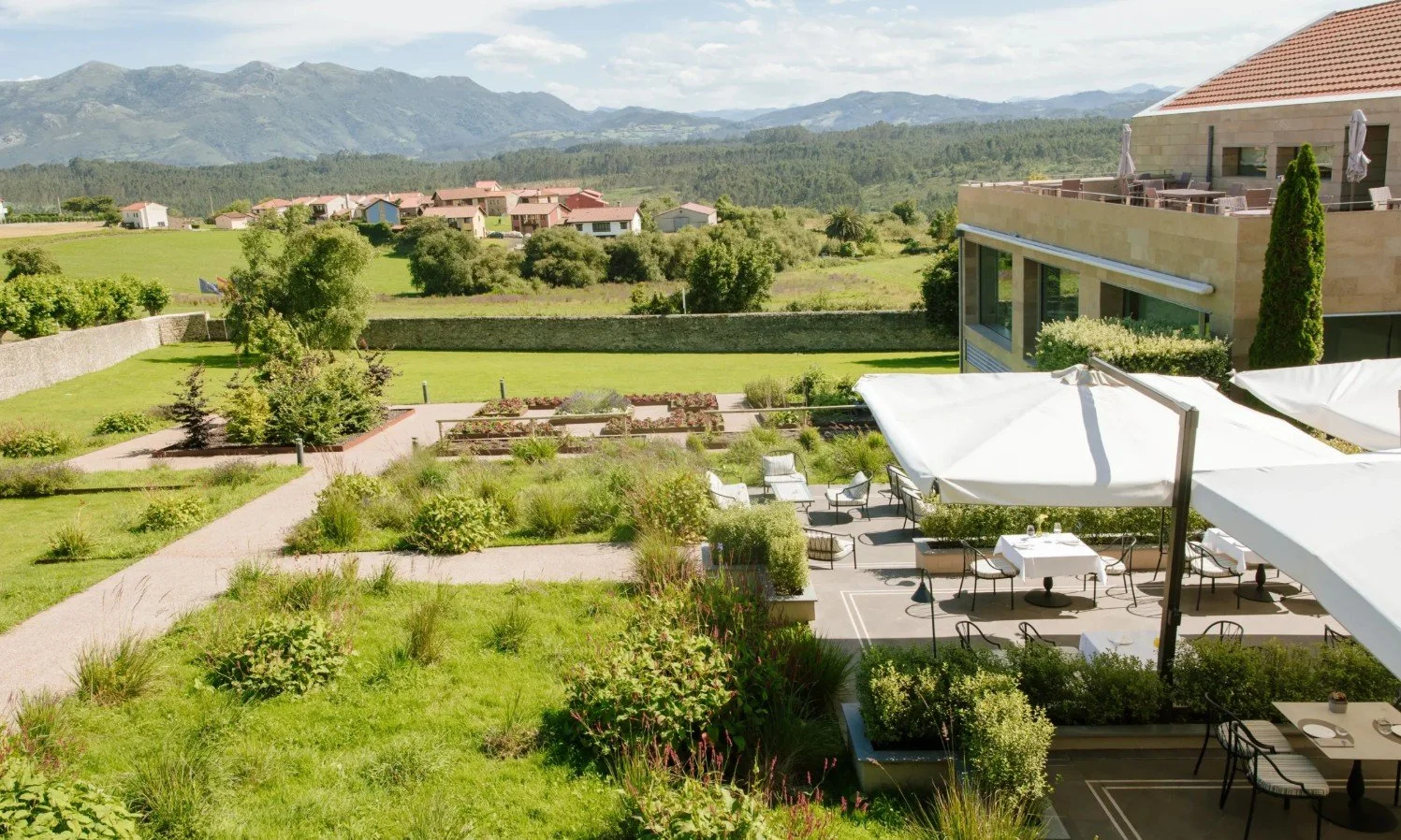
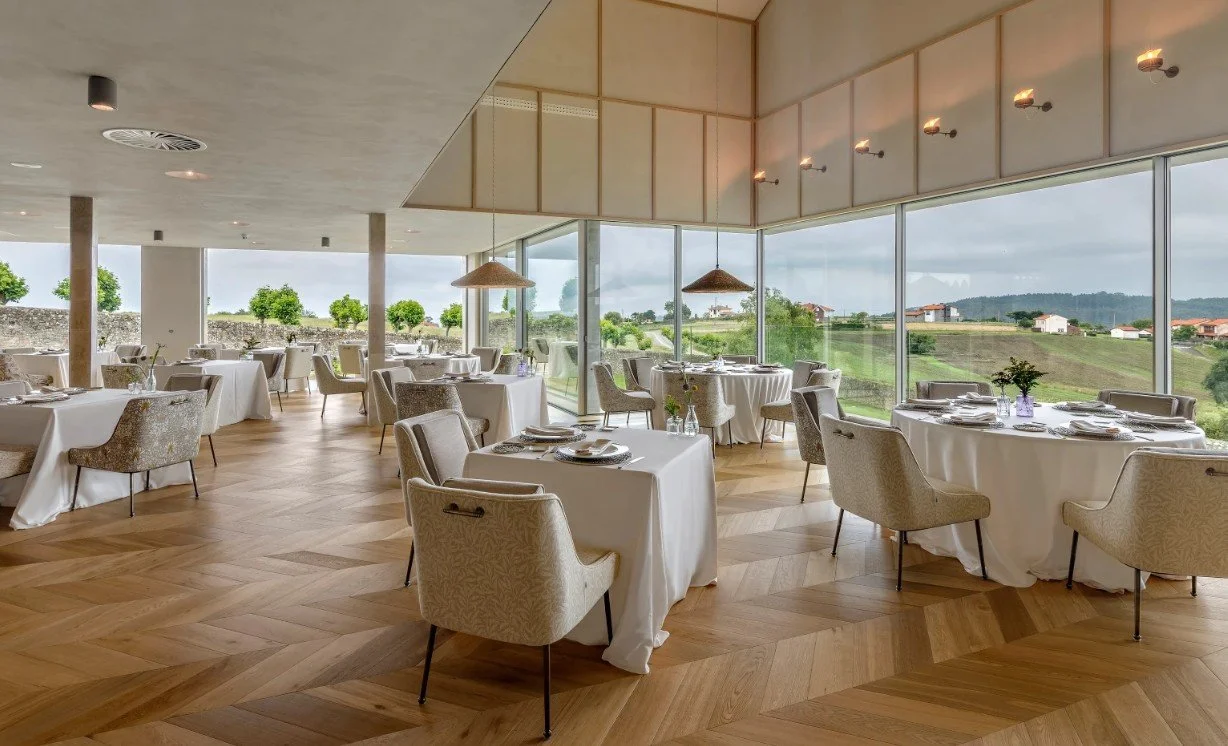
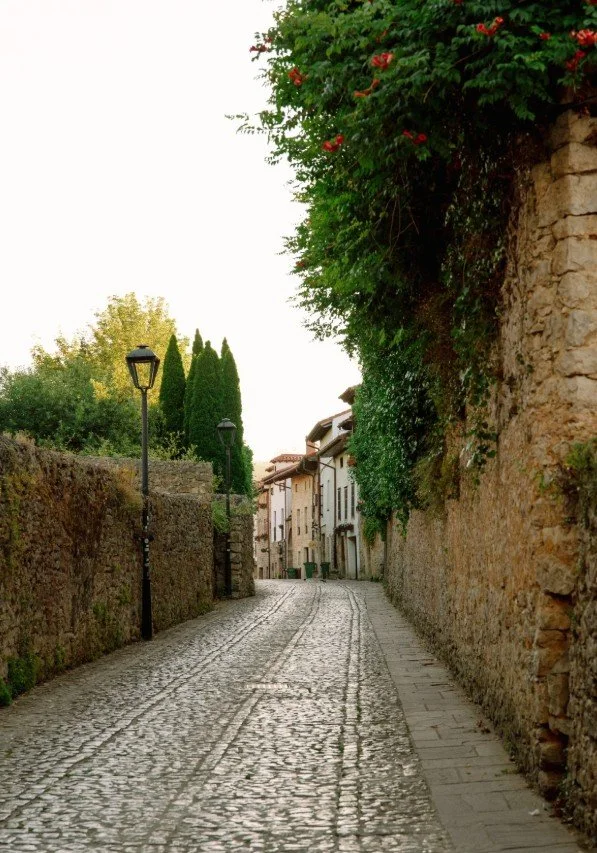
Lunch in the Michelin-starred restaurant: crab soup, bright gazpacho, salad with freshly picked greens, bread with a crust so good I used every piece. Both evenings we chose the bar instead with deep chairs, games of rummy, a burger with potato wedges, and casual wine. Comfort over performance. My travel companion had arrived on a long flight in a cramped seat; the hotel had arranged massages. That kind of seamless coordination- two people arriving separately, days apart, in a region most travelers don't know- is what well-designed travel looks like from the inside.
hiking picos de europa
A few things I didn't have to do in the Picos de Europa: figure out directions, get lost, get gas, stop for supplies, white-knuckle the mountain roads, worry about the trail, make lunch, know where to stop for a beer.
A few things that were done for us: drive, pack food, slice cheese, salami, chorizo, bread, and fruit and arrange it on a platter, pour cider, hand us chocolate bars, lead the way, order beers in a foreign language.
Our mountain guide, Ignacio, a hearty fellow of few words who barely spoke English, knew every stone of the Picos de Europa. We had watched videos of this hike before leaving home. The views were supposed to be extraordinary. The fog, mist, and steady rain that accompanied us all day made sure we couldn't see more than ten feet ahead- only rocks, our boots, and rain. We walked 10.5 miles round trip through fields of cow dung, past friendly cows who approached without fear, and up craggy switchbacks along the mountain edge.
At roughly 90% of the ascent, muscles cold and tight, rain jacket soaked through (we had left our rain pants at home, a decision I regretted with every step), lungs working harder than expected at altitude, I came very close to stopping. Three things kept me going: regular breaks, the promise of lunch, and a stubborn refusal to be a wimp.
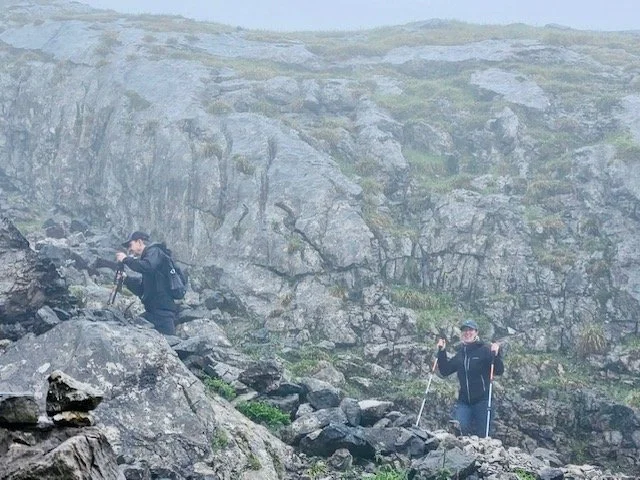
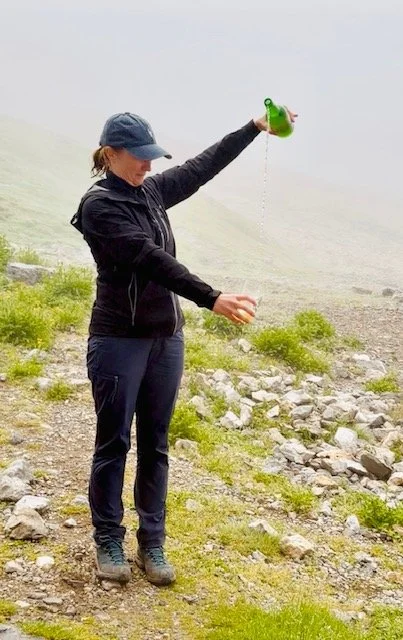
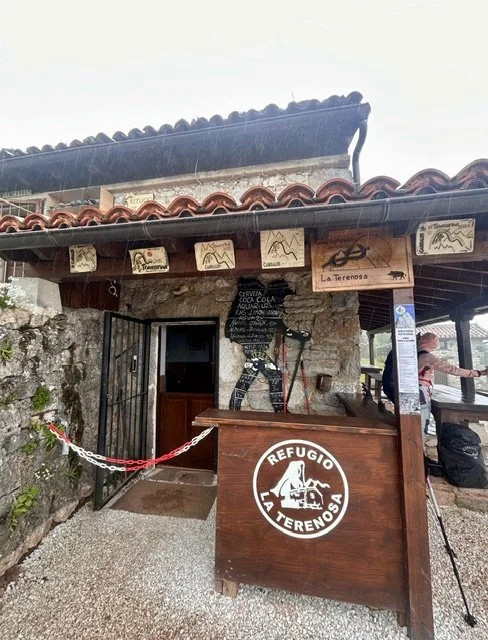
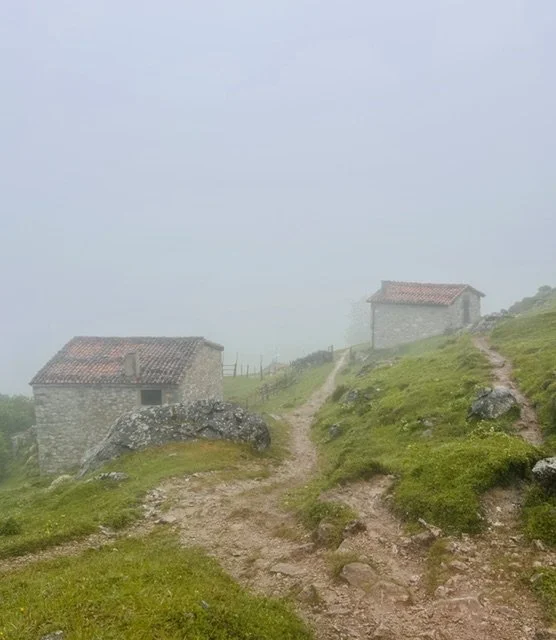
The lunch was worth it. We sat on the drier side of a locked refugio, reserved for overnight guests but shelter enough, and watched a dozen mountain deer bounce down the hillside directly in front of us, equally curious about us as we were about them. Ignacio produced a fresh boule, a spread of Iberian cheeses, fruit, chorizo, and chocolate. And then cider — yes, on the mountainside, in the rain. I practiced the pour. I'm quite proud of how it went. The guides poured alongside us, something you'd rarely see from American guides navigating liability concerns. Here it was simply lunch on a mountain.
On the descent, Ignacio spotted a second refugio that appeared closed. It's the kind of place I would have walked directly past on my own. He knocked. The operator appeared from the back and served us beers under a dry overhang. I couldn't finish mine- too cold- but I welcomed the ten minutes of dry shelter like a gift. I've never been so happy to see a complete stranger as when we spotted Pedro waiting at the trailhead. He drove us back through the mountain roads while we napped in the van. That evening, we warmed up in the sauna, swam in the heated pool, and sat in the steam room until the cold left our bones. The hotel took our boots to clean. They washed the inside as thoroughly as the outside. We retrieved them after dinner, completely soaked. Some things you can't anticipate.
San Sebastián
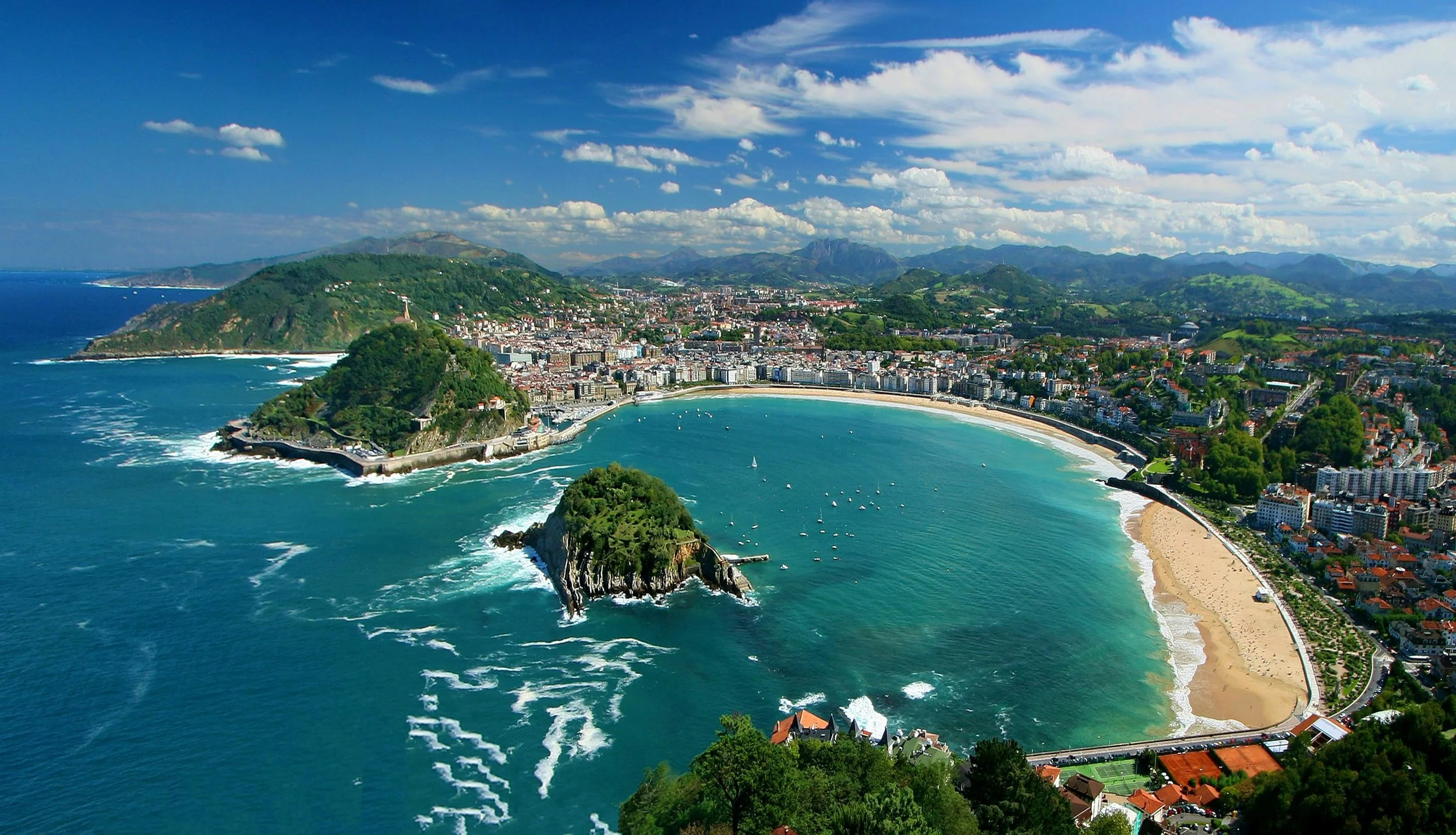
I could live here if I spoke fluent Spanish. It has beaches, mountains, extraordinary food, art, and shopping, and avoids pretentiousness for a city with more Michelin stars per capita than anywhere else on earth. In four days, I heard only a handful of English-speaking families. Our guide Colm has lived there his whole life and knows every proprietor where people actually eat in every neighborhood. On our first morning, he offered a choice: the Old Town tourist circuit, or the version he does with his friends on a Friday night. We chose the latter. He gave us a list of the tourist spots anyway, and we visited them on our own the following evening- louder, more crowded, the food more ordinary. They didn't compare.
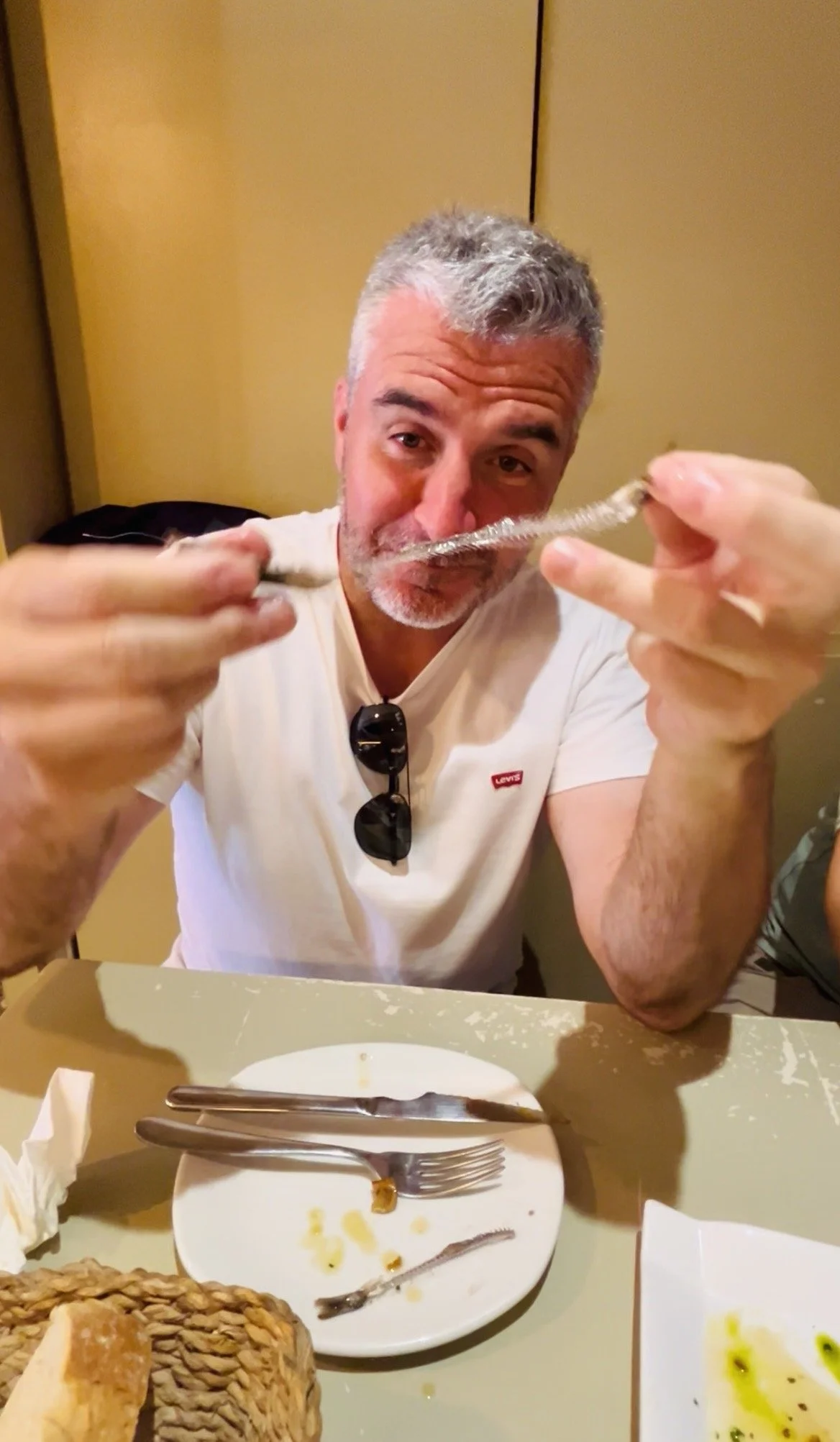
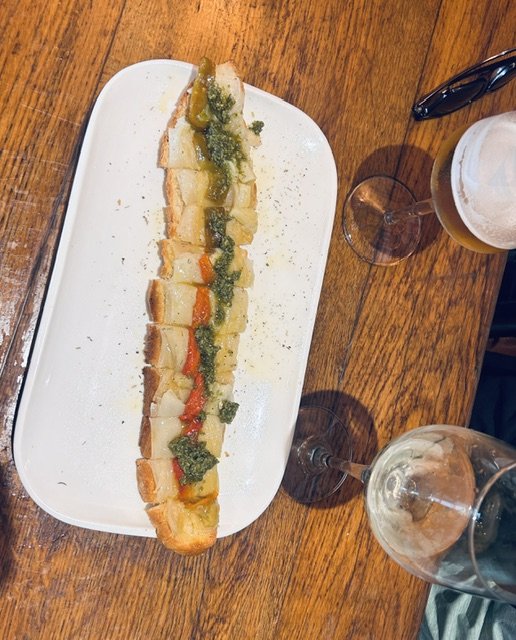
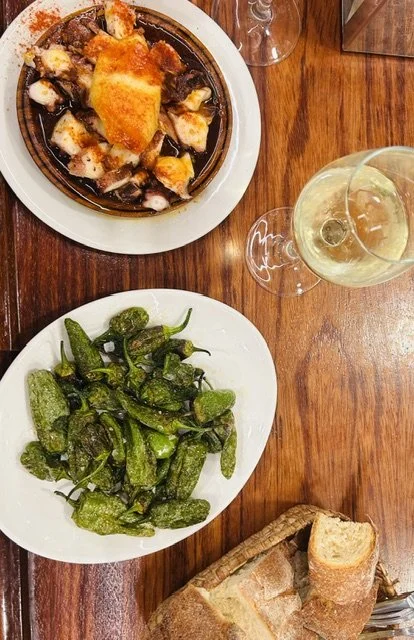
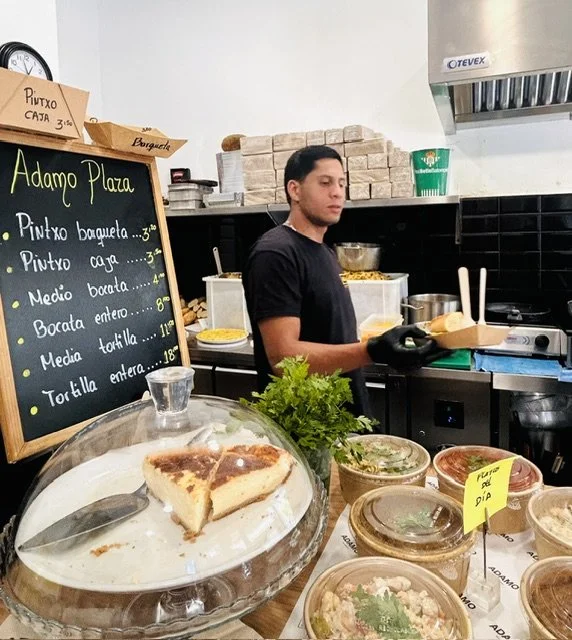
Four stops through residential streets most visitors never find: an open-faced sandwich of cheese, legumes, and pesto so perfectly balanced it reset my expectations for what a single bite can do. A takeout window serving a potato and onion omelette so rich and gooey it broke my heart to leave the rest of it. Octopus and shishito peppers at a place that had been there forever, smoke drifting in from outside. And at the final stop, Colm deboned a whole anchovy in under a minute and ate it like popcorn, a masterpiece of casual expertise.
That evening, he texted us photos from the same bars. He was out with his Friday night pintxos group: ten couples who had been meeting since their children played football together fifteen years ago. The city has that kind of life in it.
Getaria
The best day of the trip began on a morning of crystal blue sky and sea.
We drove west to the Flysch Geopark at Zumaia. Colm had checked the tides. He took us down a long flight of steps onto the wet sand rather than leaving us to look from the hilltop above.
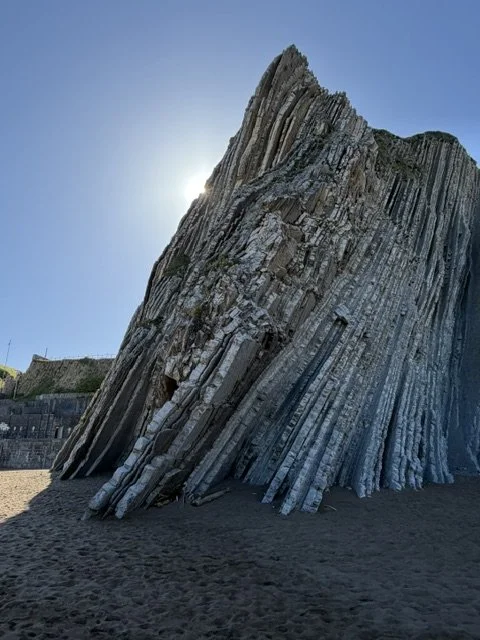
The rock strata, layer upon layer of compressed geological history, rise from the beach and lean into the sea at steep angles, parallel bands of dark and light running in formation across the sand and into the water. Imagine a shelf of record albums with every other sleeve pulled halfway out, the whole shelf tilted forward so the records fan toward you. Now multiply that into stone the size of a building, extending across an entire beach and straight into the Cantabrian Sea.
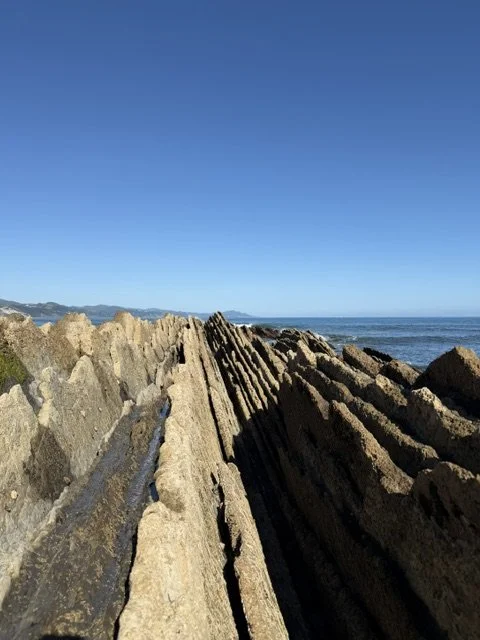
We walked into natural archways formed between the layers. It was spectacular in a way that photographs won't capture and that you wouldn't have experienced without someone who comes here regularly and knows to check the tides.
After the flysch, Colm dropped us on the Camino de Santiago, the northern coastal route that threads through the Basque Country, and told us where he'd be in an hour. We walked along the protected path with pilgrims and local strollers, the Cantabrian Sea below, green hills behind us. I've thought about walking a longer stretch of the Camino for years. Seeing this section made it feel less like a vague idea and more like a possible plan.
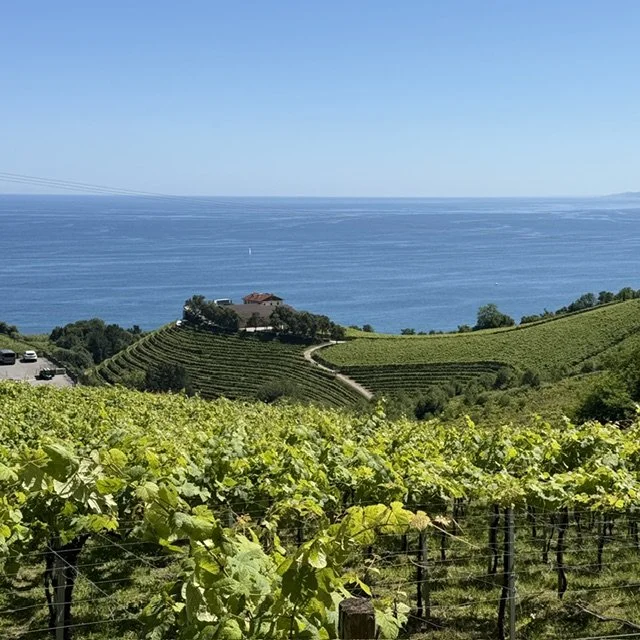
Colm was exactly where he said he'd be. We visited a small family-run Txakoli winery on a hillside, an intimate tasting that felt more like visiting someone's home than a commercial operation. We tasted the zippy white and rose wines on the patio overlooking the sparkling sea.
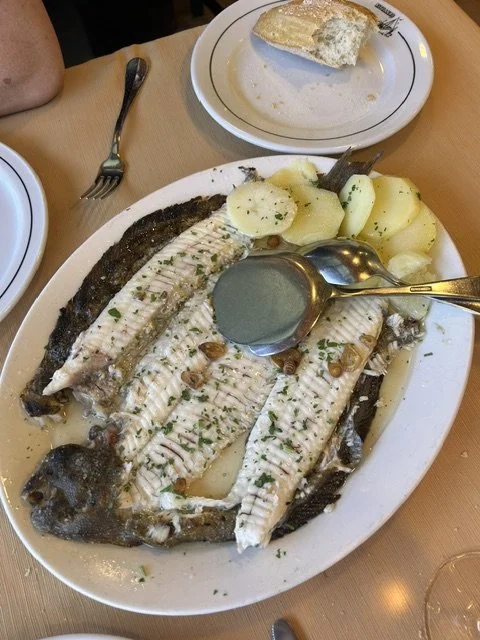
We ventured to Getaria for lunch at a restaurant I never would have found or chosen based on appearances, tucked into a working fisherman's port, industrial on one end, seemingly abandoned on the other. We were the only Americans in the room, possibly the only English speakers. I ordered in broken Spanish. Stuffed crabs, a whole grilled fish, a roll, a bottle of wine. Our second floor table by the window overlooked the port.
Three teenage boys jumped off the pier below. The first went without hesitation, fearless, showing off for his friends. The second hesitated, then fell in. The third waited while the others taunted him from the water. Eventually he jumped. We watched them swim from dock to dock until they tired out and settled in the sun with sodas.
A perfectly ordinary summer afternoon. And it was everything.
There was also an afternoon sailing excursion, slow afternoons at the beach, mornings wandering fishing villages along the Cantabrian coast, and days that simply refused to fit neatly into any category. The French Basque coast — Biarritz, Saint-Jean-de-Luz, Hondarribia — is barely a drive from San Sebastián, and spending a day across the border felt like a small, delightful magic trick.
Why Northern Spain
Asturias, Cantabria, the Basque Country feels like an untapped destination. It's a region that rewards travelers who arrive with the right people on the ground guiding their stay.
I noticed everything on this trip, including what didn't go perfectly. And I came home more certain that the difference between a good trip and an exceptional trip is both the destination and the design.
If northern Spain wasn't on your list before, consider this your introduction. This is exactly the kind of trip I love building- layered, personal, and nothing like what you'd find on your own. If it's already on your list, let's talk about how to do it right.
Interested in other destinations? Check out more travel ideas here.
