
I went to evaluate it for clients. This is what I found.
The pregnancy gambit didn't work. Two travel advisors in our group raised the possibility, strategically and with appropriate vagueness, that they might be expecting. They were not. We did this to receive an easier trek to the gorillas in Volcanoes National Park in Rwanda. The national guide assigned us the difficult route anyway, unimpressed by the news. We climbed through dense jungle in mud that built up on our boots by the hour, short of breath, moving carefully through vegetation closing in from all sides. Three hours up. An hour with the gorillas. Three hours back down in the rainforest.
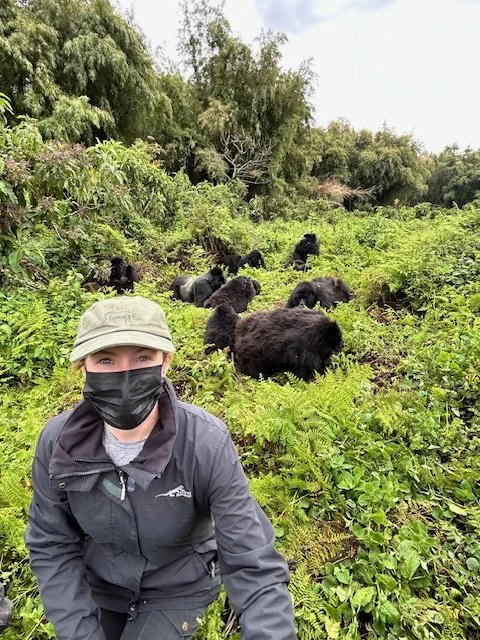
As a travel advisor, I took this research trip, visiting four African countries in two months: South Africa, Zimbabwe, Rwanda, and Tanzania, specifically to build the kind of firsthand knowledge and relationships to better serve clients wanting to explore Africa.
What Kigali Offers
Kigali is the cleanest city I've ever visited. The orderliness is not an exaggeration; it's the first thing I noticed and reflects the pride Rwandans have for their country.
I tested the VIP arrival process and recommend it for clients. The service includes a personal attendant, expedited customs line, and a seat in the quiet lounge with drinks while your attendant retrieves your baggage and obtains your visa. It avoids an otherwise hectic arrival.
Most visitors arriving internationally spend a night in Kigali, either at Hemingway's Retreat or The Pinnacle, depending on budget. Hemingway’s offers simple, contemporary suites with private plunge pools. The Pinnacle offers a small and luxurious boutique hotel in a former residence with a Michelin key, renowned art program, and unbeatable views overlooking the City of a Thousand Hills.
Consider two nights for a more thorough cultural immersion. The Kigali Genocide Memorial is essential — not a comfortable visit, but a necessary one. Rwanda's history is not distant; it shapes everything about the country and its people, and understanding it changes how you experience the rest of the trip.
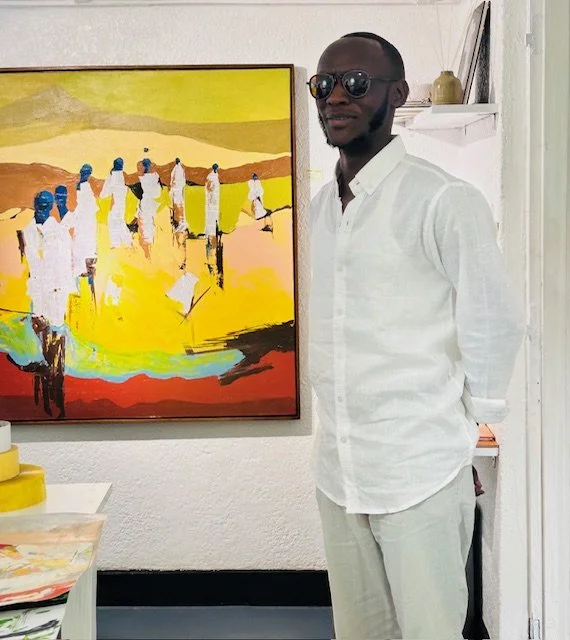
A day in the city with a local guide opens up what isn't visible from a plush hotel: markets, great coffee, and the texture of daily life in a modern and deeply rooted capital. Kigali has a genuine arts scene, and spending time with a local artist in their studio or workspace is the kind of experience that comes from working with a travel advisor with established relationships.
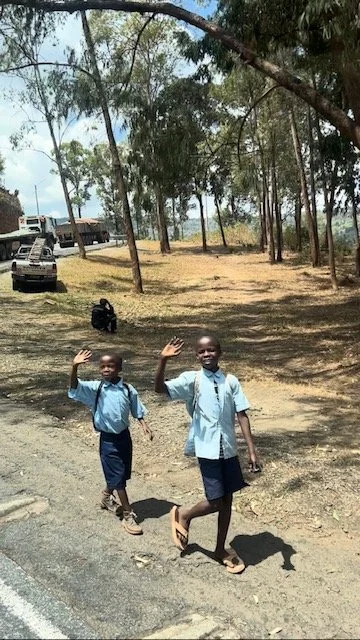
On this research trip, we explored Singita Kwitonda, the best of the best in African hospitality. The drive from Kigali to Kwitonda takes about three hours. Leaving the city, the road fills with people carrying yellow plastic water jugs or pushing wooden carts stacked with large containers — the daily work of getting water. Schoolchildren in navy blue skirts and light blue button-downs walk home holding hands, the smallest ones tripping on long hems. Single-room homes made with corrugated metal and cinder blocks dot the clay-colored hillsides, lines of laundry strung between them in reds, blues, whites, yellows. Worn footpaths crisscross the dry slopes.
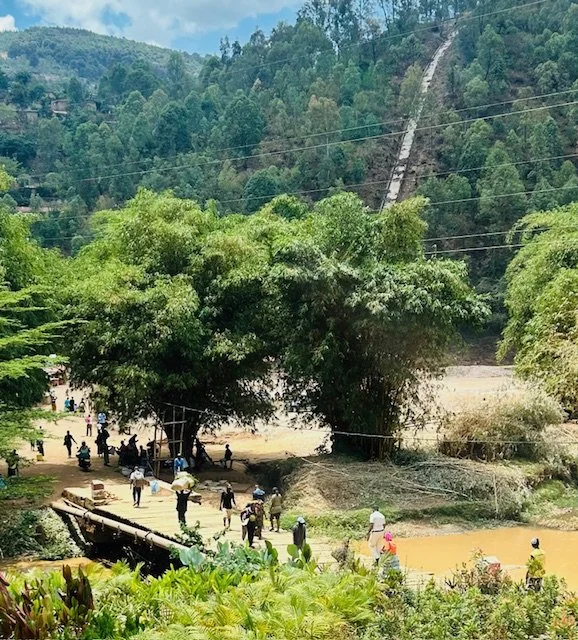
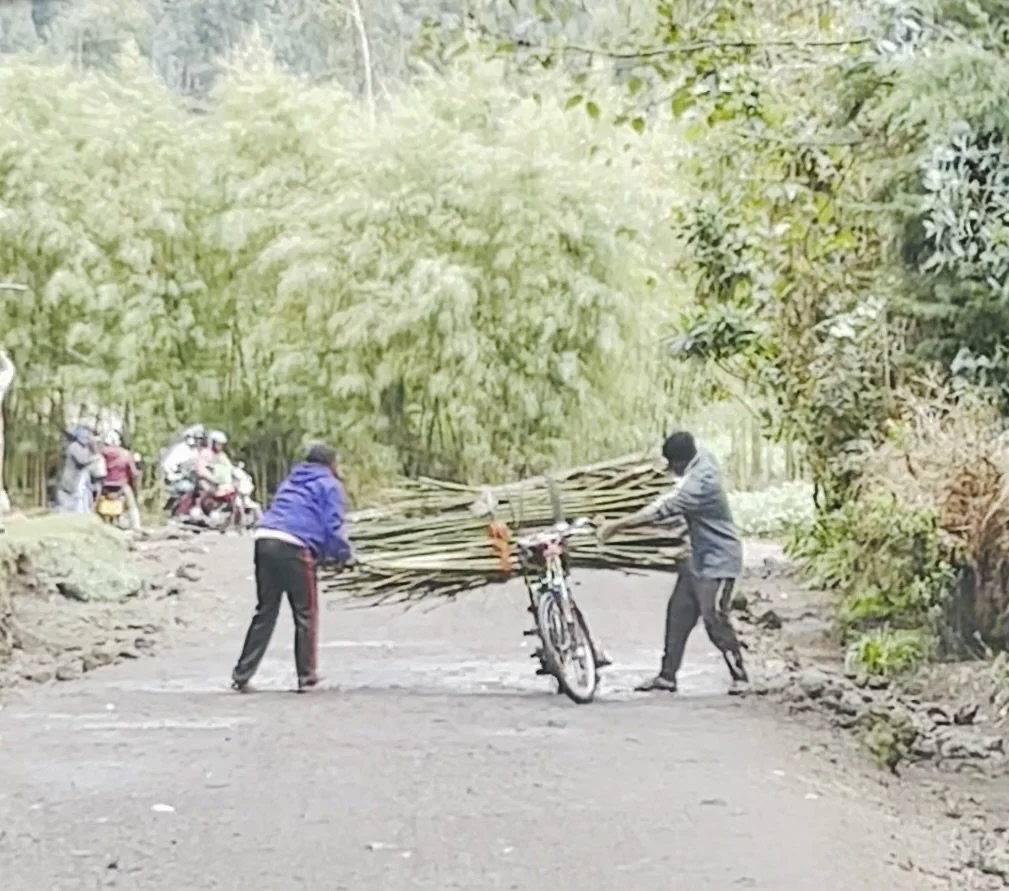
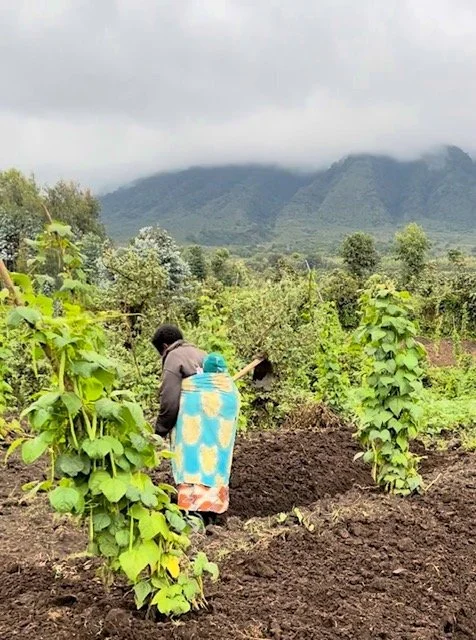
Then the city thins and the fields take over with perfect order. I noticed no machinery and no modern tools. Farming occurs with real manual labor — bare hands, machetes, hoes tied together with rope. Women bent at the waist and babies tied to their backs. Men on their knees. Dense, meticulous fields worked carefully by villagers of all ages, including children.
The roads slow behind trucks on the inclines, and the hills are steep and curvy enough to cause motion sickness. Stopping halfway at the coffee shop rest stop breaks up the journey. For clients with the budget, taking a helicopter saves time. However, I recommend the drive in at least one direction to observe Rwandan daily life a helicopter wouldn't show. If booking the heli, you need to reserve both a helicopter transfer and a car as a backup in case the weather doesn't cooperate. After experiencing both directions by car, I'd fly back without hesitation.
Worth visiting, the Ellen DeGeneres Campus of the Dian Fossey Gorilla Fund sits near Volcanoes National Park. It's a working research and conservation center, not a tourist attraction dressed up as one — and the context it provides for the gorilla population enriches the trek.
the lodge setting the standard
Kwitonda sits at the upper end of what East African lodges offer. I stayed here to evaluate it properly — not as a guest passing through, but as someone whose clients will ask whether it's worth the price. It is.
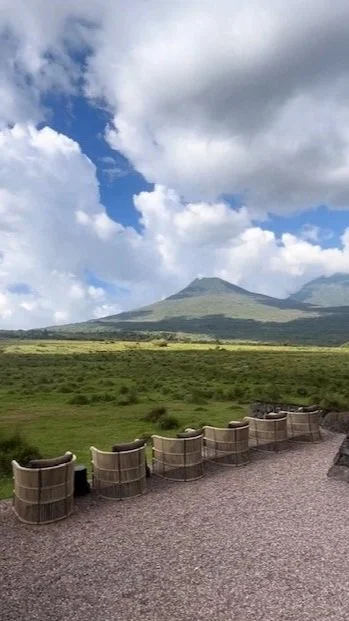
The architecture frames views deliberately, with every room, seating area, and threshold facing Volcanoes National Park. Nothing about it feels accidental. The food is exceptional. There's a set menu daily, but the kitchen accommodates requests and handles family-style service for guests who want to try everything. The wine room provides a special nook for a private dinner. The sommelier, serving the best South African wines, eagerly offers new tastings at each meal. The rate includes it all.
The rooms are serious: two fireplaces each — one indoor, one out; heated plunge pool; indoor and outdoor showers; in-room massage bed; multiple nooks and comfortable seating areas; well-stocked and personalized minibar; and a drawer of games and painting kit if you're so inspired.
In addition to the one-bedroom suites, Kwitonda accommodates groups in a couple of configurations. The four-bedroom villa operates as a private property: wine room, movie theatre, a primary suite with a private office overlooking the national park, three additional bedrooms, personal staff, full kitchen, bar, and living and dining rooms. One note on the two-bedroom villa: the bedrooms are smaller than the suites and share a central living and dining space, potentially working better for a family. Two couples sharing it won't experience what made Kwitonda suites worth coming to. Two separate suites is the right call for couples traveling together.
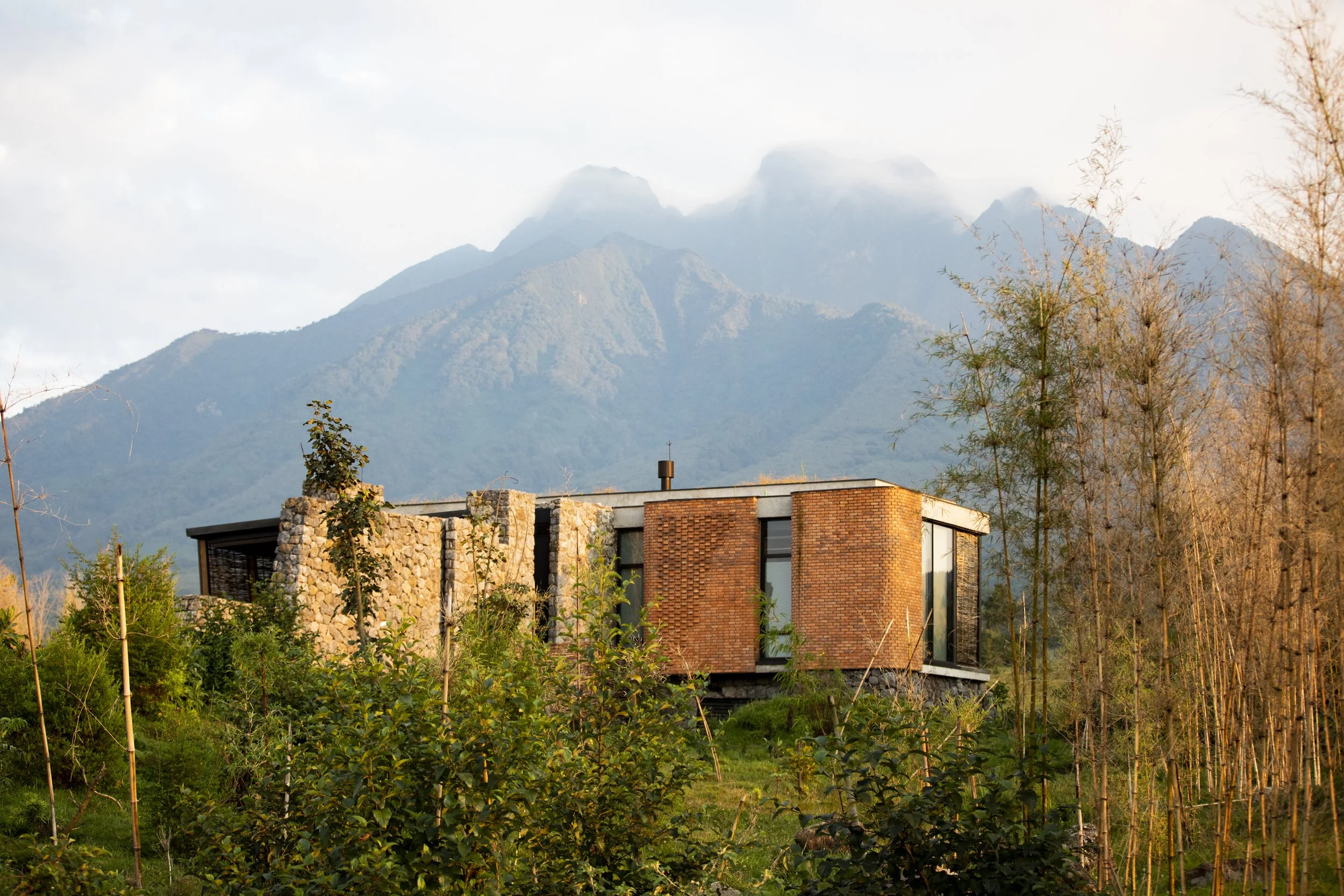
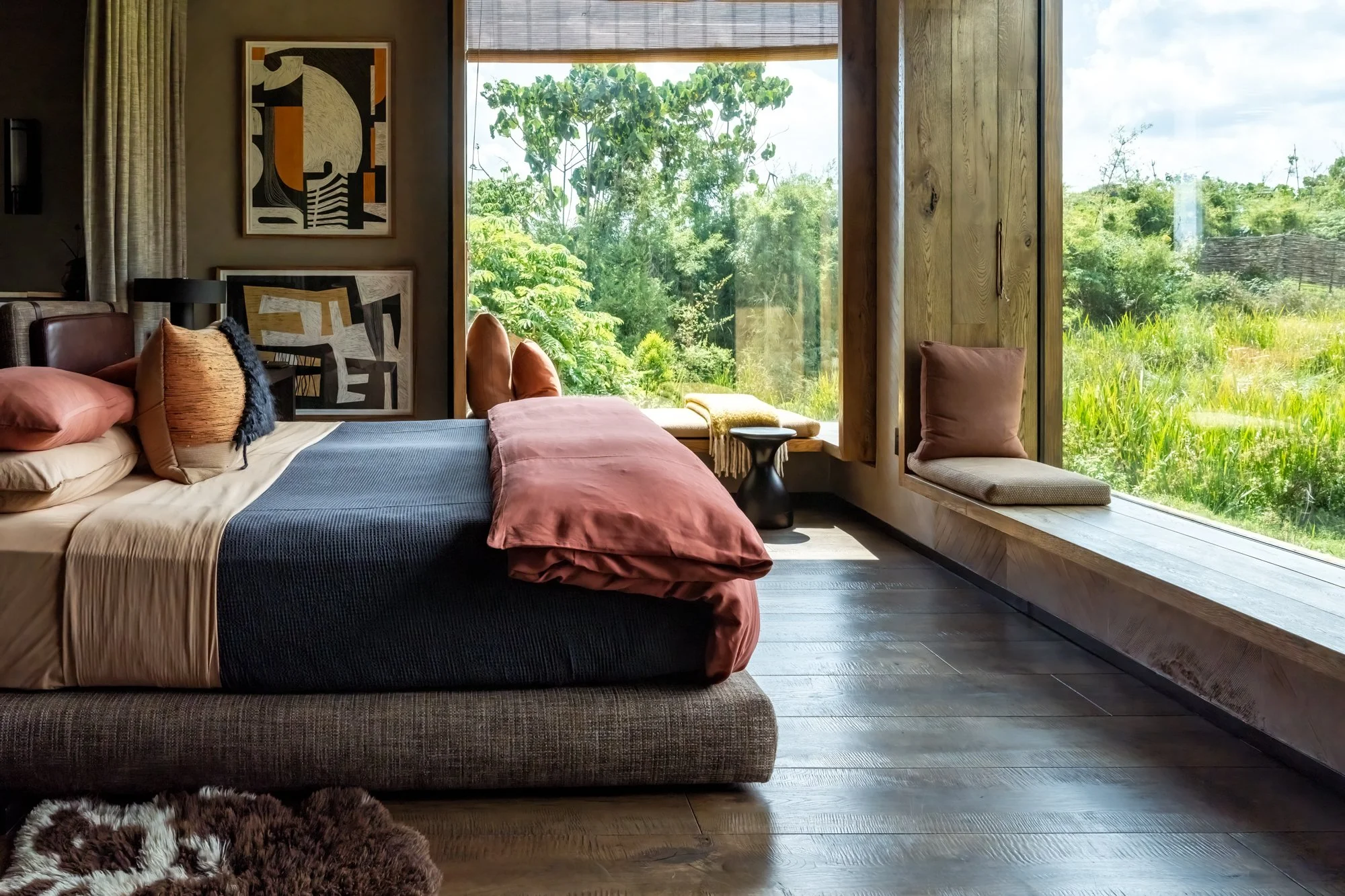
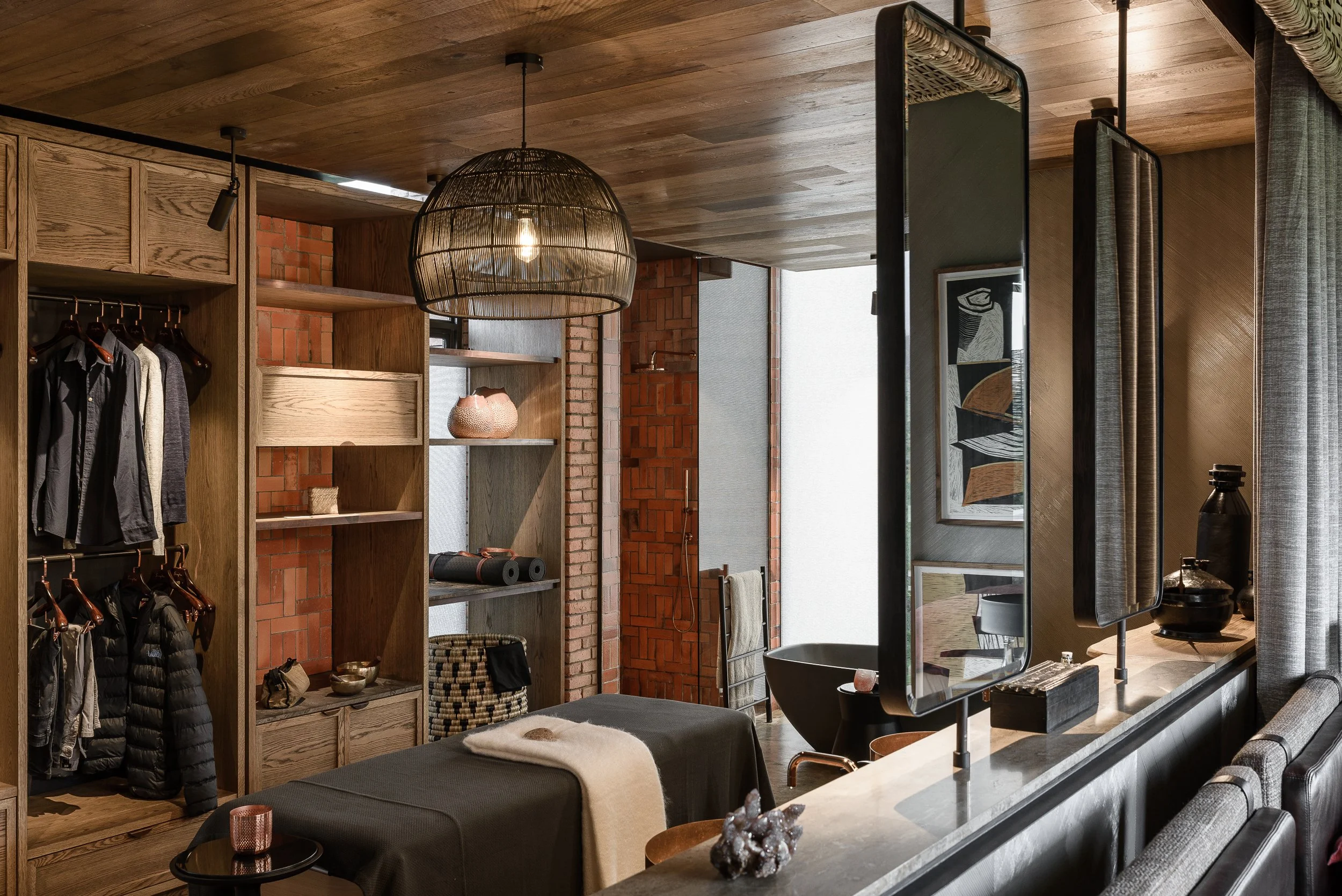
What separates Kwitonda from other exceptional lodges isn't the fireplaces or the plunge pool — it's the anticipatory service that operates below the level of asking. Arrival begins with a hand-washing ritual and a warm welcome from the full team. After the trek, a single serving of freshly made green juice and a handwritten card about the specific gorilla family you visited waited in the room — timed perfectly, deeply personal. The drink you ordered the night before appeared by the fire the following evening without a word. Every team member — not just the senior staff — demonstrates a quality of care that feels individual rather than trained. The detail I loved: the handkerchief I'd used on the trek, dirty from hours in the jungle and left in my backpack, was quietly collected, carefully cleaned, folded, and returned without ever being mentioned. That's what the top of this market looks like.
One evening, performers from the local village came to the lodge, and it turned out to be one of the highlights of the trip. The women and men arrived in traditional draped garments with bells tied at their ankles, and what followed was fast, physical, and genuinely joyful: hopping and dancing together in formation while singers shrilled behind them, the sound carrying across the property. At some point the circle opened and guests got pulled in. No one resisted for long, and we strangers danced and hopped with the villagers.
I recommend a three-night stay. Two is doable for arrival, a trek day, and a little downtime, but three provides a full day to enjoy the property with no agenda. It allows the staff to tailor surprises or experiences you haven't planned. Or if you're interested in the onsite tailor crafting custom clothing, a third day gives her time to complete your pieces. After this trip, I adjusted an upcoming client stay from two nights to three. The long drive, demanding trek and inspiring surroundings deserve more time. It's the kind of call that makes sense once you've been there.
what to know before the trek
Nothing about this experience is passive. That's the first thing I'll tell any client considering it.
The night before the trek, in its conservation room covered in artifacts, learning tools, and visuals, the in-house gorilla expert runs a briefing about what to expect, trekking etiquette, and a lunch order for the following day. Kwitonda fully outfits trekkers: hiking boots, rain jacket, water-resistant pants, gloves, trekking pole, backpack, water bottles, neck gaiter, and a small care package. The gear is quality — On Cloud, Arc'teryx, and Fjällräven as examples. Since light aircraft flights most likely restricts luggage weight and size, the lodge gear saves space. Note that the boots are not fully waterproof. An hour into the trek, they may be caked in mud. Clients particular about their gear should bring what matters to them.
Recommendations for the trek: wear a breathable, easily drying long-sleeve shirt — the jungle overgrowth is close and constant. Wear gloves in case you slip in the mud or trek through spiky vegetation. Hydrate. Get to bed early. Altitude compounds whatever dehydration travel already created.
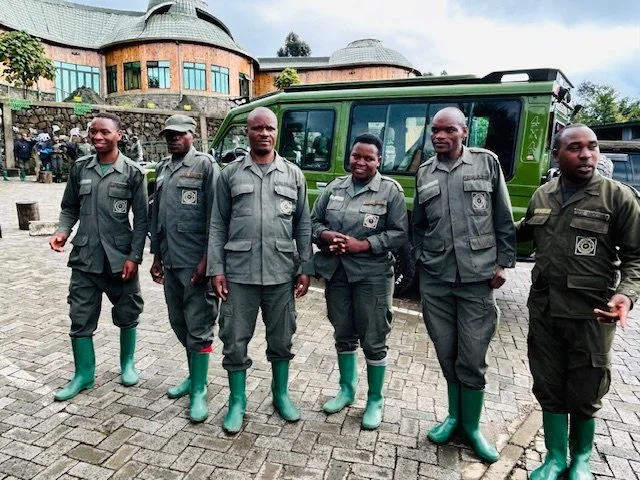
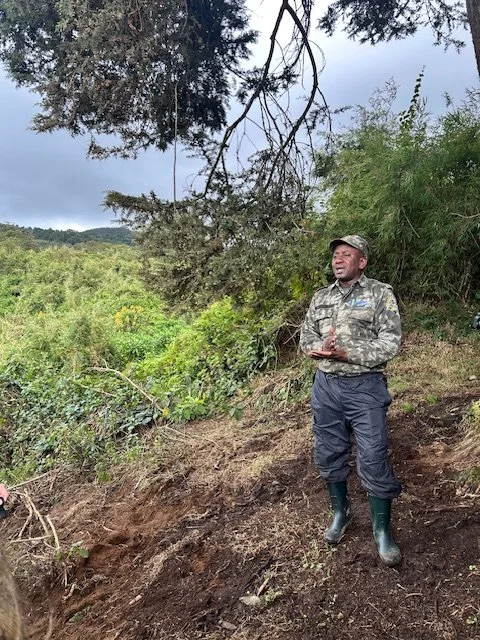
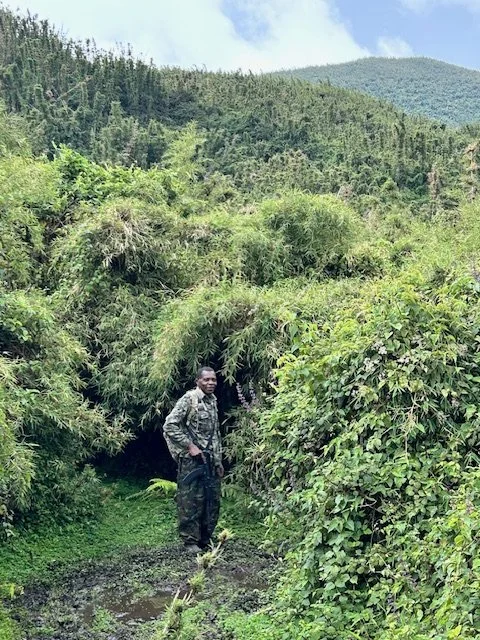
After a 5:30 a.m. wake-up call, hydrate and eat something. The drive from Kwitonda to the trekking base at Volcanoes National Park is short — a practical advantage of staying there over alternatives that require a much earlier start. At the base: hundreds of people from other groups, national guides, porters. A lodge guide finds your assigned national guide and hands the group off. From there, the trek group contains up to eight people, typically paired with strangers based on approximate age and fitness.
No one controls which gorilla family they're assigned to, which route they take, or how difficult the terrain will be. While supposedly based on age and ability, some groups drive two hours and trek thirty minutes through well-worn trails in farmland. Others head directly into the mountains, as we did. The assignment happens at the base, and there is no appeal process. For anyone with mobility challenges, Singita offers the chance to utilize a seat carried by porters for a nominal fee. It's truly possible for all abilities.
We climbed to over 9,000 feet. One person in our group suffered from altitude sickness. Another fell repeatedly in the mud. It's a lot — the weight of accumulated mud on boots, the slick trail, concentration required for every step, and three hours of climbing through dense jungle to reach the gorilla family in thick brambles.
one hour that justifies everything
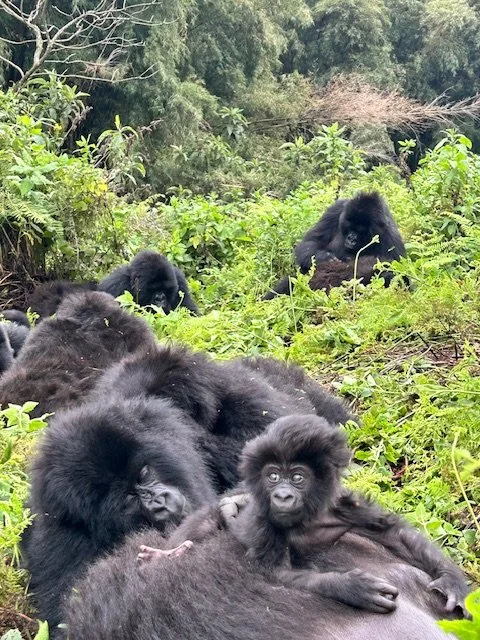
The trackers search for your gorilla family for hours prior to your arrival. The animals move and you follow, so we never quite knew when we would reach them. The porters don't speak English; their main goal is to keep you moving safely at a steady pace. When we finally reached the family, it was a welcomed surprise. We had summited the mountain and were now traveling down the other side to a clearing the animals had made with their density and mass. We donned our medical masks, left our belongings with the porters, and followed the guide to the gorillas through high brambles.
The guide told us to stay quiet and stay together, then led us to a spot five feet from the group, sandwiched between about 15 gorillas of all ages and a set of nine-year-old silverback twins. They communicated with the gorillas through grunts, signaling that everything was calm. A young female gorilla immediately approached and struck one woman in our group on the thigh. She had come too close — a warning. About 30 minutes in, a male charged at me. I vaulted into a bramble bush to get out of his path.
For an hour, we observed the gorillas, and sometimes they observed us. Mostly they remained unfazed and ignored us. Tired from eating, they lounged and slept. A trio of rambunctious toddlers wrestled and climbed trees, causing mischief and squabbling. A mother caressed and fed her newborn, gazing at her the way any mother does. The baby peeked around its mother, made eye contact with our group of muddy strangers, and watched us until she fell asleep. It’s all humbling and unbelievable — the sounds, the smells, the fingers and toes, the physical proximity to something that close to human and entirely not.
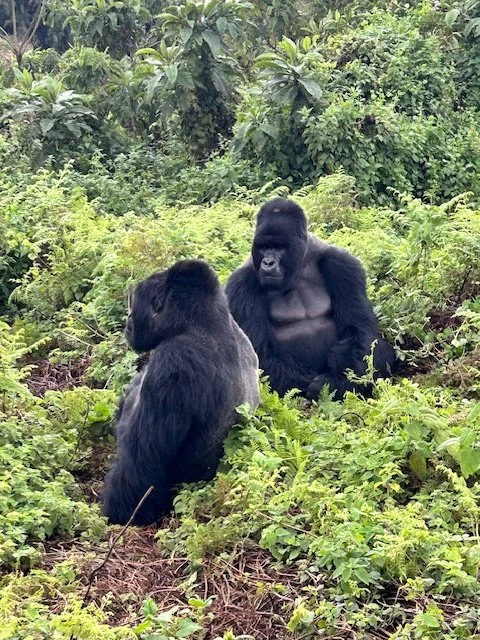
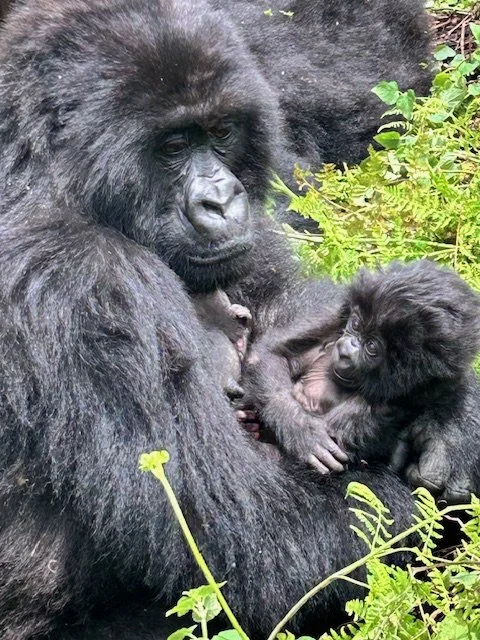
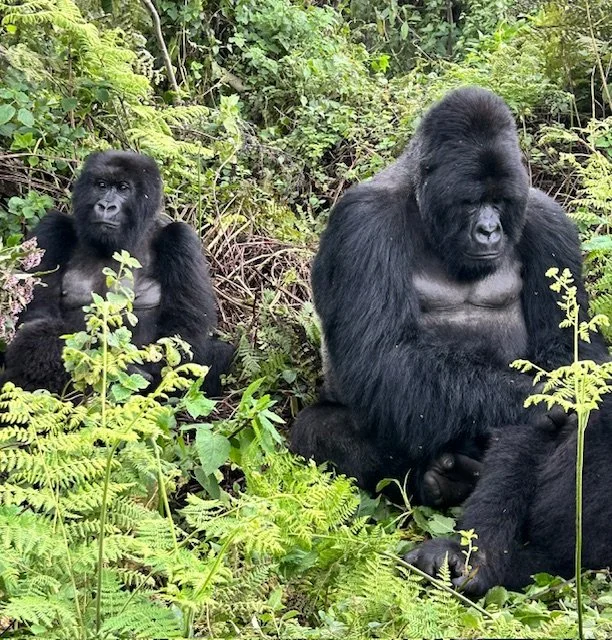
After an hour, their energy shifted as they grew tired of us. We single-filed out to meet our porters and eat our boxed lunches. The trek back meant re-summiting and sliding back down in the mud for three hours in intermittent rain.
Our driver waited at the parking lot with cold beers, sodas, and snacks. We shared a drink with the porters — who don't speak English, carry bags, steady trekkers on the slickest sections, and direct footfall through the worst of the mud without being asked.
The Kind of Thing You Recall for the Rest of Your Life
Rwanda issues gorilla permits in small daily allocations, and a trek is on the higher end of an East African experience, with the permit cost in 2026 at $1,500 per person per trek. Staying at Kwitonda is also top of market. After this experience, I can affirm it's well worth it.
The lodges that make the experience what it should be — close to the trekking base, with the briefing, the gear, and the guides — book nine months to a year in advance. Some further. Everything in this article — the helicopter note, the villa caveat, the gear list, the permit timeline — comes from being there to evaluate it for clients who will ask me whether it's worth it.
If Rwanda tops your travel bucket list, let's talk. The conversation starts with where you want to go and what you want to feel when you get there. Reach out at karen@wellplacedtravel.com.
Interested in other travel inspiration? Check out these Destinations.
